Arepa colombian
1344×768 · AVIF · CC BY 4.0

The arepa is a round, flat cornbread that serves as a staple of Colombian cuisine, enjoyed at any meal and made using ancient techniques.
About this subject
The arepa is far more than a side dish in Colombia; it is a cultural icon present on every table. Traditionally made from nixtamalized corn (pre-cooked in lime water), its recipe varies by region: arepas from Antioquia are thick and salty, while those from the Caribbean coast are thin and crispy. In Colombia, there are an estimated 40-plus types of arepa, including arepa de choclo (sweet, made with fresh corn) and arepa con huevo (stuffed with a fried egg).
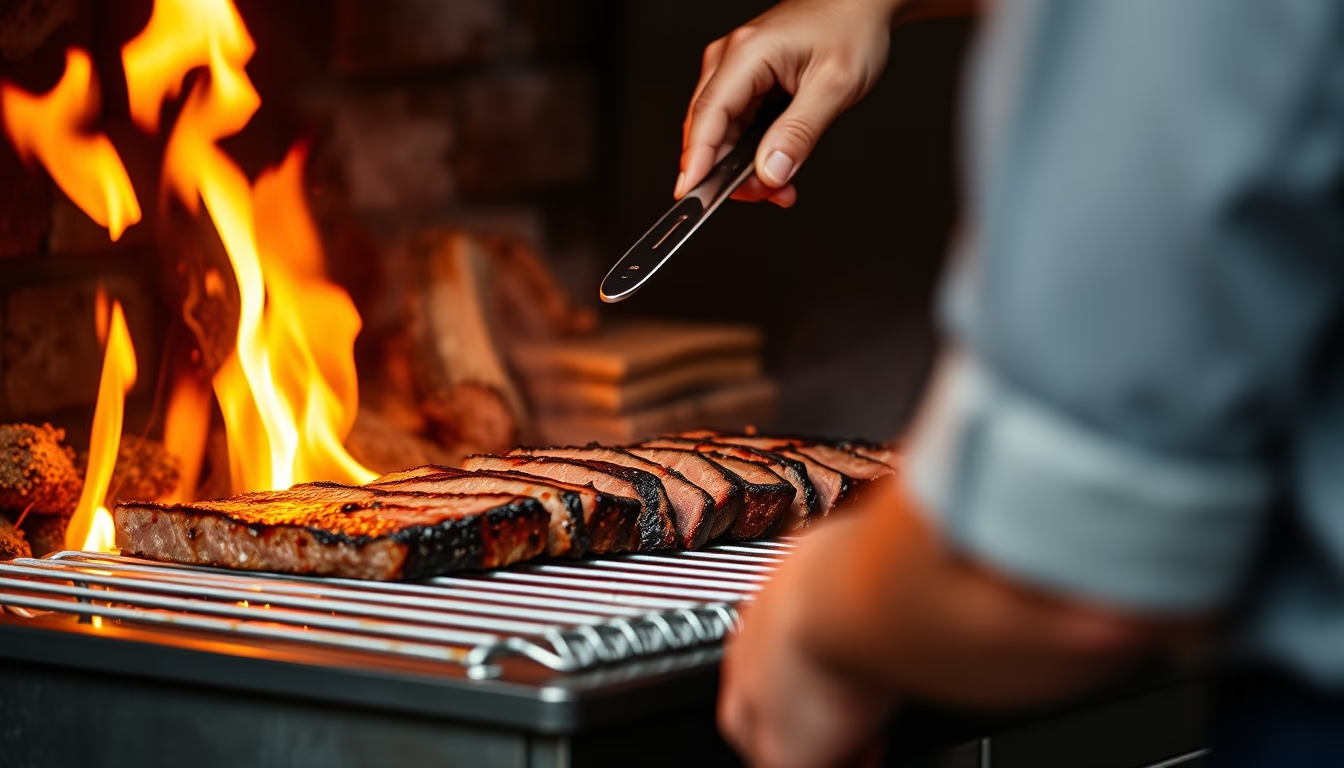
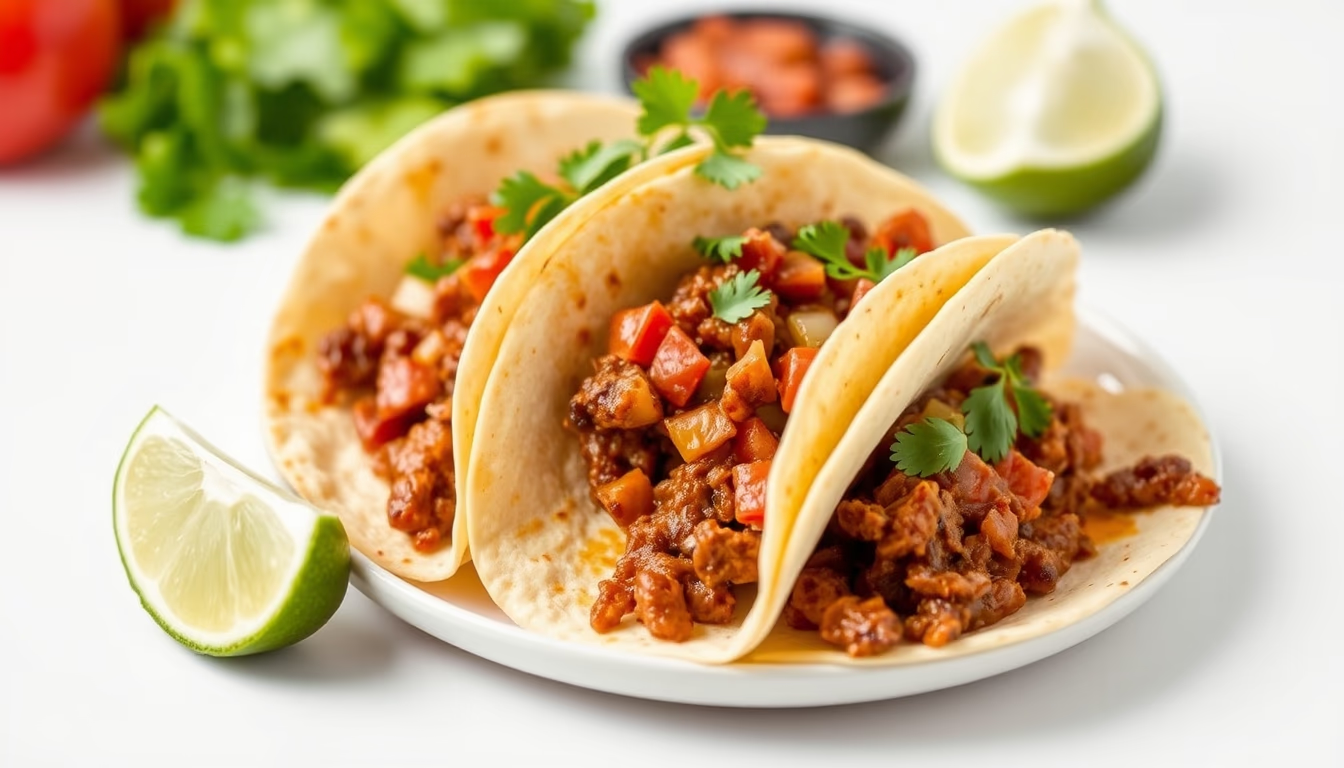
Preparation starts with masa de arepa, an instant corn flour that is hydrated, kneaded, and shaped into discs. The arepa is then grilled on a budare (a flat iron griddle) or fried. Unlike Brazilian cornbread, the arepa is unleavened, resulting in a dense, slightly elastic texture. Colombians eat arepas for breakfast with butter and cheese, for lunch as a base for dishes like bandeja paisa, or for dinner stuffed with meats, avocado, and sauces.
The arepa's origins trace back to pre-Columbian indigenous groups such as the Zenú and Tairona, who baked corn discs on hot stones. Spanish chronicles from the 16th century describe arepas being consumed in what are now Colombia and Venezuela. Although both countries share the dish, each developed distinct variations. In Colombia, the arepa is a cross-class food, eaten by rural and urban populations alike, and in 2016 the Colombian government declared the arepa as intangible cultural heritage of the nation.
Curiously, the Colombian arepa should not be confused with the Venezuelan version, which is usually thinner and often stuffed. In Colombia, there is even the "arepa pasada", which is grilled twice to achieve a crunchier texture. The arepa's versatility allows it to be served at festivals, such as the festivities of the Virgen del Carmen, or at street stalls, where it is always accompanied by fresh fruit juices like lulo or passion fruit.
Frequently Asked Questions
What is the difference between Colombian and Venezuelan arepas?
Colombian arepas are generally thicker and denser, while Venezuelan arepas are thinner and often split open to be stuffed with fillings like cheese, meat, or chicken. Colombian arepas are traditionally grilled or fried without a filling.
How do you make Colombian arepa dough?
Use pre-cooked corn flour (masarepa), mix it with water and salt until a smooth dough forms. Knead, shape into discs about 1 cm thick, and cook on a greased griddle or skillet until golden on both sides.
Are arepas only eaten in Colombia?
No, arepas are also a staple in Venezuela, Panama, and parts of the Caribbean like the Dominican Republic. However, each country has its own variations. In Colombia, the arepa is recognized as intangible cultural heritage.
Direct URL
https://pub-c7d6a6ea828543ac903a74a341ccb2e1.r2.dev/imagens/arepa-colombian-film-grain-authentic-fresh0.avifHow to credit
Include a visible link back to UtilizAí. Copy one of the snippets below:
<a href="https://xn--utiliza-eza.com/en/midia/imagens/arepa-colombian-film-grain-authentic-fresh0">Arepa colombian</a> by <a href="https://xn--utiliza-eza.com">UtilizAí</a>, licensed under <a href="https://creativecommons.org/licenses/by/4.0/">CC BY 4.0</a>.
[Arepa colombian](https://xn--utiliza-eza.com/en/midia/imagens/arepa-colombian-film-grain-authentic-fresh0) by [UtilizAí](https://xn--utiliza-eza.com), CC BY 4.0
License: CC-BY-4.0