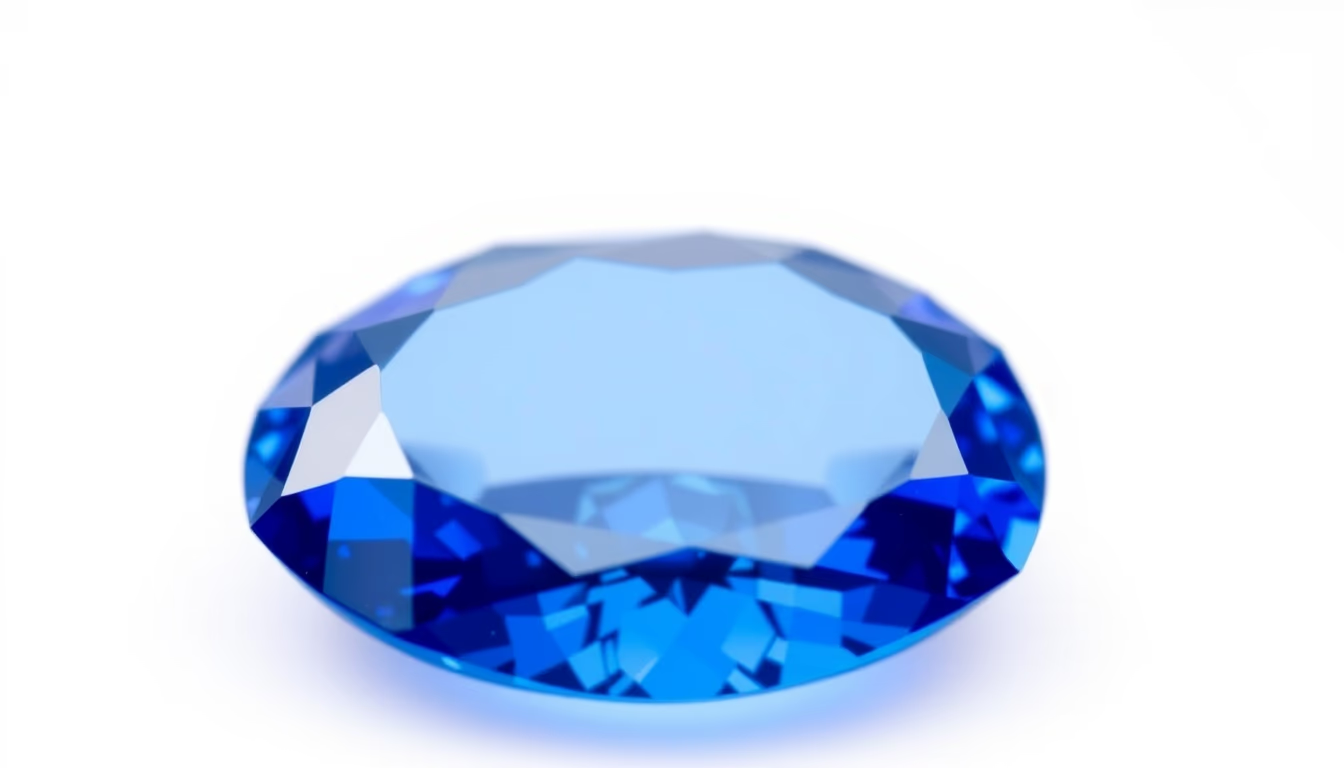
Aquamarine pale blue
1344×768 · AVIF · CC BY 4.0

Aquamarine is a blue-green variety of beryl, valued for its sea-like color and transparency.
About this subject
Aquamarine is a gemstone belonging to the beryl family, which also includes emerald and morganite. Its pale blue to greenish-blue color comes from traces of iron in its crystal lattice. The name derives from Latin 'aqua marina', meaning 'seawater', reflecting its characteristic hue. With a hardness of 7.5 to 8 on the Mohs scale, it is durable enough for everyday jewelry and is typically cut into faceted shapes like emerald or oval cuts.
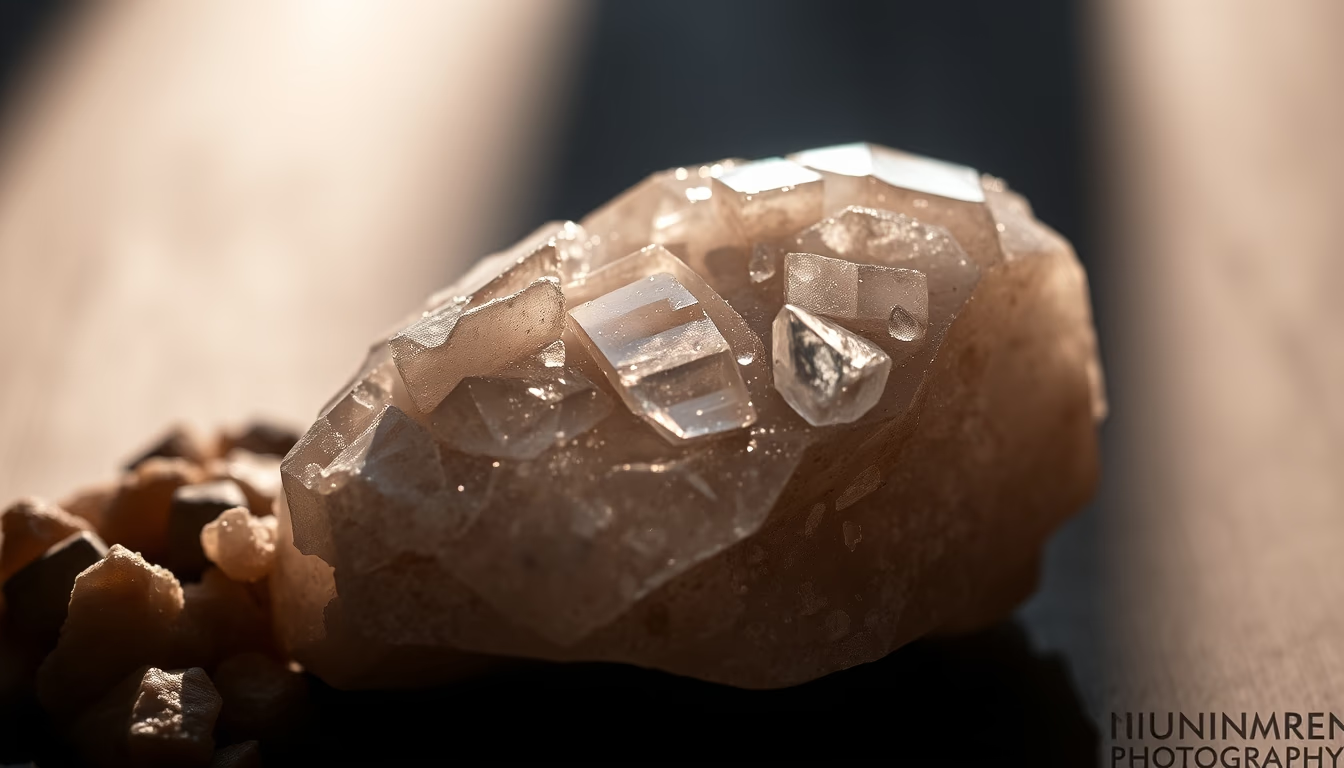
Brazil is one of the world's largest producers of aquamarine, notably from mines in Minas Gerais, such as the regions of Governador Valadares and Teófilo Otoni. Other significant deposits are in Madagascar, Nigeria, Pakistan, and Russia. The gem often forms hexagonal crystals that can weigh several kilos; the largest aquamarine ever found weighed over 110 kg, discovered in Marambaia, Minas Gerais, in 1910.
Beyond its beauty, aquamarine carries symbolic meanings. It is the birthstone for March and is associated with courage, communication, and serenity. In medieval times, it was believed to protect sailors and ensure safe sea voyages. In modern crystal healing, it is used to balance emotions and promote self-expression. The gem also contributes to the blue color in many color systems, serving as a reference for pastel and light tones.
Interestingly, aquamarine can be heat-treated to enhance its color, a widely accepted practice in the industry. Exposure to temperatures between 400 and 500 degrees Celsius removes yellowish tints, resulting in a purer blue. This treatment is stable and does not affect the stone's durability, being common in gems traded globally.
Frequently Asked Questions
What is the difference between aquamarine and blue topaz?
Although both are blue, aquamarine is a beryl, while blue topaz is an aluminum fluorosilicate. Aquamarine has a hardness of 7.5-8 and topaz is 8 on the Mohs scale, but blue topaz usually has a more intense color and is more prone to cleavage.
How can you tell if an aquamarine is natural?
Natural gems typically show characteristic inclusions and subtle color variations. Heat-treated aquamarines are considered natural as they only enhance color. Synthetic stones are rare and tend to be very pure with no inclusions.
Can aquamarine be used in engagement rings?
Yes, due to its good hardness (7.5-8), it is suitable for daily wear. However, hard impacts should be avoided as it may chip. It is a popular alternative to diamonds for blue gemstone engagement rings.
Direct URL
https://pub-c7d6a6ea828543ac903a74a341ccb2e1.r2.dev/imagens/aquamarine-pale-blue-tilt-shift-miniature-p6.avifHow to credit
Include a visible link back to UtilizAí. Copy one of the snippets below:
<a href="https://xn--utiliza-eza.com/en/midia/imagens/aquamarine-pale-blue-tilt-shift-miniature-p6">Aquamarine pale blue</a> by <a href="https://xn--utiliza-eza.com">UtilizAí</a>, licensed under <a href="https://creativecommons.org/licenses/by/4.0/">CC BY 4.0</a>.
[Aquamarine pale blue](https://xn--utiliza-eza.com/en/midia/imagens/aquamarine-pale-blue-tilt-shift-miniature-p6) by [UtilizAí](https://xn--utiliza-eza.com), CC BY 4.0
License: CC-BY-4.0