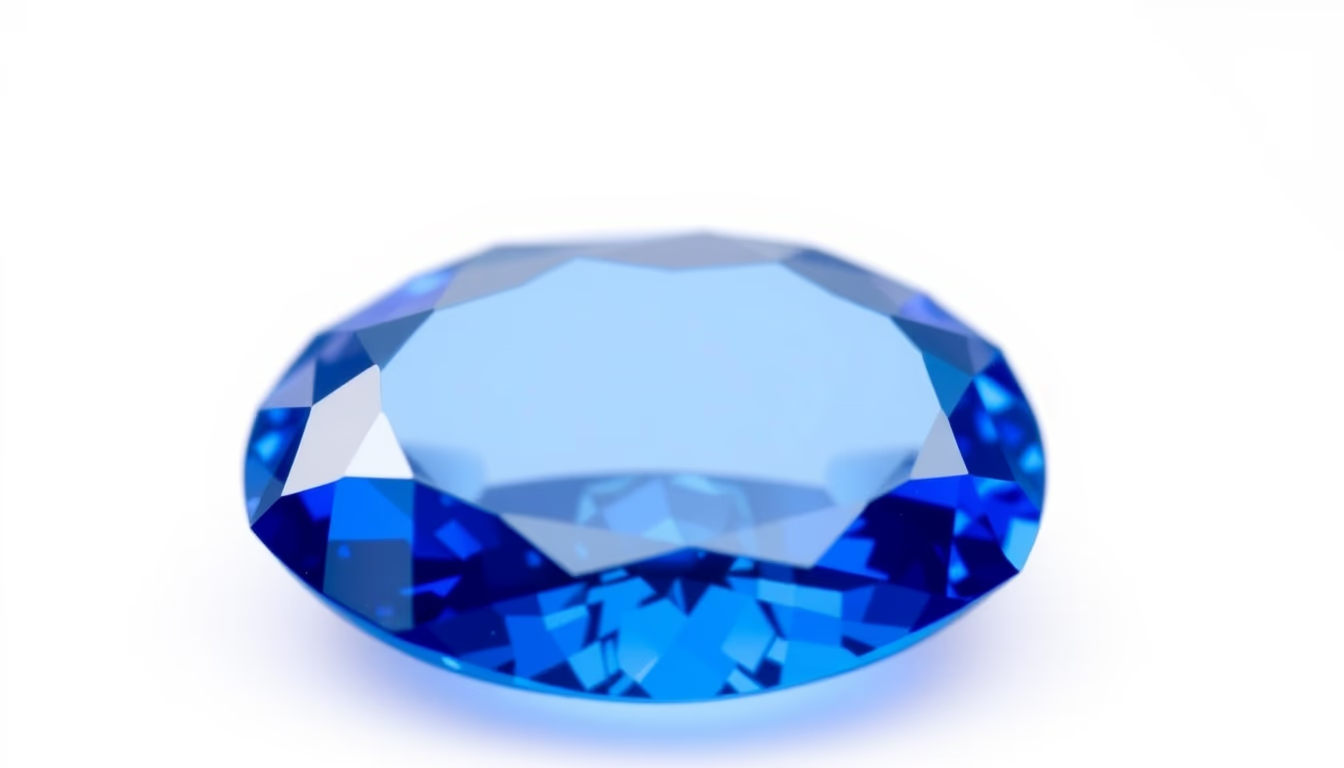
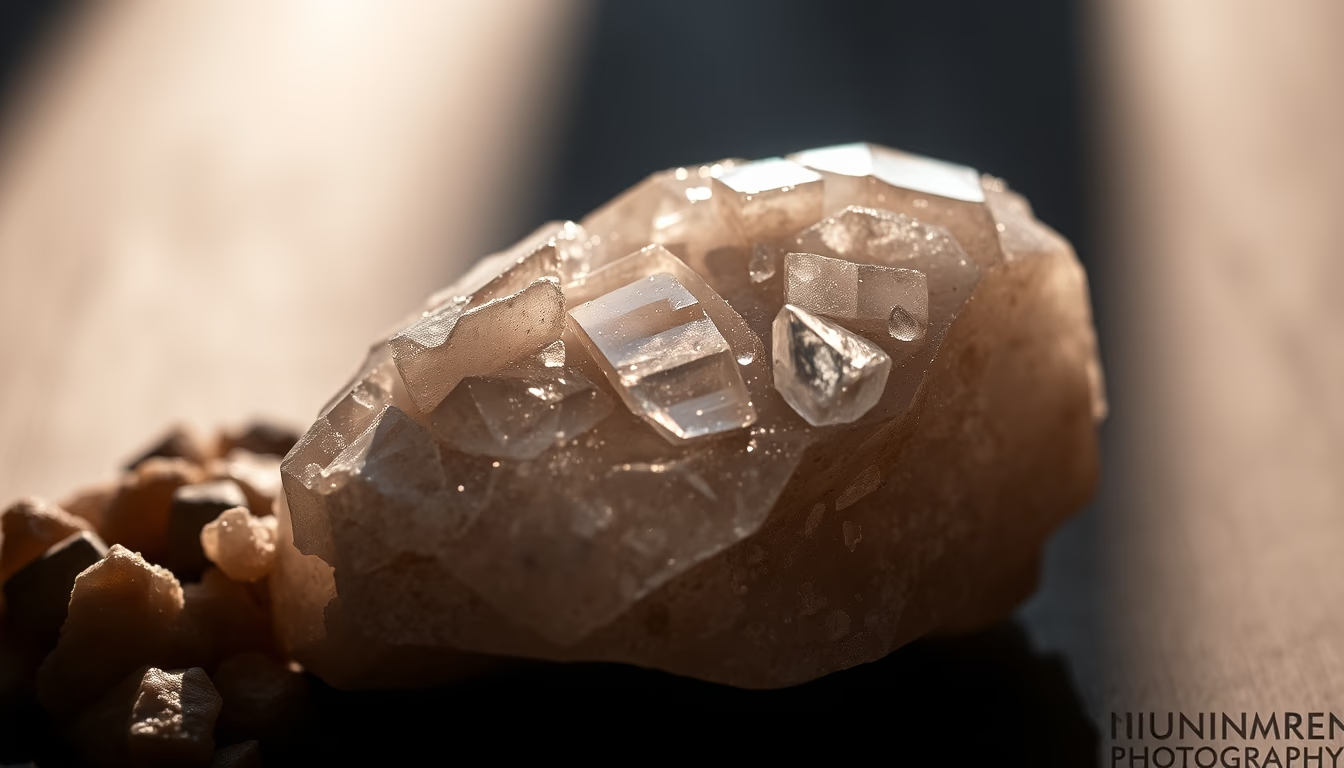
Aquamarine pale blue
1344×768 · AVIF · CC BY 4.0

Pale blue aquamarine is a variety of beryl, valued for its soft color and transparency. Learn more about this mineral.
About this subject
Aquamarine is a variety of the mineral beryl, chemically classified as a beryllium aluminum silicate. Its characteristic pale blue color is caused by traces of iron ions in the crystal lattice. While pure beryl is colorless, the presence of Fe2+ and Fe3+ produces shades ranging from light blue to blue-green. The most famous aquamarine deposits are in Brazil, especially in the states of Minas Gerais, Espírito Santo, and Bahia. Other important sources include Pakistan, Afghanistan, Madagascar, and Russia. Brazil accounts for about 70% of the world's gem-quality aquamarine production.
Historically, aquamarine was used by sailors as a talisman to protect against shipwrecks, believed to calm the waves. In the Middle Ages, it was considered a symbol of love and fidelity. The Romans associated it with Neptune, god of the sea. The gem was also used in medicinal elixirs to treat eye and liver problems. Today, it is one of the most popular gemstones in jewelry, especially in rings, earrings, and pendants, due to its durability (hardness 7.5-8 on the Mohs scale) and clarity.
From a gemological perspective, pale blue aquamarine is often heat-treated to remove yellowish or greenish tones and enhance the blue color. This heating at around 400-500°C is a standard and accepted practice in the market. Aquamarine crystals can reach remarkable sizes: the largest gem-quality crystal ever found weighed 110 kg and was discovered in Minas Gerais. The most famous faceted gem is the "Martha Rocha" aquamarine, weighing about 200 carats, currently at the National Museum of Natural History in Washington.
Frequently Asked Questions
What causes the color of aquamarine?
The pale blue color of aquamarine is caused by iron impurities (Fe2+ and Fe3+) within the beryl crystal structure. Higher iron concentrations produce deeper blue tones.
Is aquamarine a natural stone?
Yes, aquamarine is a natural gemstone, but many specimens undergo heat treatment to enhance color. This process is standard and accepted in the trade.
Which countries are the main producers of aquamarine?
Brazil is the leading producer, especially from Minas Gerais. Other significant sources include Pakistan, Afghanistan, Madagascar, and Russia.
Direct URL
https://pub-c7d6a6ea828543ac903a74a341ccb2e1.r2.dev/imagens/aquamarine-pale-blue-documentary-photography-p7.avifHow to credit
Include a visible link back to UtilizAí. Copy one of the snippets below:
<a href="https://xn--utiliza-eza.com/en/midia/imagens/aquamarine-pale-blue-documentary-photography-p7">Aquamarine pale blue</a> by <a href="https://xn--utiliza-eza.com">UtilizAí</a>, licensed under <a href="https://creativecommons.org/licenses/by/4.0/">CC BY 4.0</a>.
[Aquamarine pale blue](https://xn--utiliza-eza.com/en/midia/imagens/aquamarine-pale-blue-documentary-photography-p7) by [UtilizAí](https://xn--utiliza-eza.com), CC BY 4.0
License: CC-BY-4.0