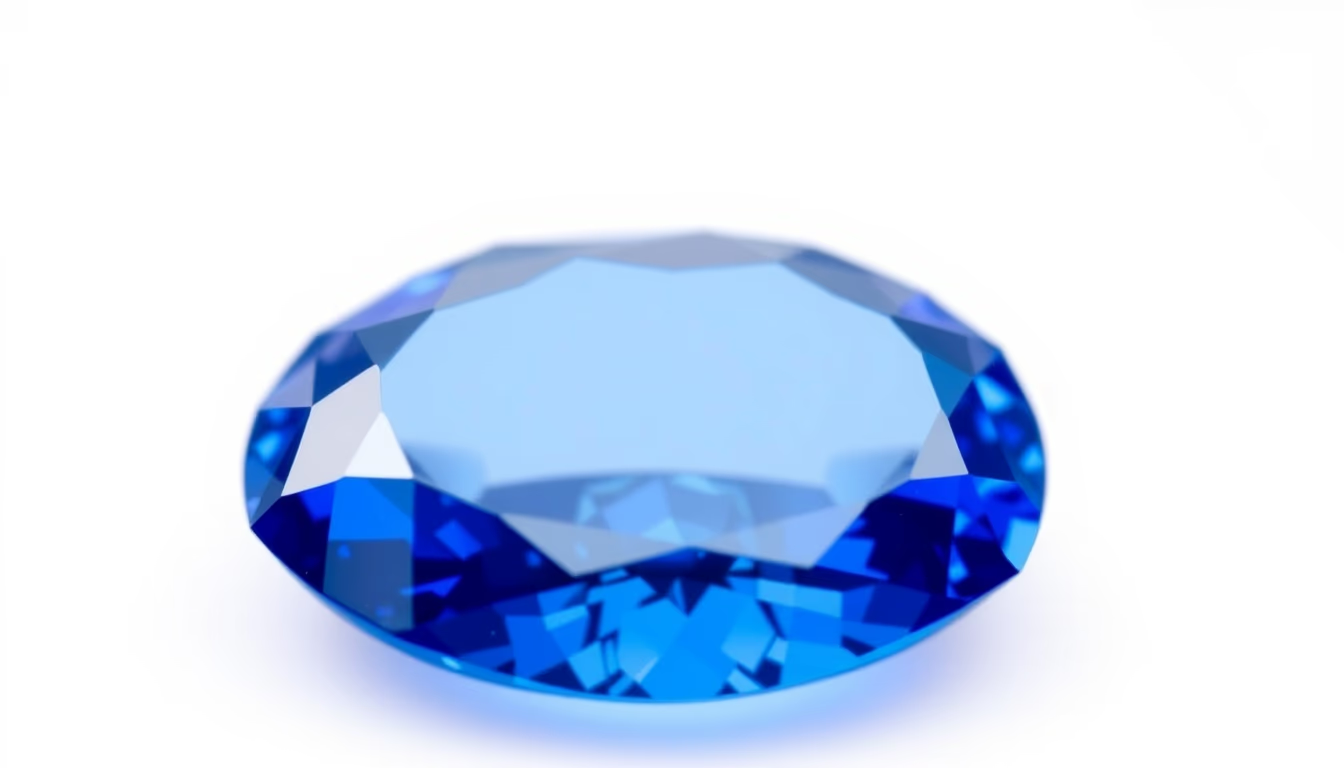
Aquamarine pale blue
1344×768 · AVIF · CC BY 4.0

Aquamarine is a pale blue variety of beryl, known for its soft color and clarity, found in granitic pegmatites around the world.
About this subject
Aquamarine, whose name derives from Latin "aqua marina" (sea water), is a variety of the mineral beryl, chemically beryllium aluminum silicate. Its characteristic pale blue color is due to traces of iron in the Fe2+ oxidation state within the crystal's structural channels. Hexagonal crystals can reach large sizes; the largest recorded specimen weighed about 110 kg and was found in Brazil, in 1910, in the Marambai region of Espírito Santo state. Brazil is the world's largest producer of aquamarine, with notable deposits in Minas Gerais, Bahia, and Espírito Santo. Other important sources include Pakistan, Afghanistan, Nigeria, Madagascar, and Russia. In gemstones, the color is often heat-treated to remove greenish tones, enhancing the blue. Aquamarine is the March birthstone and symbolizes youth, hope, and health. In astrology, it is associated with the zodiac sign Pisces and the throat chakra. Historically, sailors believed it protected them during ocean voyages. With a hardness of 7.5, 8 on the Mohs scale, it is suitable for everyday jewelry. The most valuable pieces have an intense blue color and high transparency with no visible inclusions. The marine aquarium of gemstones at the Museum of Science and Technology of the Ouro Preto School of Mines displays a notable collection of rough and cut crystals.
Frequently Asked Questions
What is the difference between aquamarine and blue topaz?
Aquamarine is beryl, while blue topaz is an aluminum fluorosilicate. Aquamarine naturally has softer tones; blue topaz is often produced by irradiation and heat treatment. Aquamarine's hardness (7.5, 8) is slightly higher than topaz (8).
How is aquamarine's color enhanced?
Most aquamarines are heat-treated at around 400, 450°C to remove yellow or greenish tints, resulting in a purer, more stable blue. This treatment is widely accepted in the gem trade.
Where are the largest aquamarine deposits found?
Brazil hosts the largest deposits, especially in Minas Gerais (e.g., Teófilo Otoni region), Bahia, and Espírito Santo. Other significant producers include Pakistan, Afghanistan, Nigeria, and Madagascar.
Direct URL
https://pub-c7d6a6ea828543ac903a74a341ccb2e1.r2.dev/imagens/aquamarine-pale-blue-aerial-drone-shot-p10.avifHow to credit
Include a visible link back to UtilizAí. Copy one of the snippets below:
<a href="https://xn--utiliza-eza.com/en/midia/imagens/aquamarine-pale-blue-aerial-drone-shot-p10">Aquamarine pale blue</a> by <a href="https://xn--utiliza-eza.com">UtilizAí</a>, licensed under <a href="https://creativecommons.org/licenses/by/4.0/">CC BY 4.0</a>.
[Aquamarine pale blue](https://xn--utiliza-eza.com/en/midia/imagens/aquamarine-pale-blue-aerial-drone-shot-p10) by [UtilizAí](https://xn--utiliza-eza.com), CC BY 4.0
License: CC-BY-4.0