Antique hammer wooden handle
1344×768 · AVIF · CC BY 4.0
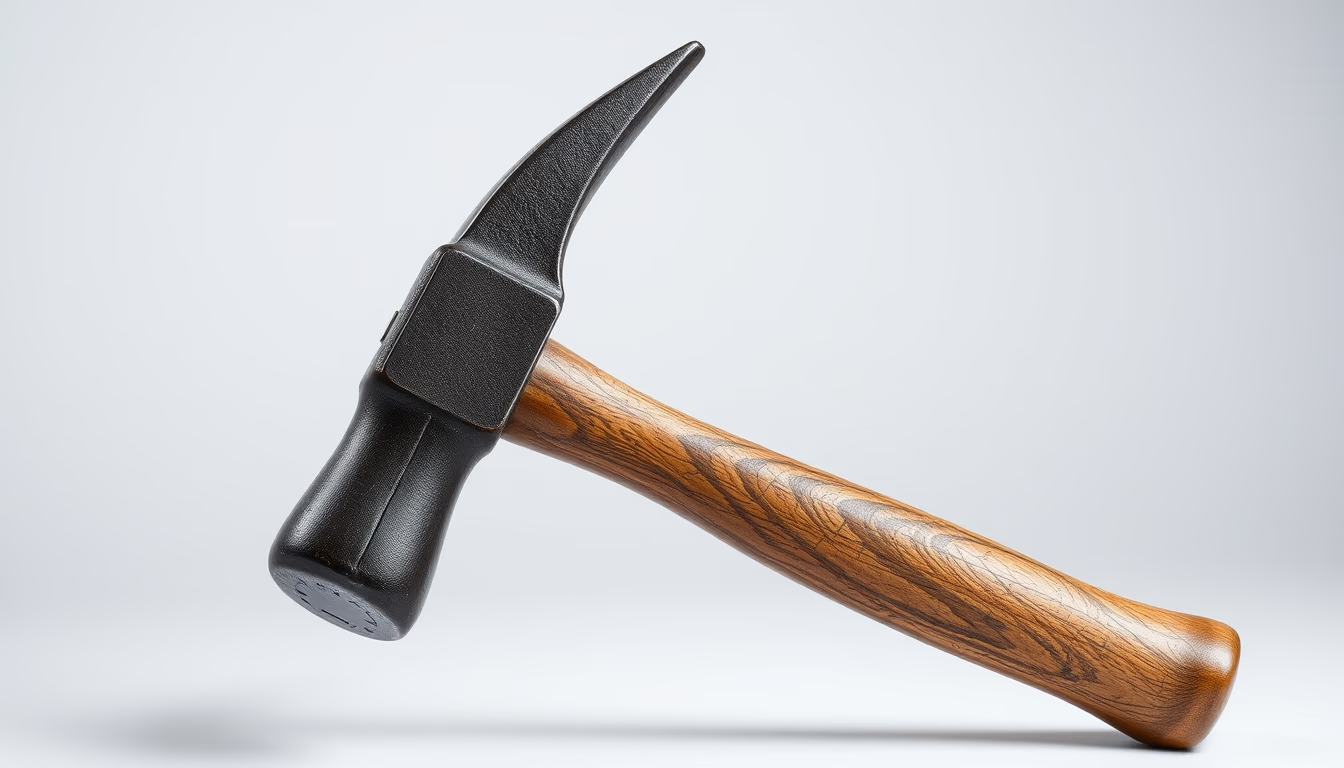
Antique hammer with wooden handle: history, types, and value as a tool and collectible.
About this subject
The hammer with a wooden handle is one of humanity's oldest tools, with evidence dating back to the Bronze Age. Early hammers were stones lashed to wooden handles, but metallurgy allowed for forged iron heads that were more durable and precise. In the pre-industrial era, each blacksmith or carpenter crafted their own hammers, resulting in unique pieces with handles made from selected woods like ash or hickory, prized for strength and shock absorption.
Wooden handles offer ergonomic benefits: they dampen vibration and conform to the user's hand over time. The head was secured to the handle using metal or wooden wedges, a method still used in artisanal hammers today. During the 19th century, mass production standardized models like the carpenter's claw hammer and the ball-peen hammer, both with turned wooden handles. Mason's and blacksmith's hammers also retained wood handles until synthetic materials emerged.
Collecting antique hammers values specimens with original handles, marks of renowned blacksmiths, and heads with controlled rust patina. Pieces from the 18th and 19th centuries, especially by European or American smiths, can fetch hundreds of dollars at auction. Beyond historical worth, these hammers remain functional: many collectors use them in woodworking or restoration, appreciating the balance and tactile feel of wood.
Trivia: the oldest wooden-handled hammer found in Europe dates to around 3000 BCE in Switzerland. In some cultures, the hammer symbolizes justice and power, as in a judge's gavel. The phrase 'let the hammer fall' originates from auctions, where a wooden hammer closes bids.
Frequently Asked Questions
What wood is most common in antique hammer handles?
Ash and hickory are most common for their strength and flexibility. Hickory (pecan) is especially prized in American hammers.
How to identify an original antique hammer?
Check for hand-forging marks on the head, such as irregularities and blacksmith stamps. The handle should show signs of use and may have metal or wooden wedges. Patina on the head and absence of modern screws are indicators.
Can antique hammers be used today?
Yes, if the handle is tight and free of cracks. Many collectors use them for light tasks, but for heavy impact, a modern hammer is safer.
Direct URL
https://pub-c7d6a6ea828543ac903a74a341ccb2e1.r2.dev/imagens/antique-hammer-wooden-handle-studio-still-life-fresh11.avifHow to credit
Include a visible link back to UtilizAí. Copy one of the snippets below:
<a href="https://xn--utiliza-eza.com/en/midia/imagens/antique-hammer-wooden-handle-studio-still-life-fresh11">Antique hammer wooden handle</a> by <a href="https://xn--utiliza-eza.com">UtilizAí</a>, licensed under <a href="https://creativecommons.org/licenses/by/4.0/">CC BY 4.0</a>.
[Antique hammer wooden handle](https://xn--utiliza-eza.com/en/midia/imagens/antique-hammer-wooden-handle-studio-still-life-fresh11) by [UtilizAí](https://xn--utiliza-eza.com), CC BY 4.0
License: CC-BY-4.0