Antique hammer wooden handle
1344×768 · AVIF · CC BY 4.0
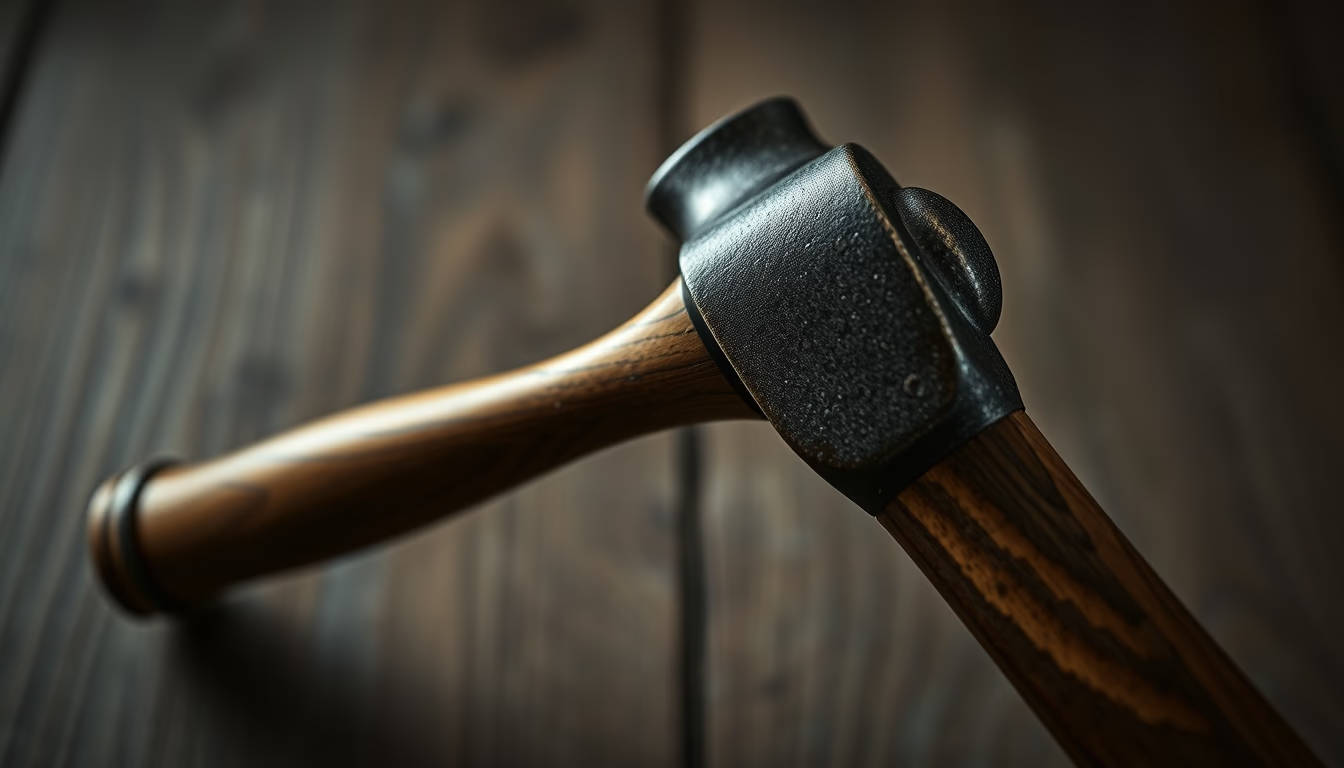
Antique hammer with wooden handle, a manual tool that has accompanied humanity from the Stone Age to the Industrial Revolution.
About this subject
The hammer is one of humanity's oldest tools, with evidence dating back about 3.3 million years, from knapped stone artifacts found in Kenya. Over millennia, the hammer's evolution paralleled the development of civilizations: from early pebbles tied to branches to sophisticated medieval blacksmith hammers. In Brazil's colonial period, hammers with wooden handles were essential for building engenhos (sugar mills), churches, and furniture.
The basic hammer design consists of a metal head (usually steel or wrought iron) and a wooden handle, often made of freijó, oak, or hickory. Wood was chosen for its strength and impact absorption, while the head could have different faces: one for striking and another for pulling nails (claw). Antique hammers often bear blacksmith marks, indicating their artisanal and regional origin.
In carpentry, the carpenter's hammer was used to drive nails and adjust joints. In metalworking, ball-peen and cross-peen hammers served specific purposes. The Industrial Revolution standardized mass-produced designs, but antique examples are prized by collectors for their originality and patina.
Today, antique hammers with wooden handles are collector's items and decorative pieces, especially those with hardwood handles or manually forged iron heads. Antique fairs and specialized auctions frequently feature 18th and 19th century pieces, valued based on condition and rarity.
Frequently Asked Questions
What is the origin of the hammer?
The hammer originated in the Paleolithic, about 3.3 million years ago, with early hominins using stones to break bones. The version with a wooden handle appeared later, improving leverage and force.
How to identify an antique hammer?
Check the head: hand-forging leaves irregular marks and imperfect symmetry. The original wooden handle will have patina and wear marks. Blacksmith stamps or engraved initials increase historical value.
How to preserve an antique wooden hammer?
Avoid excessive humidity to prevent wood cracking. Clean with a dry cloth and apply neutral wax on the handle. Do not sand the patina, as it reduces value. Store in a stable temperature environment.
Direct URL
https://pub-c7d6a6ea828543ac903a74a341ccb2e1.r2.dev/imagens/antique-hammer-wooden-handle-fine-art-photography-fresh3.avifHow to credit
Include a visible link back to UtilizAí. Copy one of the snippets below:
<a href="https://xn--utiliza-eza.com/en/midia/imagens/antique-hammer-wooden-handle-fine-art-photography-fresh3">Antique hammer wooden handle</a> by <a href="https://xn--utiliza-eza.com">UtilizAí</a>, licensed under <a href="https://creativecommons.org/licenses/by/4.0/">CC BY 4.0</a>.
[Antique hammer wooden handle](https://xn--utiliza-eza.com/en/midia/imagens/antique-hammer-wooden-handle-fine-art-photography-fresh3) by [UtilizAí](https://xn--utiliza-eza.com), CC BY 4.0
License: CC-BY-4.0