Ancient olive tree gnarled trunk
1344×768 · AVIF · CC BY 4.0
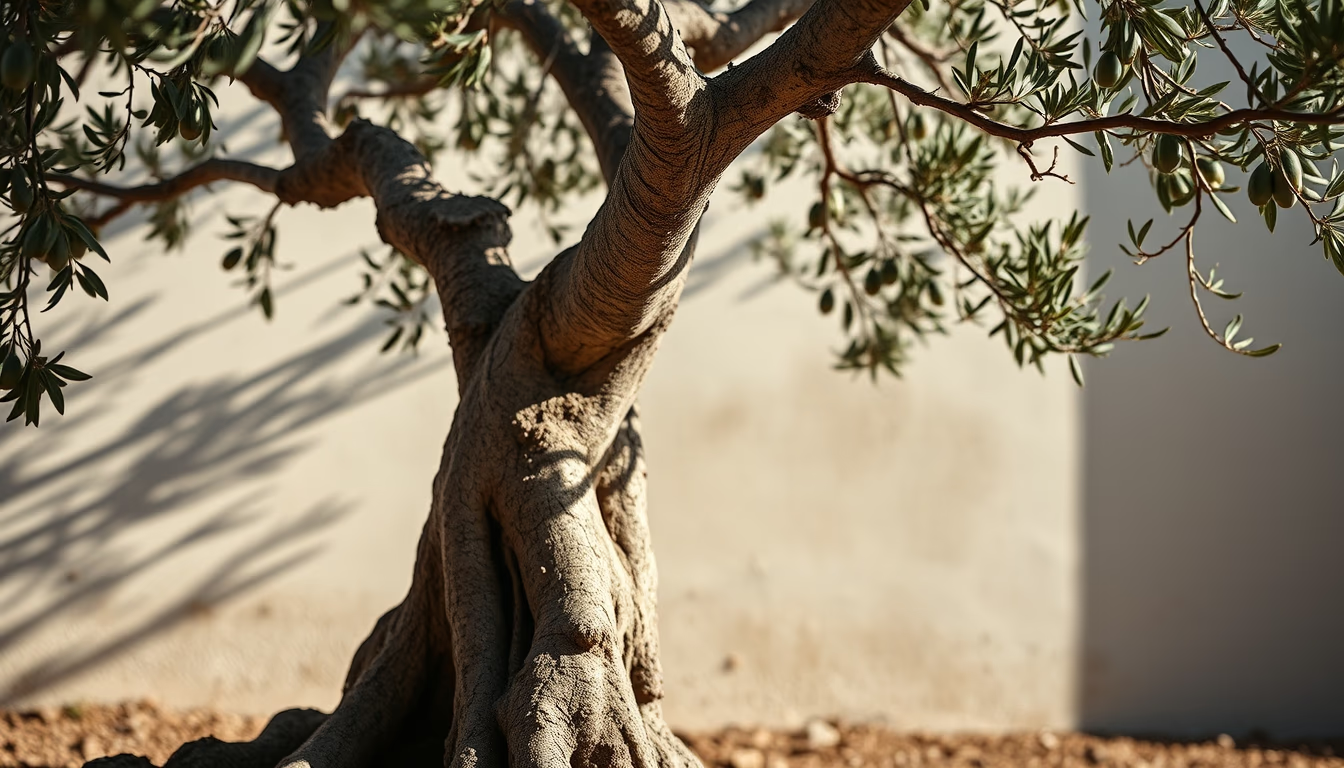
Century-old olive trees have gnarled trunks that bear witness to centuries of cultivation in the Mediterranean, symbolizing resilience and tradition.
About this subject
Olive trees (Olea europaea) are extremely slow-growing, often living for over two thousand years. The oldest known specimens, such as the olive trees in the Garden of Gethsemane in Jerusalem, are estimated to be between 900 and 1200 years old, though genetic analyses suggest they may be clones of even older trees. The gnarled, twisted trunk is an evolutionary adaptation: the tree accumulates new tissue over damage from strong winds, fires, and centuries of pruning, resulting in a sculptural, often hollow stem.
These trees are native to the Mediterranean Basin, with archaeological evidence of cultivation dating back at least 6000 years. Countries like Greece, Italy, Spain, Portugal, and Turkey have plantations of century-old olive trees that still produce high-quality olives. The cultural significance is immense: the olive tree appears in Greek mythology (Athena's gift to Athens), the Bible (the olive branch brought by Noah's dove), and traditions of peace and wisdom.
A remarkable fact is that olive trees can survive intense fires, resprouting from the base after the flames pass. This is possible thanks to dormant buds on the trunk and deep roots. In modern agriculture, centenarian olive trees are often preserved for their landscape and historical value, though they require special care: light pruning every two years, controlled irrigation to prevent fungi, and protection against severe frosts. Olive oil extracted from fruits of ancient trees tends to be more concentrated in flavor, with a distinctive phenolic profile.
Today, conservation of these trees faces challenges: urbanization, pests such as Xylella fastidiosa, and climate change. Projects for cataloging and clonal propagation aim to perpetuate millennial genotypes. In regions like the Valley of the Temples in Sicily and the Mount of Olives in Jerusalem, centenarian olive trees are living heritage of humanity.
Frequently Asked Questions
What is the maximum age of an olive tree?
Olive trees can live for over 2000 years, such as those on the Mount of Olives in Jerusalem. Exact age is difficult to determine because many have hollow trunks, hindering dendrochronology, but genetic estimates indicate clones of millennial trees.
Why are olive tree trunks gnarled?
The gnarled trunk results from adaptations to strong winds, poor soils, and centuries of pruning. The tree grows slowly and deposits new tissue over wounds, creating a knotty, irregular structure that aids resistance to harsh conditions.
How to care for a centenarian olive tree?
Requires light pruning every two years to remove dead branches and maintain shape, controlled irrigation to prevent rot, moderate organic fertilization, and frost protection with thermal covers. Pests like the olive fruit fly must be monitored.
Direct URL
https://pub-c7d6a6ea828543ac903a74a341ccb2e1.r2.dev/imagens/ancient-olive-tree-gnarled-trunk-magazine-editorial-p7.avifHow to credit
Include a visible link back to UtilizAí. Copy one of the snippets below:
<a href="https://xn--utiliza-eza.com/en/midia/imagens/ancient-olive-tree-gnarled-trunk-magazine-editorial-p7">Ancient olive tree gnarled trunk</a> by <a href="https://xn--utiliza-eza.com">UtilizAí</a>, licensed under <a href="https://creativecommons.org/licenses/by/4.0/">CC BY 4.0</a>.
[Ancient olive tree gnarled trunk](https://xn--utiliza-eza.com/en/midia/imagens/ancient-olive-tree-gnarled-trunk-magazine-editorial-p7) by [UtilizAí](https://xn--utiliza-eza.com), CC BY 4.0
License: CC-BY-4.0