Ancient olive tree gnarled trunk
1344×768 · AVIF · CC BY 4.0
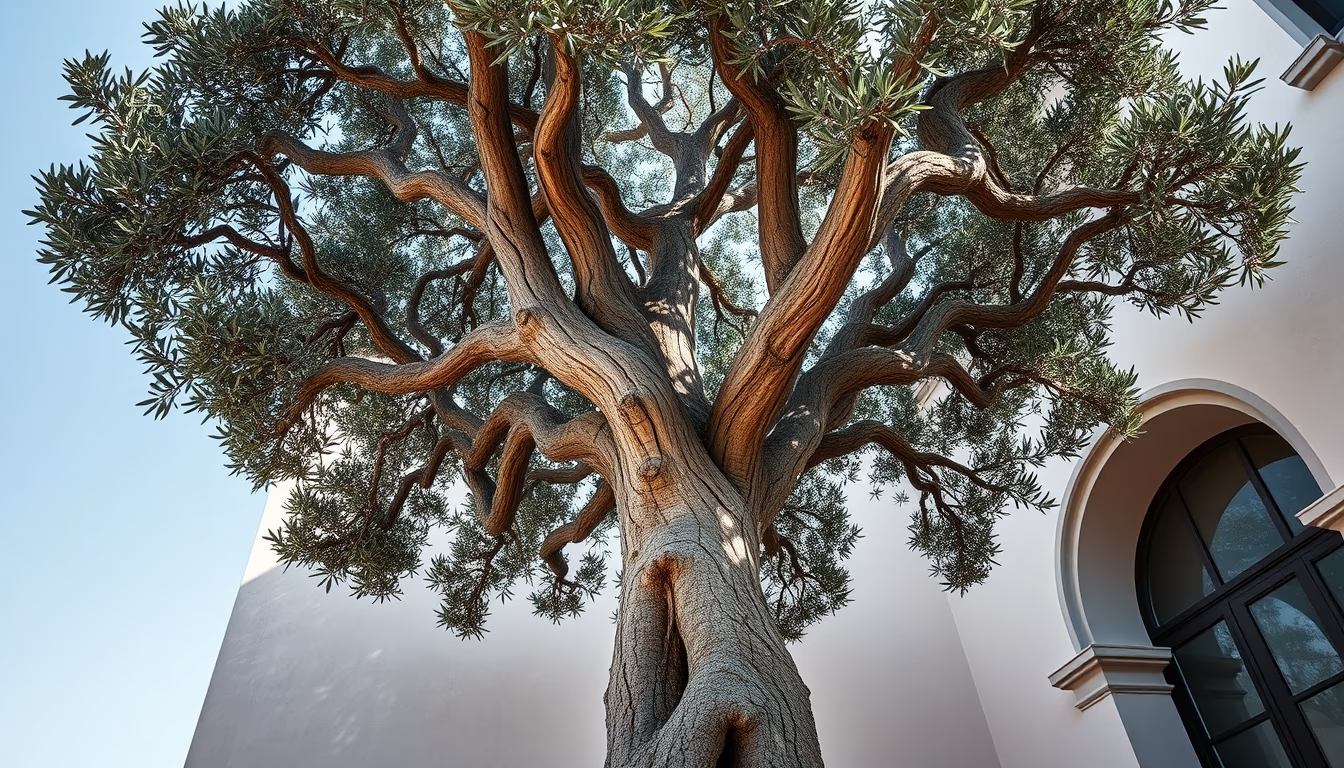
Ancient olive tree with gnarled trunk, silent witness to centuries of Mediterranean history.
About this subject
Ancient olive trees are living monuments of the Mediterranean landscape, capable of living for thousands of years. Their twisted and hollow trunks result from extremely slow growth, adaptation to poor soils and constant winds, and regrowth after pruning or fires. Each year the trunk expands only a few millimeters, forming growth rings that are rarely continuous, since with age the tree tends to become hollow, making precise dating difficult.
Culturally, the olive tree symbolizes peace, wisdom, and endurance. In Greek mythology, Athena gifted the city of Athens the first olive tree, which can still be seen on the Acropolis. The oil extracted from its fruit is the base of the Mediterranean diet and has religious, cosmetic, and medicinal uses. Olive wood, dense and fibrous, is used in fine craftsmanship and carving.
Among the world's oldest olive trees are those on the Mount of Olives in Jerusalem (around 900 years old) and the Oliveira do Mouchão in Portugal, estimated at 3350 years. In Italy, the olive tree of Luras in Sardinia has radiocarbon dating around 3000 BC. These trees continue to produce fruit and olives, remaining productive even at advanced age.
The gnarled trunk of ancient olive trees is often subject of architectural photography, as its sculptural forms resemble natural sculptures. Each curve and cavity tells a story of survival through droughts, pests, and climate changes, making it an icon of resilience and longevity.
Frequently Asked Questions
How old can a ancient olive tree live?
Olive trees can live for thousands of years. Some of the oldest have estimated ages between 2000 and 4000 years, such as the Oliveira do Mouchão in Portugal at 3350 years.
Why do olive tree trunks become twisted and hollow?
Slow growth under harsh conditions (wind, poor soil), pruning, and regrowth over centuries produce twisted trunks. With age, the center rots due to fungal attacks, becoming hollow.
What does the olive tree symbolize culturally?
The olive tree symbolizes peace, wisdom, longevity, and resilience. In ancient Greece, the olive wreath was the ultimate prize in the Olympic Games. Its wood and oil have sacred and practical uses to this day.
Direct URL
https://pub-c7d6a6ea828543ac903a74a341ccb2e1.r2.dev/imagens/ancient-olive-tree-gnarled-trunk-architectural-photography-p12.avifHow to credit
Include a visible link back to UtilizAí. Copy one of the snippets below:
<a href="https://xn--utiliza-eza.com/en/midia/imagens/ancient-olive-tree-gnarled-trunk-architectural-photography-p12">Ancient olive tree gnarled trunk</a> by <a href="https://xn--utiliza-eza.com">UtilizAí</a>, licensed under <a href="https://creativecommons.org/licenses/by/4.0/">CC BY 4.0</a>.
[Ancient olive tree gnarled trunk](https://xn--utiliza-eza.com/en/midia/imagens/ancient-olive-tree-gnarled-trunk-architectural-photography-p12) by [UtilizAí](https://xn--utiliza-eza.com), CC BY 4.0
License: CC-BY-4.0