Amd ryzen processor
1344×768 · AVIF · CC BY 4.0
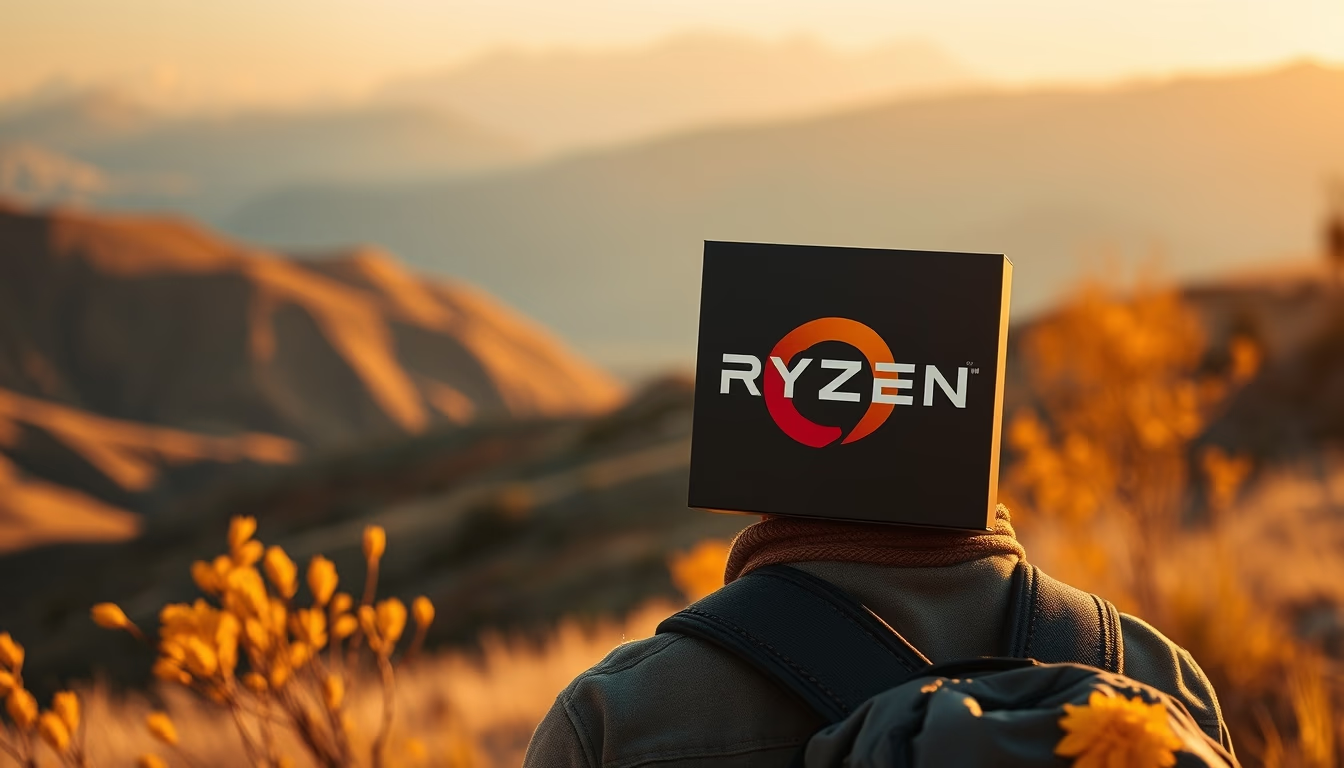
The AMD Ryzen processor revolutionized computing with its Zen architecture, delivering high multitasking performance and energy efficiency for gamers and content creators.
About this subject
Launched in 2017, the AMD Ryzen marked AMD's return to the top of the processor market, challenging Intel's dominance. Its Zen architecture brought significant improvements in performance per watt and core count, with models like Ryzen 5 and Ryzen 7 offering up to 8 cores and 16 threads for consumers. This allowed everyday users to perform heavy tasks such as video editing and 3D rendering without investing in expensive workstations.
The Zen architecture evolved through Zen 2, Zen 3, and Zen 4, each generation delivering IPC (instructions per cycle) and efficiency gains. The Ryzen 9 7950X, for example, achieves 16 cores and 32 threads, competing directly with Intel's top-tier offerings. For travel photographers, Ryzen processors power lightweight laptops like the ASUS ROG Zephyrus series, enabling RAW photo editing and fast exports on the go, thanks to high IPC and low power consumption.
Interestingly, AMD maintained the AM4 socket for several generations, easing upgrades without changing motherboards. Additionally, Ryzen processors with integrated Radeon graphics (G-series) provide sufficient graphical performance for casual gaming and media acceleration, useful for photographers needing a compact solution while traveling.
In the global market, Ryzen has become synonymous with value for money, especially in ultra-thin laptops and creator workstations. Its popularity also stems from supporting technologies like PCIe 4.0 and 5.0, which speed up large file transfers such as high-resolution photos, and DDR5 memory, reducing bottlenecks in video editing.
Frequently Asked Questions
What are the differences between AMD Ryzen Zen architectures?
Each Zen generation improved IPC and efficiency. Zen 1 (2017) introduced 8 cores, Zen 2 (2019) added PCIe 4.0 support, Zen 3 (2020) improved latency and single-thread performance, and Zen 4 (2022) introduced DDR5 and PCIe 5.0 with frequency boosts.
Is Ryzen better for photo and video editing?
Yes, especially high-core models (Ryzen 7 and 9). The high thread count accelerates rendering and export in software like Adobe Lightroom and DaVinci Resolve. For photographers, single-thread performance is also strong for RAW filters and adjustments.
Can I use an AMD Ryzen processor in a travel laptop?
Yes, many ultra-thin laptops like those with AMD Ryzen 7 5800U offer a good balance of performance and battery life. They are ideal for editing photos on the go due to low power consumption and capable integrated graphics.
Direct URL
https://pub-c7d6a6ea828543ac903a74a341ccb2e1.r2.dev/imagens/amd-ryzen-processor-travel-photography-p1.avifHow to credit
Include a visible link back to UtilizAí. Copy one of the snippets below:
<a href="https://xn--utiliza-eza.com/en/midia/imagens/amd-ryzen-processor-travel-photography-p1">Amd ryzen processor</a> by <a href="https://xn--utiliza-eza.com">UtilizAí</a>, licensed under <a href="https://creativecommons.org/licenses/by/4.0/">CC BY 4.0</a>.
[Amd ryzen processor](https://xn--utiliza-eza.com/en/midia/imagens/amd-ryzen-processor-travel-photography-p1) by [UtilizAí](https://xn--utiliza-eza.com), CC BY 4.0
License: CC-BY-4.0