Amd ryzen processor
1344×768 · AVIF · CC BY 4.0
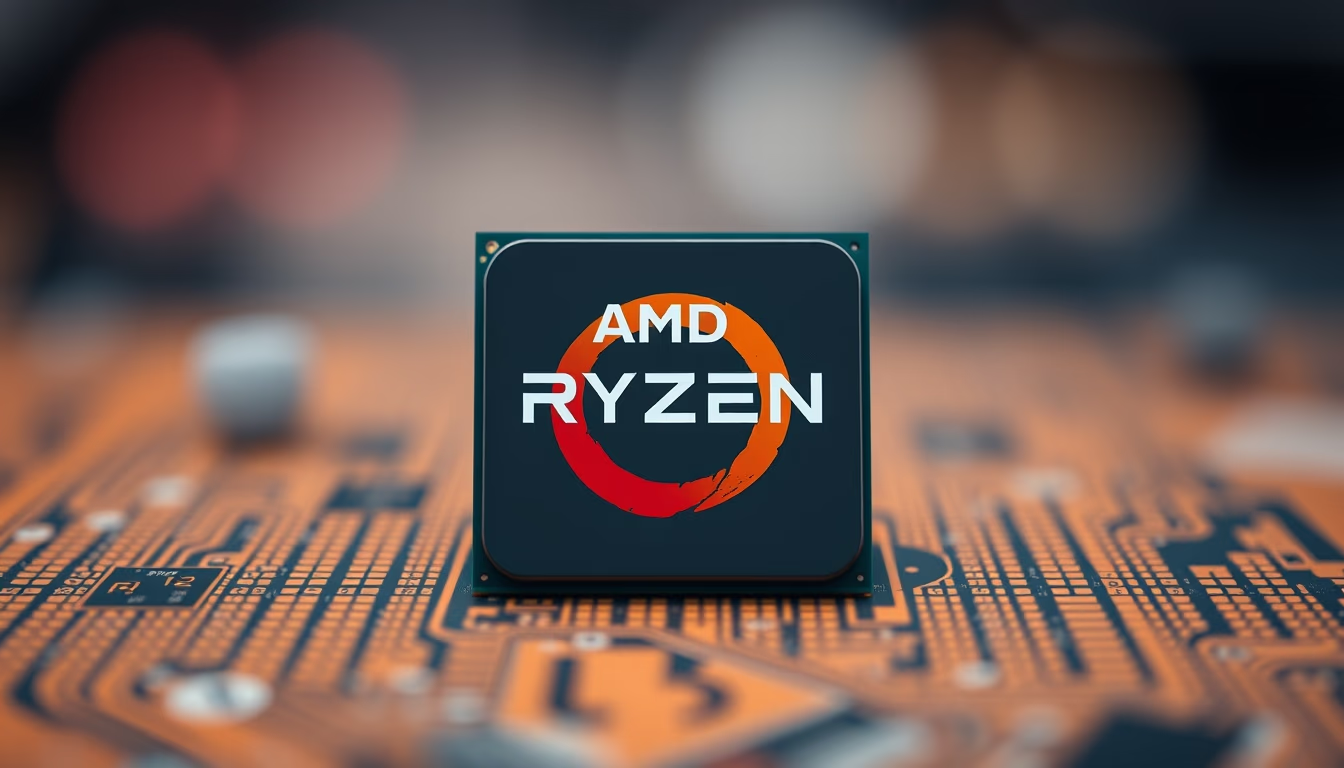
The AMD Ryzen processor revolutionized the CPU market with its Zen architecture, delivering high multi-core performance and energy efficiency.
About this subject
The AMD Ryzen series, launched in 2017, marked AMD's return to competitiveness in the high-performance processor market. Based on the Zen microarchitecture, the Ryzen line brought significant advances in core count, energy efficiency, and value for money. Early models like the Ryzen 7 1800X offered 8 cores and 16 threads, outperforming Intel competitors in multithreaded tasks. This was made possible by the modular Infinity Fabric design, which connects multiple chips (CCX) within the processor.
Over the years, AMD refined the architecture with Zen+, Zen 2, Zen 3, and Zen 4 generations. Each brought improvements in IPC (instructions per cycle), higher frequencies, and support for new technologies such as PCIe 4.0 and DDR5. The Ryzen 7 5800X3D, for example, introduced 3D V-Cache, stacking additional cache memory for notable gaming gains. The Ryzen line also includes series like Ryzen 5 (mid-range) and Ryzen 3 (entry-level), plus PRO variants for workstations.
Ryzen processors are manufactured by TSMC on advanced nodes like 7 nm and 5 nm, using the AM4 socket (backward compatible across several generations) and, more recently, AM5. They are widely used in desktops, laptops, and servers, directly competing with Intel Core and Xeon. In markets like Brazil, Ryzen is known for excellent cost-effectiveness, especially in gaming PCs and workstations.
Fun fact: The name 'Ryzen' was chosen to evoke 'horizon' and 'zen' (enlightenment), symbolizing a new era for AMD. In benchmark tests, Ryzen processors often lead in rendering and video editing tasks, cementing their reputation among content creators.
Frequently Asked Questions
What does the 'X' suffix mean in Ryzen models, like Ryzen 7 5800X?
The 'X' suffix indicates higher clock frequencies and support for technologies like Precision Boost Overdrive, offering better out-of-box performance. Non-X models have lower base clocks and are more budget-oriented.
What is the difference between Zen and Zen+ architectures?
Zen+ (2000 series) brought improvements in manufacturing process (12nm vs 14nm), higher clocks, and reduced cache latencies, resulting in roughly 3-5% performance gains over the original Zen.
Are Ryzen processors good for gaming?
Yes, especially models with 3D V-Cache (like 5800X3D) and newer generations (Zen 4). They offer competitive gaming performance, often excelling in titles that benefit from many cores.
Direct URL
https://pub-c7d6a6ea828543ac903a74a341ccb2e1.r2.dev/imagens/amd-ryzen-processor-tilt-shift-miniature-p11.avifHow to credit
Include a visible link back to UtilizAí. Copy one of the snippets below:
<a href="https://xn--utiliza-eza.com/en/midia/imagens/amd-ryzen-processor-tilt-shift-miniature-p11">Amd ryzen processor</a> by <a href="https://xn--utiliza-eza.com">UtilizAí</a>, licensed under <a href="https://creativecommons.org/licenses/by/4.0/">CC BY 4.0</a>.
[Amd ryzen processor](https://xn--utiliza-eza.com/en/midia/imagens/amd-ryzen-processor-tilt-shift-miniature-p11) by [UtilizAí](https://xn--utiliza-eza.com), CC BY 4.0
License: CC-BY-4.0