Amd ryzen processor
1344×768 · AVIF · CC BY 4.0
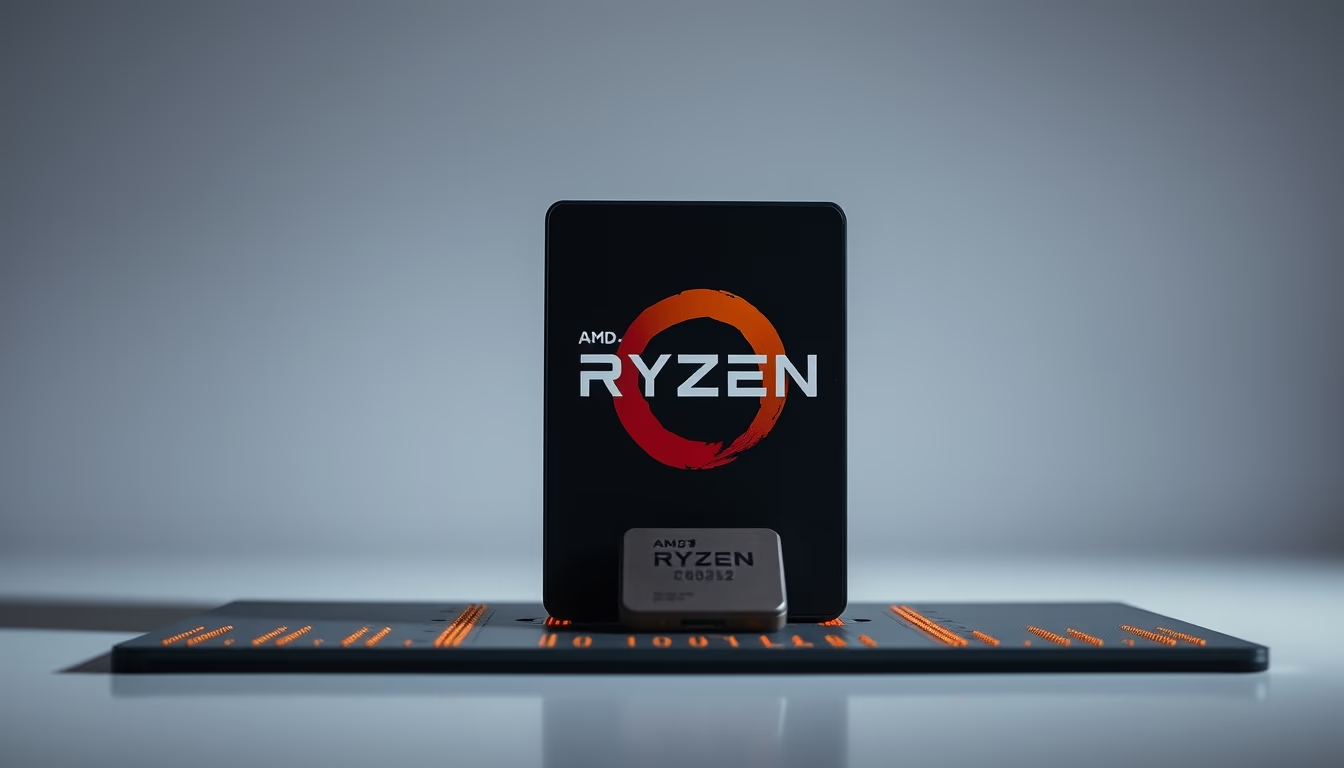
The AMD Ryzen processor revolutionized the market with Zen architecture, accessible multi-core performance, and strong competition since 2017.
About this subject
The AMD Ryzen line, launched in March 2017, marked AMD's return to the top of the processor market. Based on the Zen microarchitecture, the Ryzen series brought a significant leap in performance per watt and higher core counts than Intel's offerings at similar price points. The first model, Ryzen 7 1800X, offered 8 cores and 16 threads, which was unprecedented for consumer premium CPUs at the time.
The Zen architecture was developed under the leadership of Chief Engineer Lisa Su, who became AMD's CEO in 2014. The project focused on energy efficiency and modular design, allowing chips to scale from laptops to servers. The second generation (Zen+) refined manufacturing processes, while the third (Zen 2) introduced a chiplet design, separating compute cores from memory and I/O controllers.
With Zen 3 in 2020, AMD achieved leadership in single-thread performance and gaming. Models like the Ryzen 5 5600X and Ryzen 9 5950X became benchmarks. Currently, the Ryzen 7000 series (Zen 4) uses the AM5 socket and DDR5 memory, along with PCIe 5.0 support. The long-lasting backward compatibility of the AM4 socket was also a key differentiator, allowing upgrades without changing motherboards.
In the global market, Ryzen intensified competition, driving down prices and accelerating CPU innovations. AMD's desktop market share estimated above 40% in 2023, fueled by the Ryzen line. For data centers, EPYC processors, derived from the same architecture, directly compete with Intel's solutions.
Frequently Asked Questions
What does 'Ryzen' mean and why did AMD choose that name?
Ryzen is a name created by AMD to evoke 'rising' and 'horizon', symbolizing the company's resurgence in the processor market. It was trademarked in 2016 and launched in 2017.
What is the difference between Ryzen, Athlon, and EPYC?
Ryzen is for consumers (desktops and laptops), Athlon is the budget line with fewer cores, and EPYC is for servers and data centers, offering more cores and ECC memory support.
Is the Ryzen 7 7800X3D worth it for gaming?
Yes, the Ryzen 7 7800X3D uses 3D V-Cache technology, adding an extra layer of L3 cache to improve performance in games that rely on fast memory access. It is considered one of the best gaming processors available.
Direct URL
https://pub-c7d6a6ea828543ac903a74a341ccb2e1.r2.dev/imagens/amd-ryzen-processor-studio-still-life-p7.avifHow to credit
Include a visible link back to UtilizAí. Copy one of the snippets below:
<a href="https://xn--utiliza-eza.com/en/midia/imagens/amd-ryzen-processor-studio-still-life-p7">Amd ryzen processor</a> by <a href="https://xn--utiliza-eza.com">UtilizAí</a>, licensed under <a href="https://creativecommons.org/licenses/by/4.0/">CC BY 4.0</a>.
[Amd ryzen processor](https://xn--utiliza-eza.com/en/midia/imagens/amd-ryzen-processor-studio-still-life-p7) by [UtilizAí](https://xn--utiliza-eza.com), CC BY 4.0
License: CC-BY-4.0