Amd ryzen processor
1344×768 · AVIF · CC BY 4.0
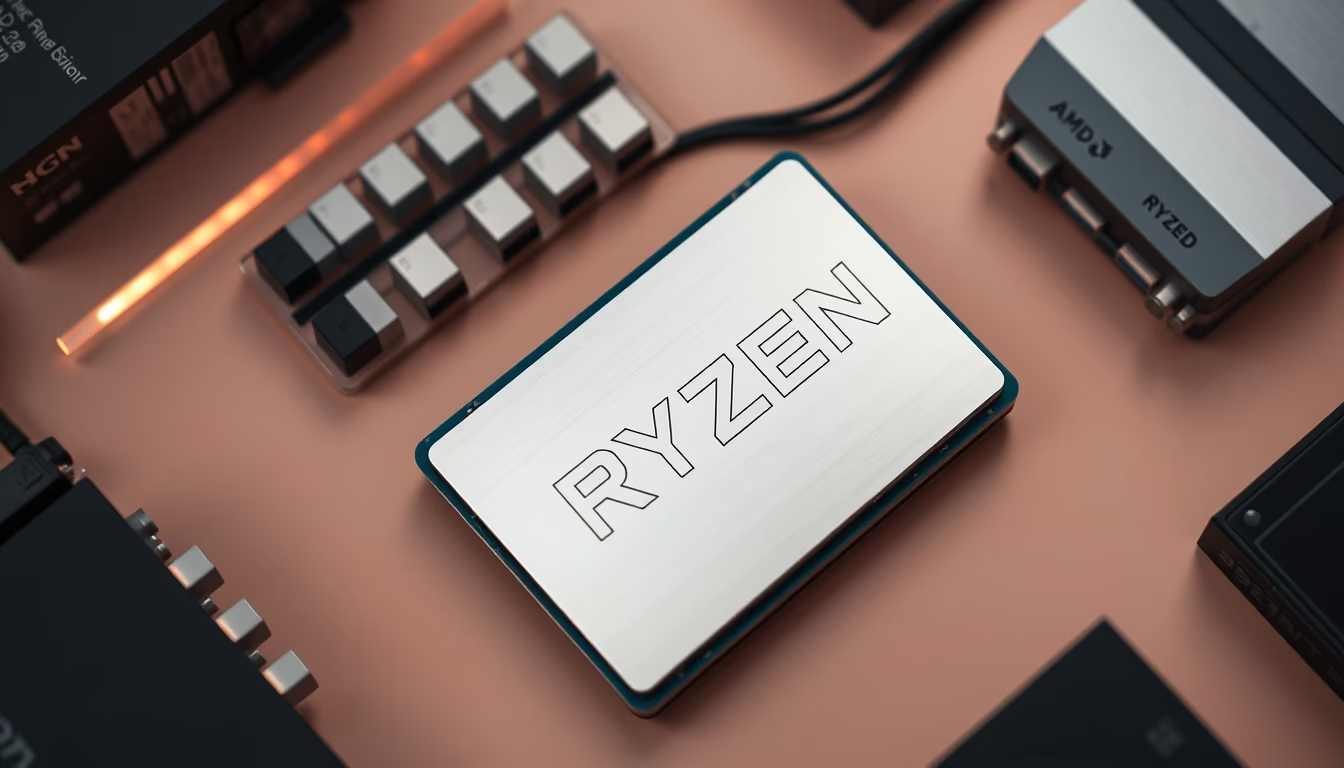
AMD Ryzen processor, Zen architecture that revolutionized the CPU market with multicore performance and energy efficiency.
About this subject
The AMD Ryzen processor family launched in 2017 with the Zen microarchitecture, marking AMD's return to competitiveness in the high-performance CPU segment. Developed under the leadership of engineer Lisa Su, the Ryzen 1000 series offered up to 8 cores and 16 threads on the AM4 socket, directly challenging Intel Core processors of the time. The innovation came from the CCX (Core Complex) module design connected by the Infinity Fabric, a high-speed interconnect that enabled scalability and low latency.
Each subsequent generation brought significant advances: Zen+ (Ryzen 2000) refined lithographic processes, Zen 2 (Ryzen 3000) introduced the chiplet design and PCIe 4.0 support, and Zen 3 (Ryzen 5000) unified the CCX to reduce inter-core latency, yielding major gains in gaming and professional applications. The Ryzen lineup ranges from entry-level Athlon and Ryzen 3 models to Ryzen 9 and Threadripper for workstations, all supporting overclocking and DDR4 memory (and later DDR5 in the 7000 series).
The impact of Ryzen on the market has been profound. They forced Intel to increase core counts in its Core i5/i7/i9 lines and lower prices, benefiting consumers. AMD also maintained AM4 socket compatibility across multiple generations, allowing upgrades without motherboard replacement. In 2023, the Ryzen 7000 series with Zen 4 architecture and TSMC's 5nm process solidified leadership in energy efficiency and single-thread performance, competing directly with Intel's 13th-gen Core processors.
Frequently Asked Questions
What does Ryzen mean in AMD's processor lineup?
Ryzen is AMD's main brand of high-performance processors based on the Zen architecture. It replaced the FX line and directly competes with Intel Core. Models range from Ryzen 3 (entry-level) to Ryzen 9 and Threadripper (high-end).
What are the main differences between Ryzen generations?
Each generation brought microarchitecture and manufacturing improvements. Zen 1 (Ryzen 1000) introduced modular design; Zen 2 (Ryzen 3000) chiplet and PCIe 4.0; Zen 3 (Ryzen 5000) unified the CCX and reduced latency; Zen 4 (Ryzen 7000) moved to 5nm with DDR5 and PCIe 5.0 support.
Are Ryzen processors good for gaming?
Yes, especially from Zen 3 onward, which matched or outperformed Intel in single-thread gaming performance. Models like the Ryzen 5 5600X and Ryzen 7 5800X3D are popular among gamers due to high clock speeds and generous L3 cache.
Direct URL
https://pub-c7d6a6ea828543ac903a74a341ccb2e1.r2.dev/imagens/amd-ryzen-processor-isometric-flat-lay-p9.avifHow to credit
Include a visible link back to UtilizAí. Copy one of the snippets below:
<a href="https://xn--utiliza-eza.com/en/midia/imagens/amd-ryzen-processor-isometric-flat-lay-p9">Amd ryzen processor</a> by <a href="https://xn--utiliza-eza.com">UtilizAí</a>, licensed under <a href="https://creativecommons.org/licenses/by/4.0/">CC BY 4.0</a>.
[Amd ryzen processor](https://xn--utiliza-eza.com/en/midia/imagens/amd-ryzen-processor-isometric-flat-lay-p9) by [UtilizAí](https://xn--utiliza-eza.com), CC BY 4.0
License: CC-BY-4.0