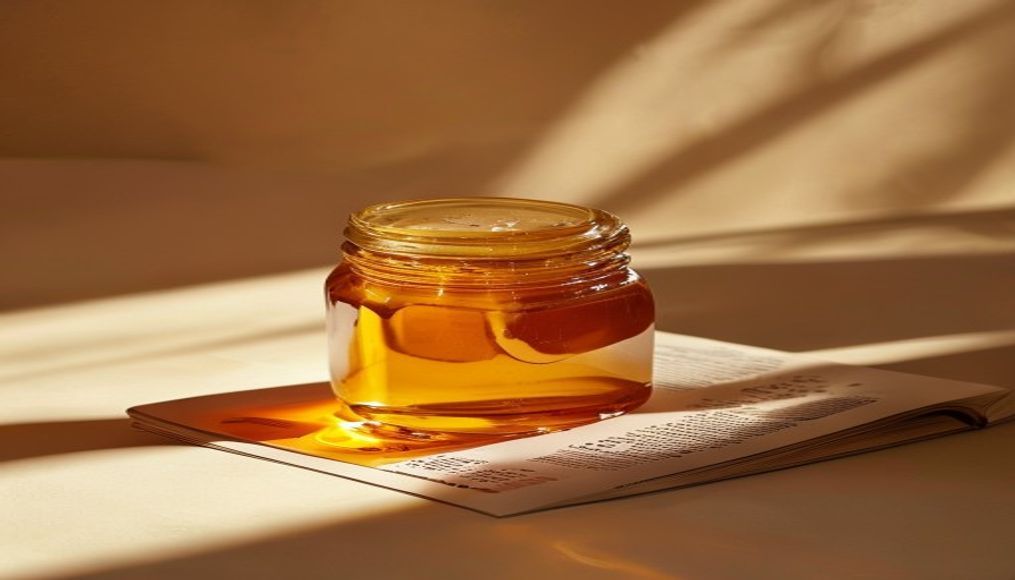
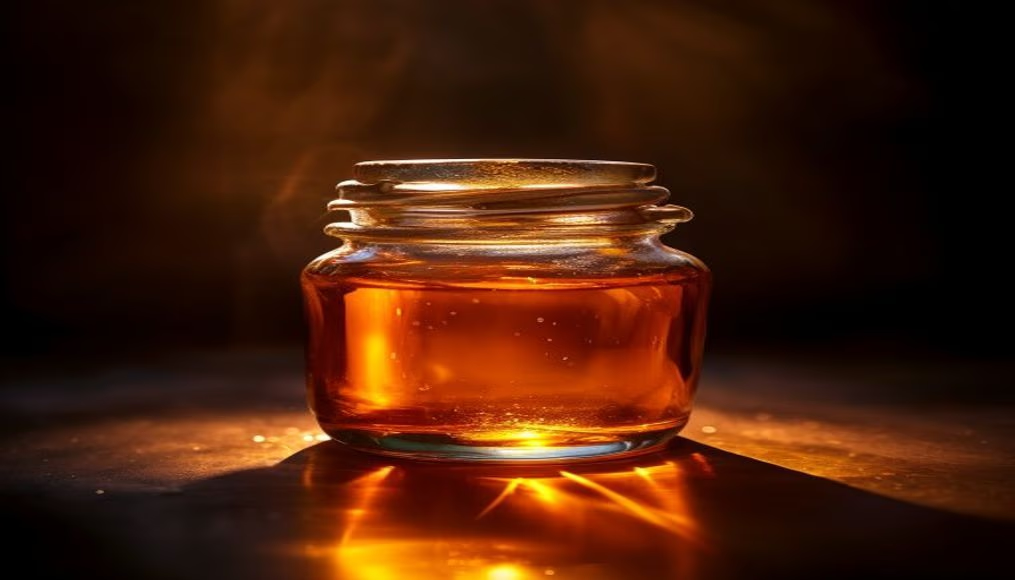
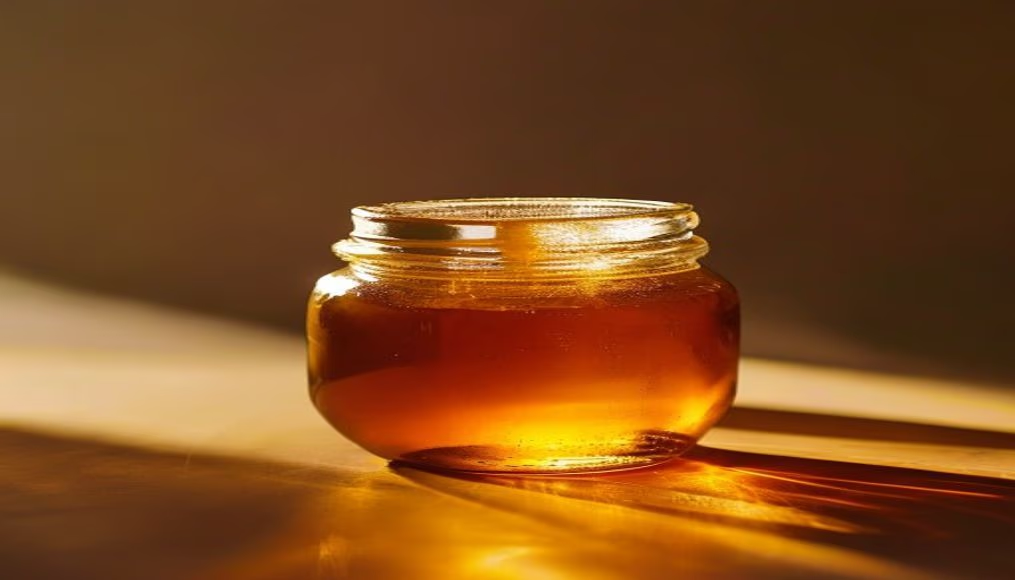
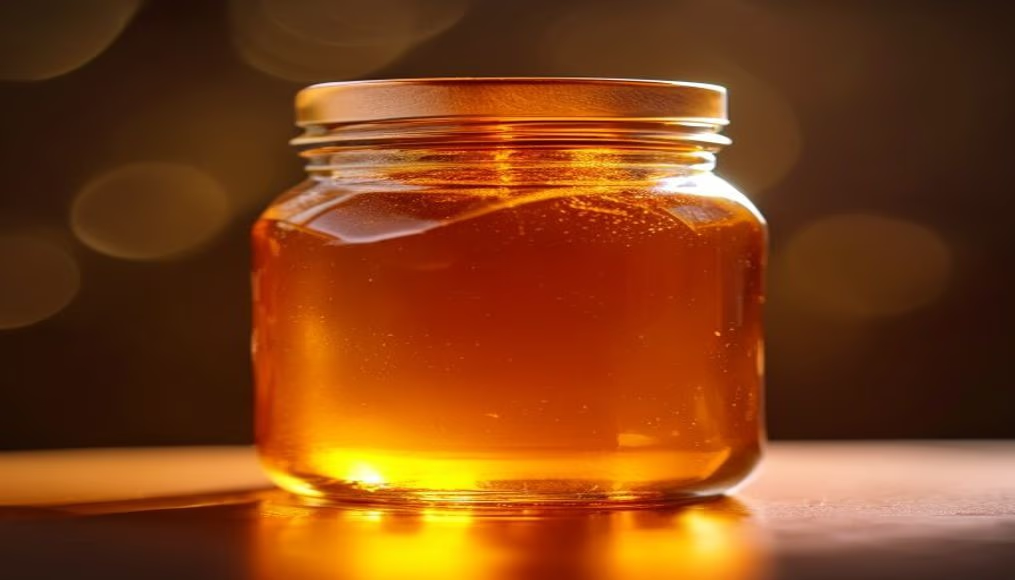
Amber resin insect inside
1344×768 · AVIF · CC BY 4.0
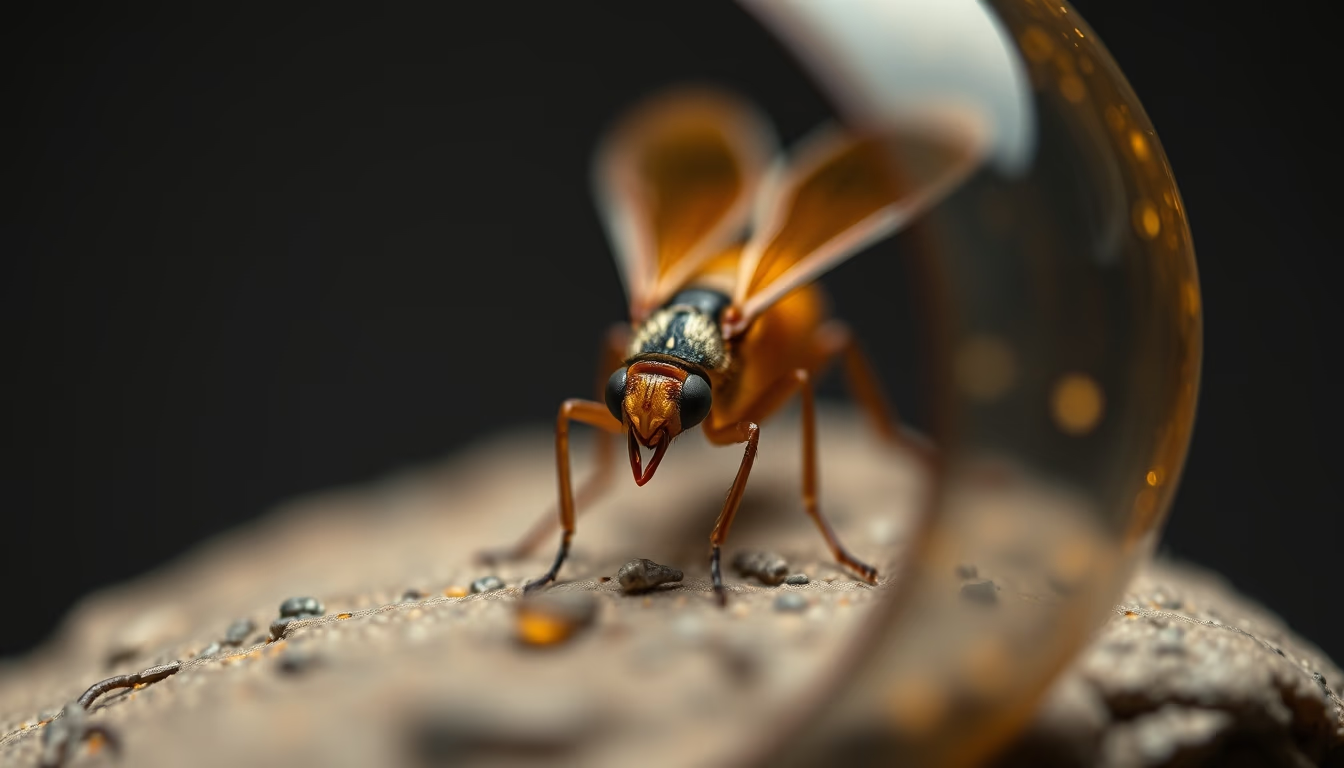
Amber with an insect preserved inside for millions of years, a natural fossil revealing details of prehistoric life.
About this subject
Preservation in amber is possible because resin acts as a dehydrating and antibacterial agent, preventing decay. Recent studies have used CT scanning to create 3D models of inclusions, revealing internal details. Amber is also used in jewelry, but pieces with insect inclusions are especially valued by collectors and scientists. The specimen depicted in the image has a perfectly visible insect, likely from the order Diptera or Hymenoptera, frozen in a natural pose.
Frequently Asked Questions
How does an insect get trapped in amber?
The insect is caught by the sticky resin of a tree, which flows over it. The resin hardens and over millions of years fossilizes, preserving the insect intact.
What is the average age of amber with insects?
It varies by origin. Baltic amber is about 44 million years old (Eocene), while Burmese amber can be up to 99 million years old (Cretaceous).
Is it possible to extract DNA from insects in amber?
So far, no viable DNA has been confirmed from amber inclusions, contrary to science fiction. Genetic material degrades over time, even in this environment.
Direct URL
https://pub-c7d6a6ea828543ac903a74a341ccb2e1.r2.dev/imagens/amber-resin-insect-inside-tilt-shift-miniature-p11.avifHow to credit
Include a visible link back to UtilizAí. Copy one of the snippets below:
<a href="https://xn--utiliza-eza.com/en/midia/imagens/amber-resin-insect-inside-tilt-shift-miniature-p11">Amber resin insect inside</a> by <a href="https://xn--utiliza-eza.com">UtilizAí</a>, licensed under <a href="https://creativecommons.org/licenses/by/4.0/">CC BY 4.0</a>.
[Amber resin insect inside](https://xn--utiliza-eza.com/en/midia/imagens/amber-resin-insect-inside-tilt-shift-miniature-p11) by [UtilizAí](https://xn--utiliza-eza.com), CC BY 4.0
License: CC-BY-4.0