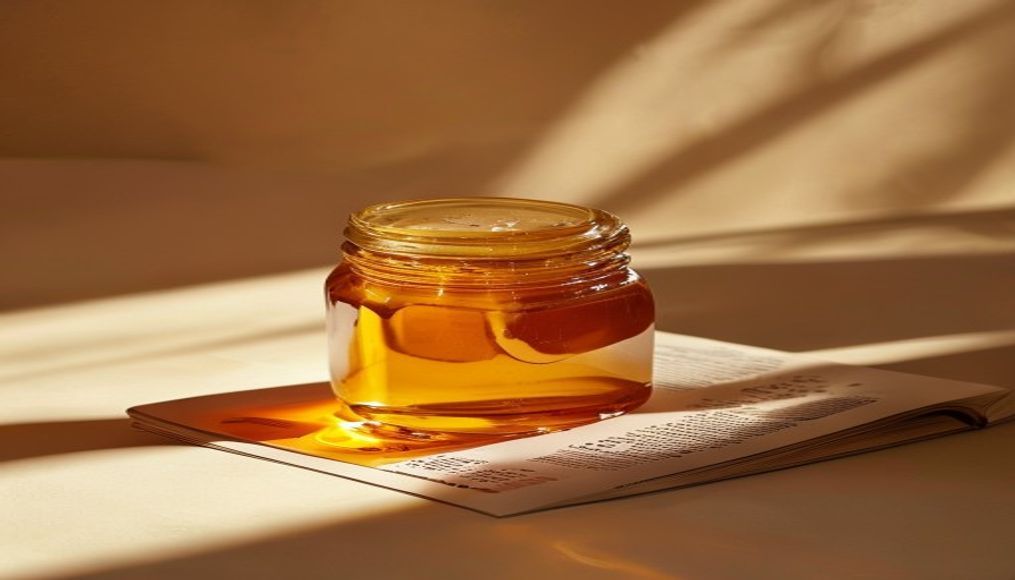
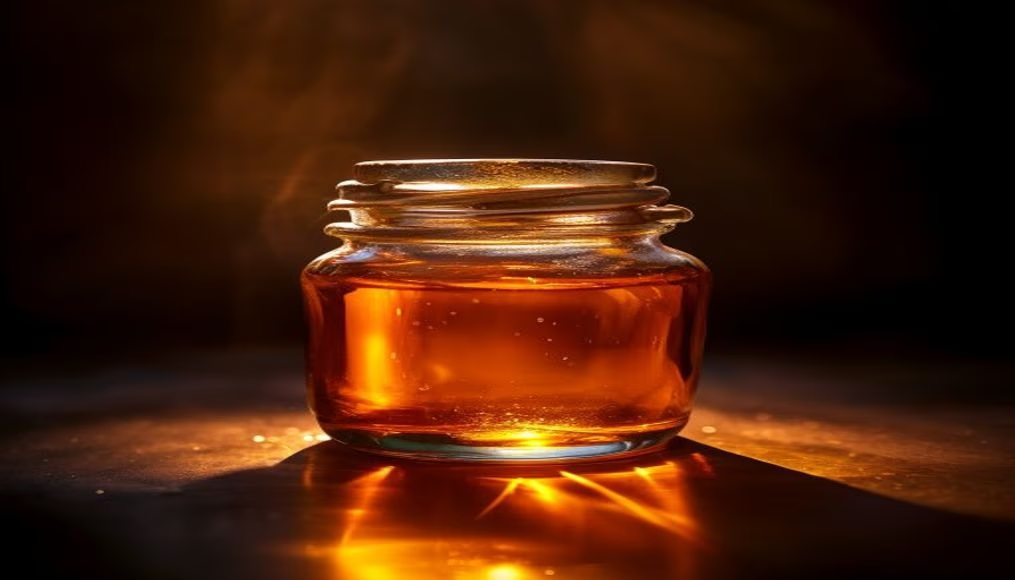
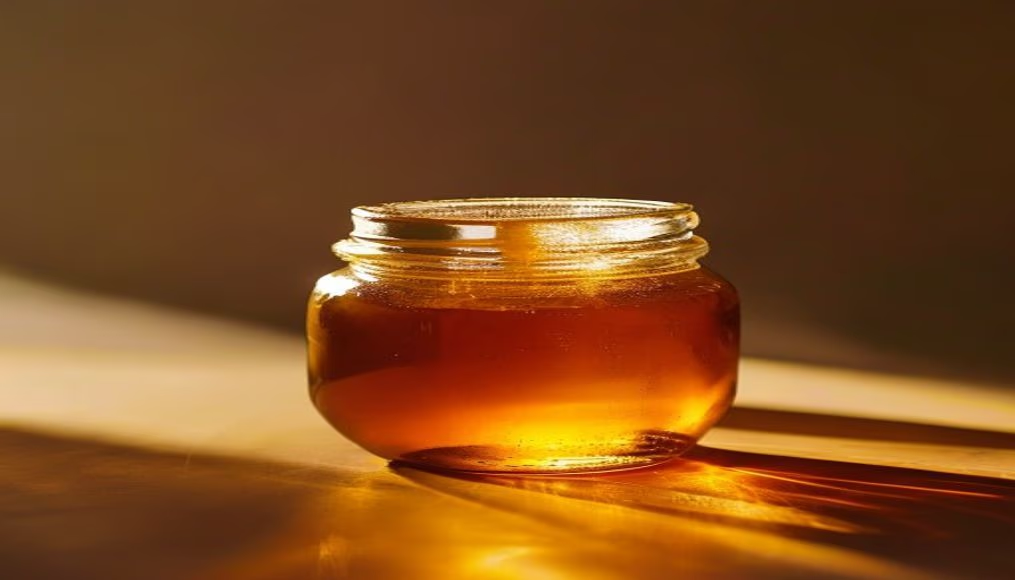
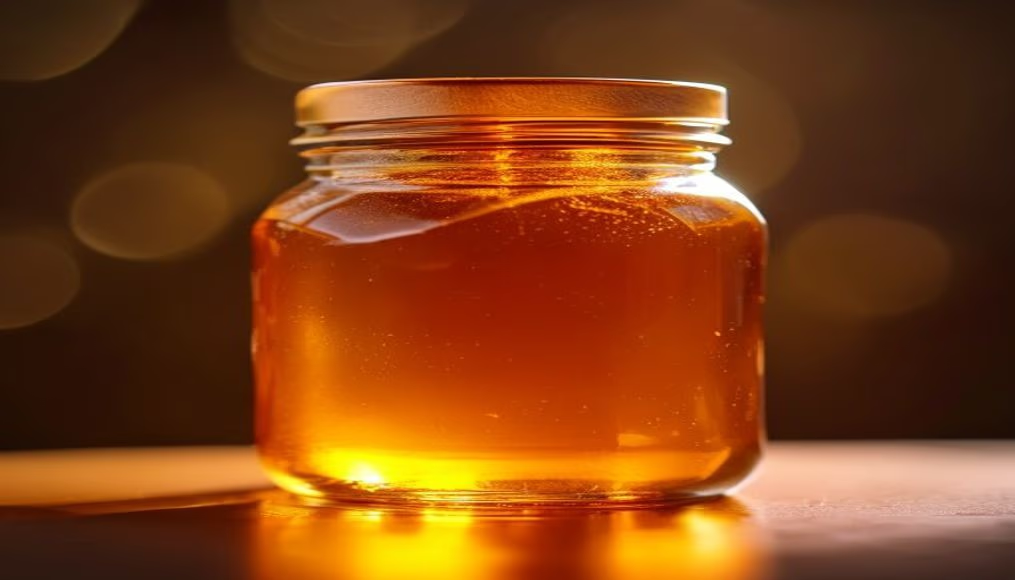
Amber resin insect inside
1344×768 · AVIF · CC BY 4.0
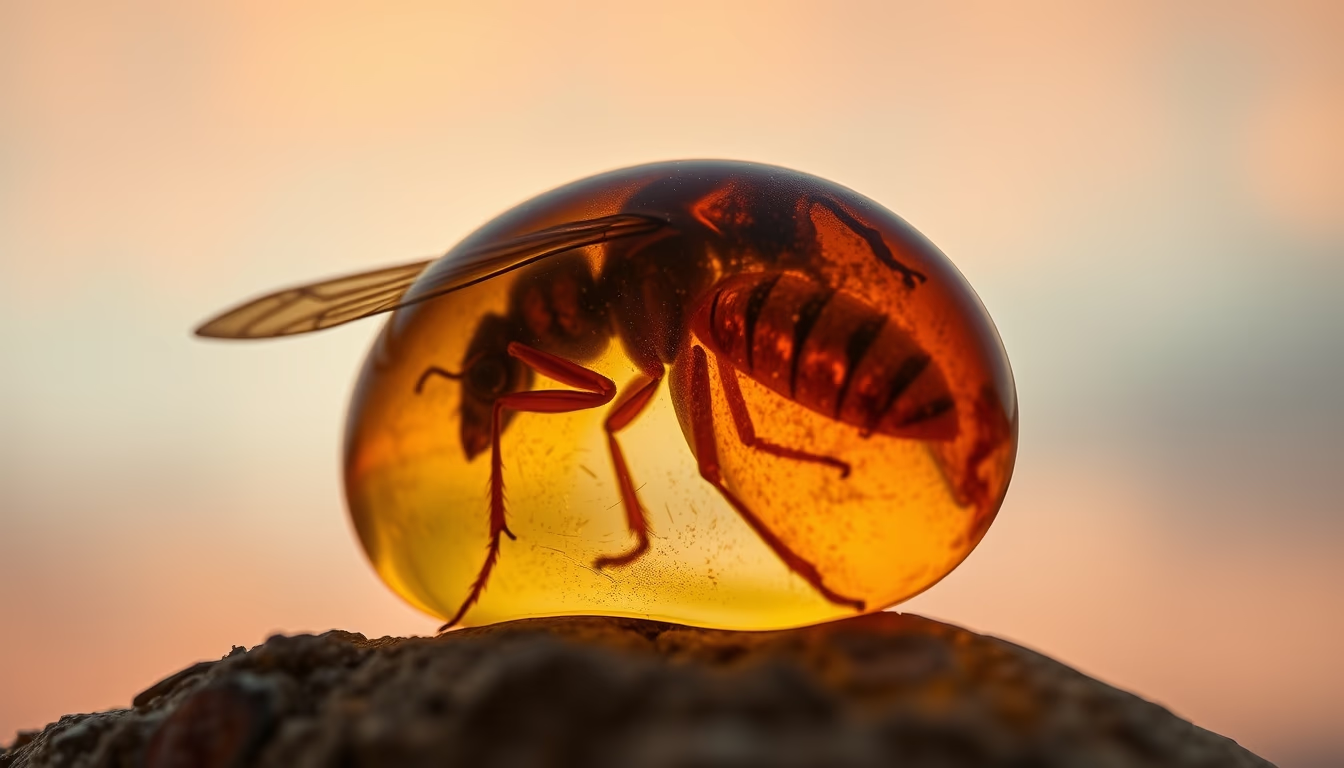
Amber is fossilized tree resin that often preserves insects and other organisms inside, providing a window into the past.
About this subject
Amber is fossilized tree resin originating from ancient coniferous trees that lived millions of years ago, mainly during the Cretaceous and Eocene periods. When resin oozed from trunks and branches, it could trap small organisms such as insects, spiders, and even small vertebrates. Over time, burial and pressure caused the resin to polymerize and fossilize, becoming amber. This process can take tens of millions of years and requires specific conditions of pressure and lack of oxygen to preserve the details of inclusions.
Insects are caught in the sticky resin while alive or recently dead. The resin flows around the insect's body, preventing contact with air and slowing decomposition. Successive layers of resin cover the specimen, forming a protective capsule. During fossilization, volatile compounds evaporate and the resin polymerizes, becoming hard and stable. Amber color ranges from light yellow to dark brown, depending on chemical composition and impurities.
For paleontology, amber is an invaluable source of exceptionally preserved fossils, often including soft tissues, hair, and even intact cells. Famous examples include the mosquito from Jurassic Park, which inspired the fiction of DNA extraction, but also real discoveries such as a dinosaur tail with feathers found in Burmese amber. Major amber deposits with inclusions are located in the Baltic region, the Dominican Republic, and Myanmar. Each deposit has different ages and compositions: Baltic amber is about 40 million years old, while Burmese amber reaches 99 million years.
Besides its scientific value, amber is appreciated in jewelry and as a collectible. Some specimens contain air bubbles that preserve samples of ancient atmosphere, allowing studies of past air composition. Amber can also hold inclusions of plants, fungi, and even raindrops. Although not a true mineral due to its organic and amorphous nature, it is classified as a mineraloid and studied together with minerals because of its geological origin.
Frequently Asked Questions
How are insects preserved inside amber?
Insects become trapped in sticky tree resin. Over time, the resin hardens and fossilizes into amber, preserving the insect's details.
What is the typical age of amber with inclusions?
Inclusion amber is usually between 20 and 100 million years old. Burmese amber from Myanmar is one of the oldest known, around 99 million years.
Is amber considered a mineral?
Amber is classified as a mineraloid, an organic fossilized substance without crystalline structure, but it is often studied alongside minerals.
Direct URL
https://pub-c7d6a6ea828543ac903a74a341ccb2e1.r2.dev/imagens/amber-resin-insect-inside-long-exposure-p8.avifHow to credit
Include a visible link back to UtilizAí. Copy one of the snippets below:
<a href="https://xn--utiliza-eza.com/en/midia/imagens/amber-resin-insect-inside-long-exposure-p8">Amber resin insect inside</a> by <a href="https://xn--utiliza-eza.com">UtilizAí</a>, licensed under <a href="https://creativecommons.org/licenses/by/4.0/">CC BY 4.0</a>.
[Amber resin insect inside](https://xn--utiliza-eza.com/en/midia/imagens/amber-resin-insect-inside-long-exposure-p8) by [UtilizAí](https://xn--utiliza-eza.com), CC BY 4.0
License: CC-BY-4.0