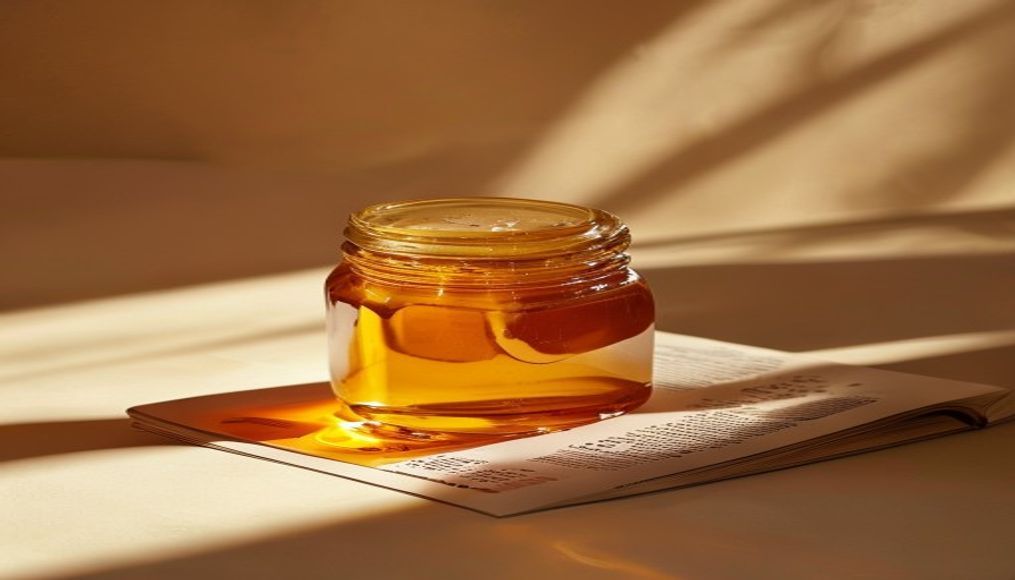
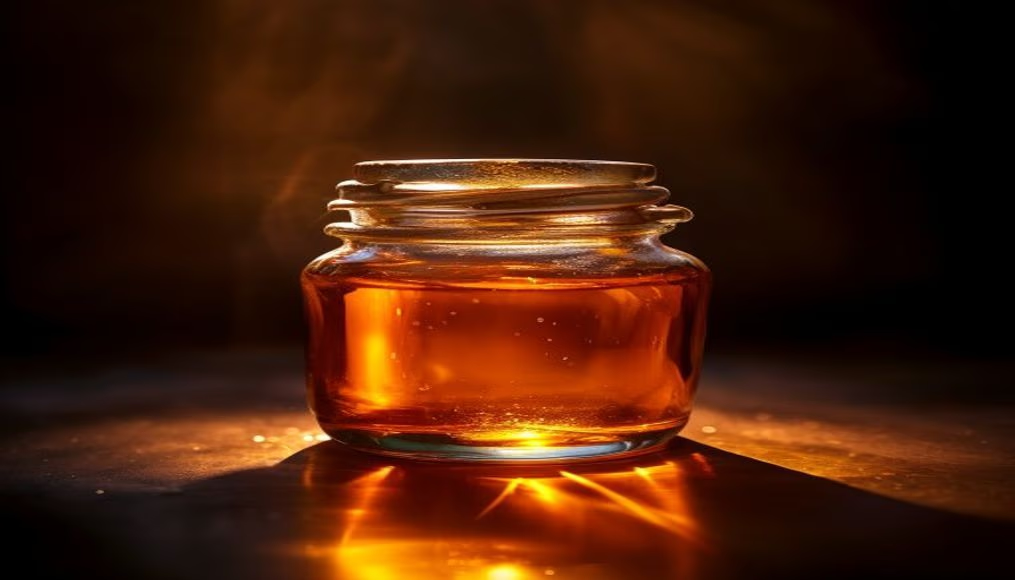
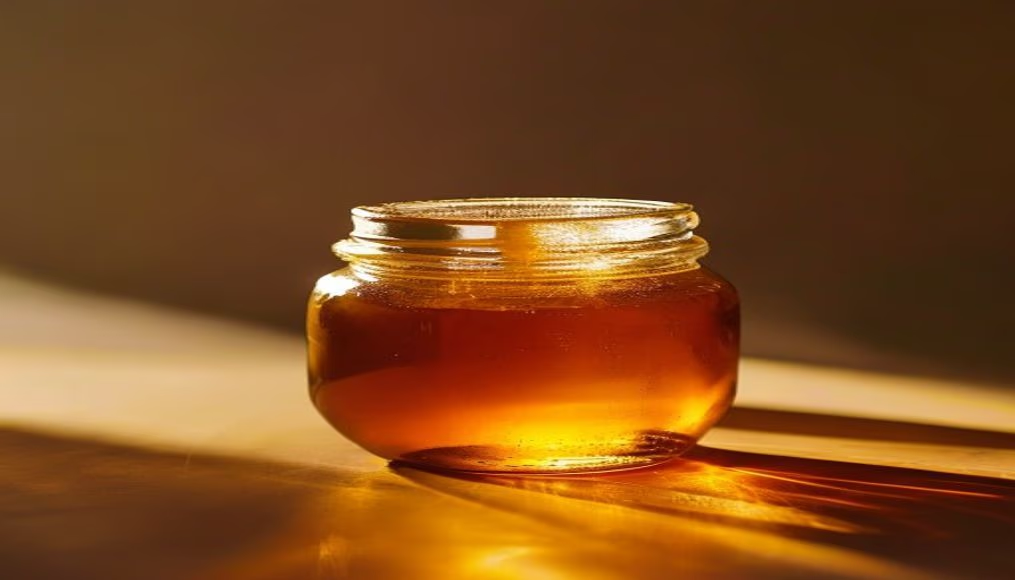
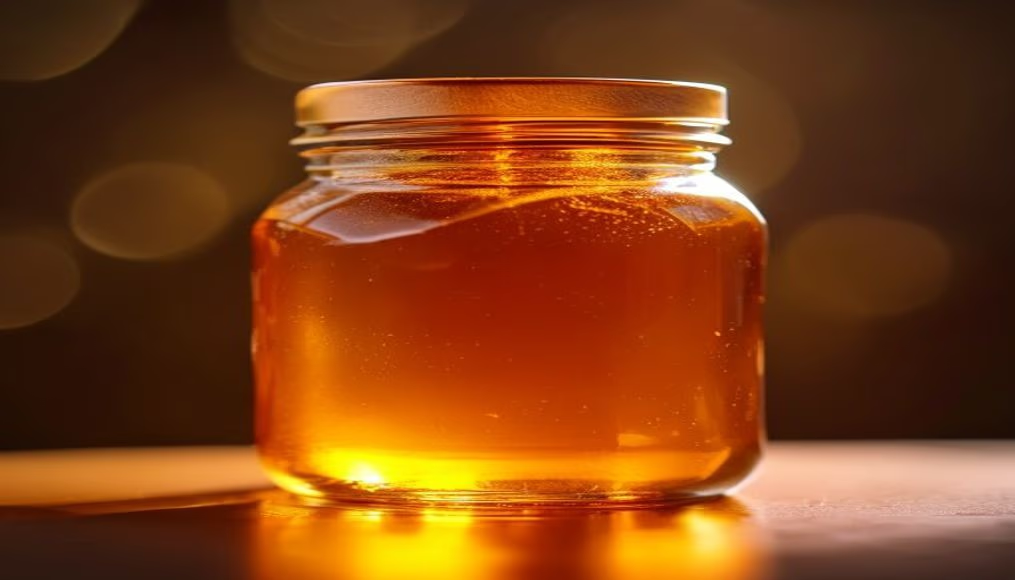
Amber resin insect inside
1344×768 · AVIF · CC BY 4.0
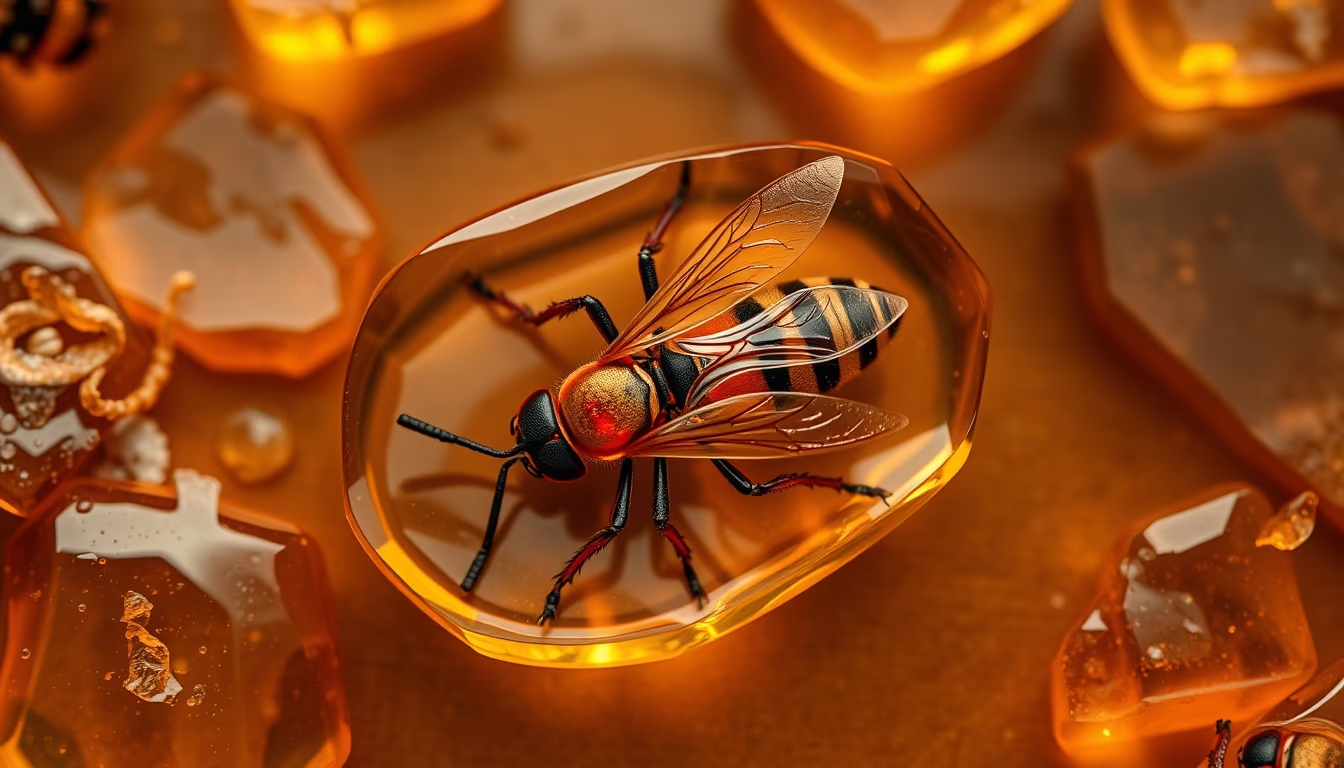
Amber with insect inclusion: fossilized resin that preserves organisms for millions of years, revealing details of ancient ecosystems.
About this subject
Amber is fossilized tree resin, produced by coniferous trees and some angiosperms millions of years ago. As the sticky resin flows down trunks, it can trap small organisms such as insects, spiders, and even tiny vertebrates. Over time, the resin polymerizes and hardens, forming a natural capsule that preserves delicate structures, wings, antennae, hairs, in three-dimensional detail. Major sources of amber with inclusions are the Baltic region (succinite amber, Eocene, about 44 million years old), the Dominican Republic (Miocene amber, 20 to 15 million years old), and Myanmar (Burmese amber, Cretaceous, about 99 million years old).
These inclusions are scientifically valuable because they provide direct information about the biodiversity and behavior of extinct organisms. For instance, amber has yielded fossils of mosquitoes with preserved blood, dinosaur feathers, and even a tiny dinosaur (a scansoriopterygid) in Myanmar. Dominican amber is famous for containing frogs, lizards, and invertebrates in excellent condition. Interestingly, amber color ranges from light yellow to reddish brown, influenced by impurities and oxidation; some pieces exhibit blue fluorescence under ultraviolet light.
The study of amber inclusions helps reconstruct paleoenvironments and ecological relationships between species. However, the authenticity of commercial pieces may be questioned, as modern imitations with artificially placed insects exist. Spectroscopy and microscopy analyses confirm the natural origin of the resin and inclusions. Amber is also used in jewelry and considered an organic gem, valued for its appearance and geological history.
Frequently Asked Questions
How does an insect become trapped in amber?
The insect is caught in sticky resin flowing from a tree. The resin envelops the animal and hardens, forming a protective layer. Over time, the resin fossilizes, preserving the insect in detail.
How old is amber with inclusions?
Ages vary by origin: Baltic amber is about 44 million years old (Eocene), Dominican amber is 20 to 15 million years old (Miocene), and Burmese amber from Myanmar is up to 99 million years old (Cretaceous).
Is amber with insects always genuine?
Not always. Imitations exist made with modern resin and artificially inserted insects. Authentication uses tests like spectroscopy, fluorescence, and analysis of natural inclusions.
Direct URL
https://pub-c7d6a6ea828543ac903a74a341ccb2e1.r2.dev/imagens/amber-resin-insect-inside-isometric-flat-lay-p9.avifHow to credit
Include a visible link back to UtilizAí. Copy one of the snippets below:
<a href="https://xn--utiliza-eza.com/en/midia/imagens/amber-resin-insect-inside-isometric-flat-lay-p9">Amber resin insect inside</a> by <a href="https://xn--utiliza-eza.com">UtilizAí</a>, licensed under <a href="https://creativecommons.org/licenses/by/4.0/">CC BY 4.0</a>.
[Amber resin insect inside](https://xn--utiliza-eza.com/en/midia/imagens/amber-resin-insect-inside-isometric-flat-lay-p9) by [UtilizAí](https://xn--utiliza-eza.com), CC BY 4.0
License: CC-BY-4.0