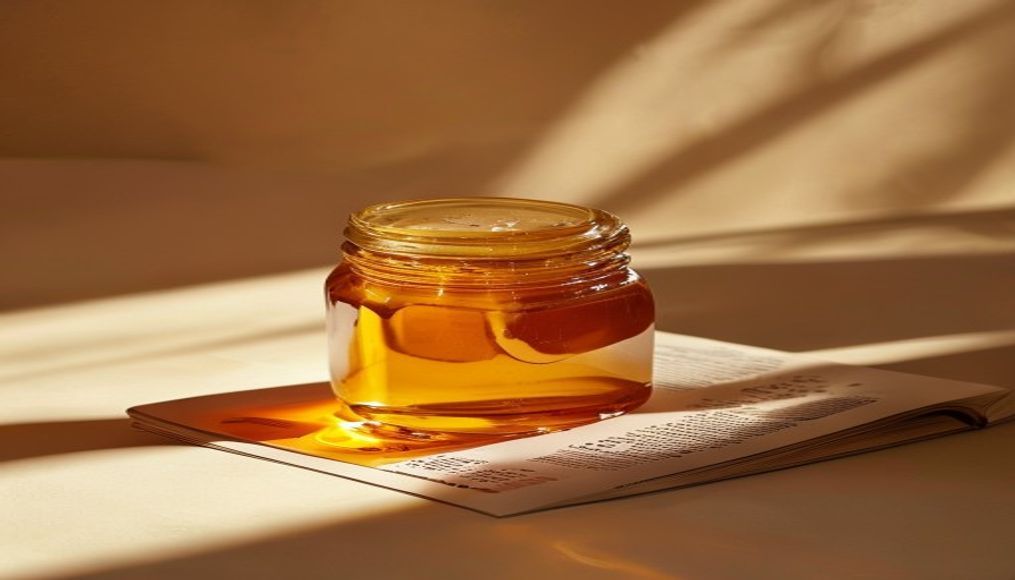
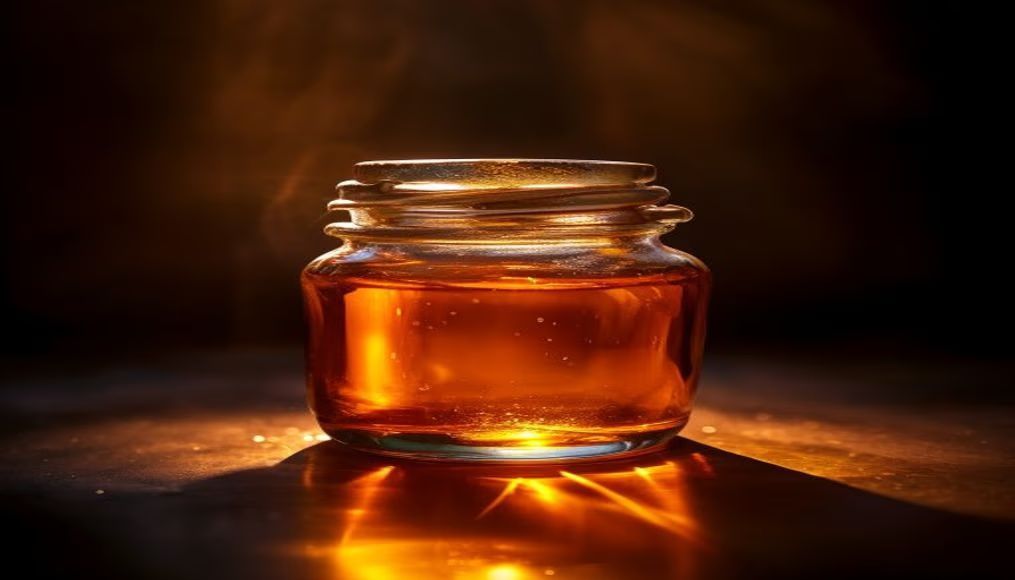
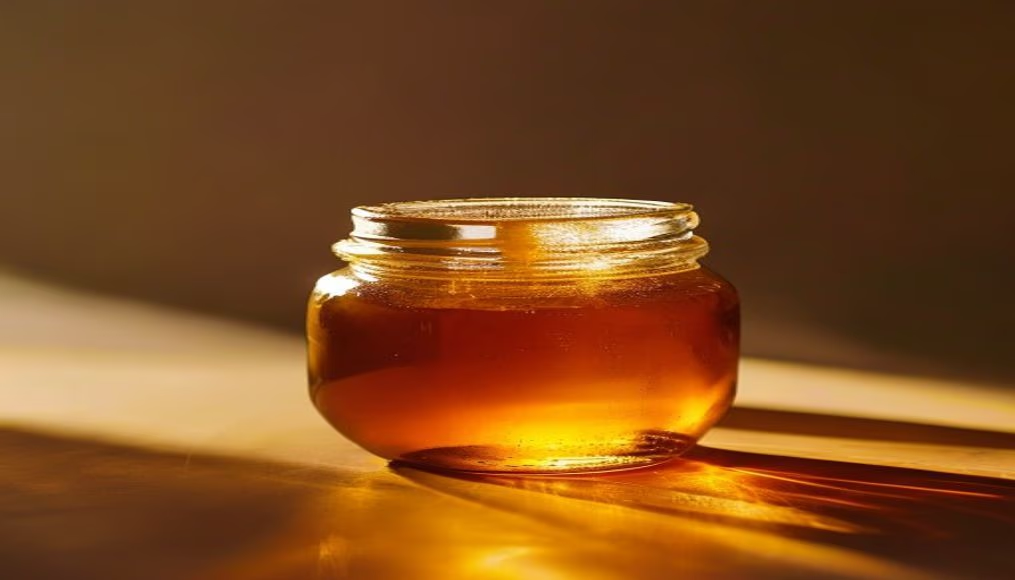
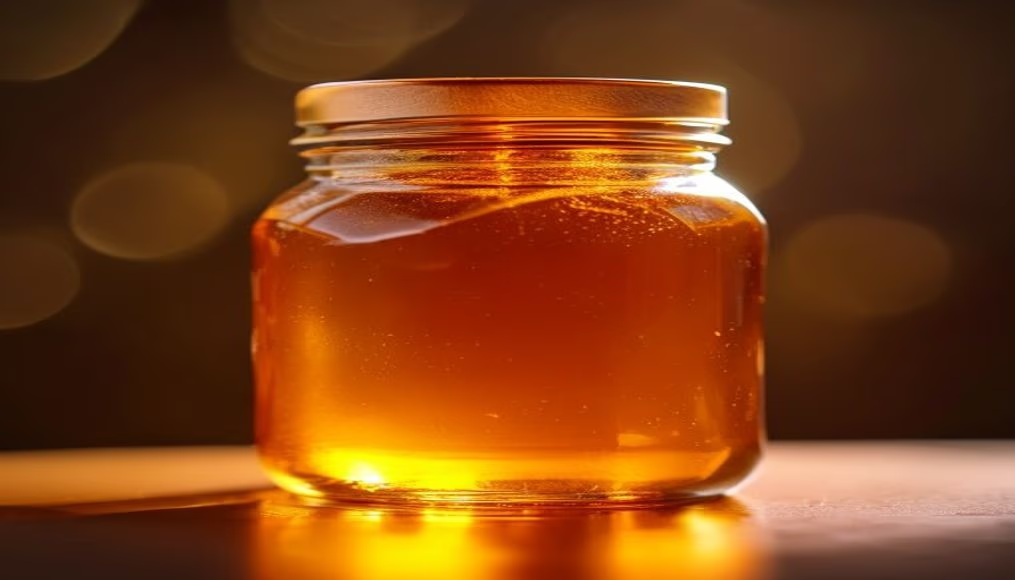
Amber resin insect inside
1344×768 · AVIF · CC BY 4.0
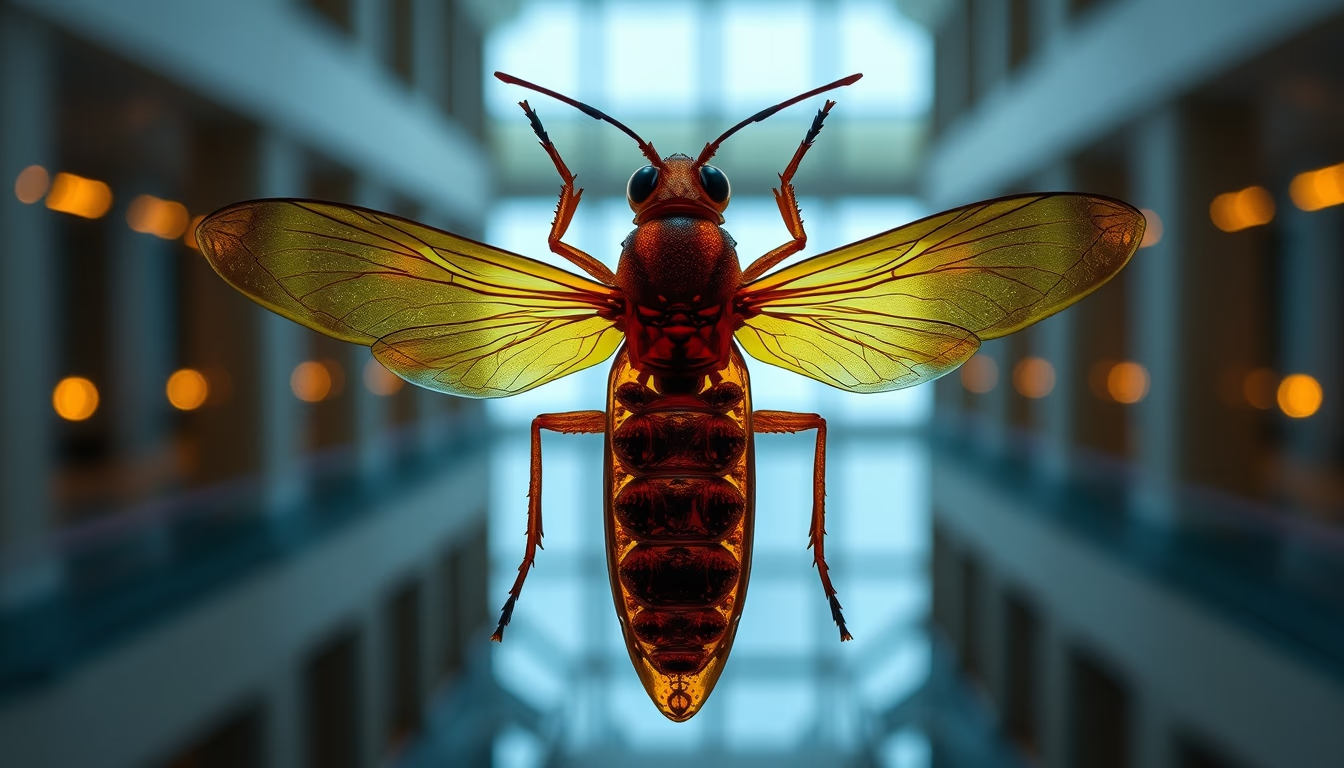
Amber is fossilized tree resin that preserves insects and other organisms for millions of years, forming true time capsules.
About this subject
Amber is a fossilized resin produced by coniferous trees and some angiosperms, which over millions of years undergoes polymerization and oxidation. When the resin flowed from tree trunks, it could trap small organisms such as insects, spiders, leaves, and even small vertebrates. Over time, the resin hardened and turned into amber, preserving the enclosed organisms in impressive three-dimensional detail.
The most famous amber deposits with inclusions are found in the Baltic region (approximately 40 million years old), the Dominican Republic (about 25 million years old), and Myanmar (up to 99 million years old). Burmese amber from the Upper Cretaceous is particularly valuable for containing fossils of dinosaurs and primitive birds. Amber color ranges from light yellow to reddish orange, depending on chemical composition and impurities.
Beyond its scientific value, amber has been used in jewelry and art since prehistoric times. The ability to preserve microscopic details, such as insect hairs and scales, allows paleontologists to study the evolution and behavior of extinct species. Amber inclusions have also revealed parasites, ancient pollination, and even fragmented DNA, although complete DNA recovery is extremely rare.
Interesting fact: amber is lightweight, has a resinous luster, and can contain trapped air bubbles that help reconstruct ancient atmospheres. It is one of the few fossilization types that faithfully preserve soft tissues.
Frequently Asked Questions
How does an insect become trapped in amber?
The insect is caught by sticky resin oozing from a tree. The resin slowly hardens, enveloping the insect and preventing decay. Over time, the resin fossilizes, preserving the insect.
What is the typical age of amber with insects?
Most amber with inclusions is between 25 and 40 million years old, but some deposits, such as those in Myanmar, can be up to 99 million years old, from the Cretaceous period.
Can amber contain dinosaur DNA?
No reliable evidence of dinosaur DNA preserved in amber exists. DNA fragments have been found in inclusions, but they are short and degraded, not viable for cloning as depicted in Jurassic Park.
Direct URL
https://pub-c7d6a6ea828543ac903a74a341ccb2e1.r2.dev/imagens/amber-resin-insect-inside-architectural-photography-p4.avifHow to credit
Include a visible link back to UtilizAí. Copy one of the snippets below:
<a href="https://xn--utiliza-eza.com/en/midia/imagens/amber-resin-insect-inside-architectural-photography-p4">Amber resin insect inside</a> by <a href="https://xn--utiliza-eza.com">UtilizAí</a>, licensed under <a href="https://creativecommons.org/licenses/by/4.0/">CC BY 4.0</a>.
[Amber resin insect inside](https://xn--utiliza-eza.com/en/midia/imagens/amber-resin-insect-inside-architectural-photography-p4) by [UtilizAí](https://xn--utiliza-eza.com), CC BY 4.0
License: CC-BY-4.0