Albatross gliding ocean
1344×768 · AVIF · CC BY 4.0
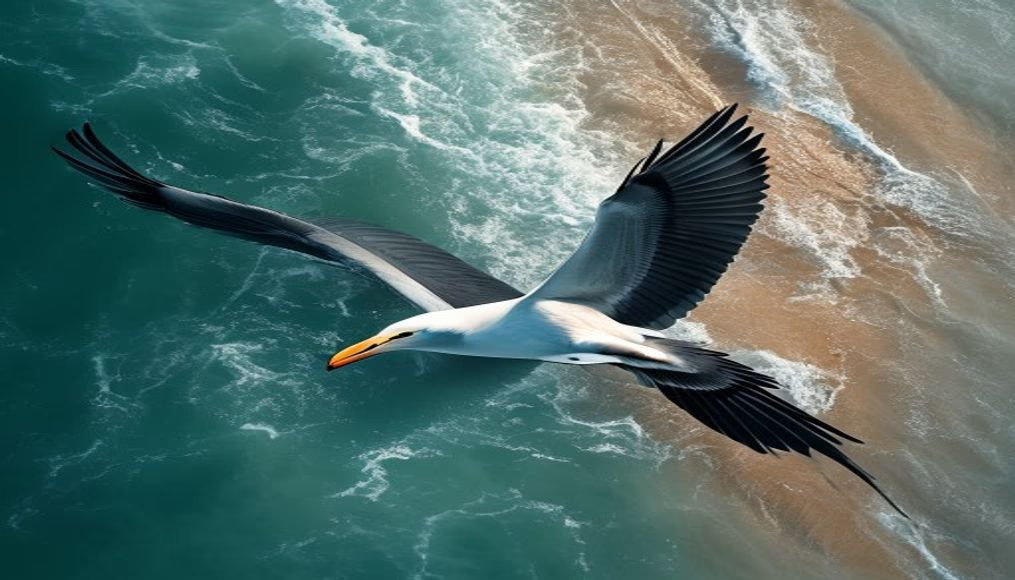
Albatross gliding over the ocean: discover the world's largest flying bird, its incredible wings, and conservation challenges.
About this subject
Albatrosses are seabirds in the family Diomedeidae, renowned for their exceptionally long and narrow wings, which can exceed 3.5 meters in span in the wandering albatross (Diomedea exulans). This adaptation enables highly efficient gliding flight, using ocean wind currents to travel thousands of kilometers with minimal energy expenditure. They spend most of their lives at sea, only coming ashore to breed on remote islands.
Albatrosses are found mainly in the Southern Hemisphere, especially the Southern Ocean, though some species occur in the North Pacific. They feed on squid, fish, and krill, often following fishing vessels. A fascinating trait is their use of "dynamic soaring," which exploits wind gradients above waves to glide without flapping for hours.
These birds are monogamous and form long-lasting pairs, with elaborate courtship rituals including dances and calls. Reproduction is slow: most species lay a single egg every one or two years, and chicks take several months to fledge. This low reproductive rate makes populations vulnerable to accidental bycatch in fisheries, plastic pollution, and introduced predators on nesting islands.
Today, the International Union for Conservation of Nature (IUCN) lists several albatross species as threatened or vulnerable. Conservation efforts include measures to reduce incidental capture in longline fisheries, such as using tori lines and weighted lines, as well as eradicating rats and cats from breeding colonies. The albatross is a symbol of freedom and endurance, immortalized in poems like Samuel Taylor Coleridge's "The Rime of the Ancient Mariner."
Frequently Asked Questions
What is the largest species of albatross?
The wandering albatross (Diomedea exulans) is the largest, with a wingspan that can reach 3.7 meters. It is found in the Southern Ocean and subantarctic islands.
Why are albatrosses threatened with extinction?
Main threats include accidental bycatch in longline fisheries, ingestion of plastic, and predation by invasive species (rats, cats) on breeding colonies. Their slow reproductive rate also hampers population recovery.
Do albatrosses sleep while flying?
Yes, they likely sleep with one brain hemisphere at a time, a phenomenon called unihemispheric sleep. This allows them to continue flying while resting, essential for long ocean journeys.
Direct URL
https://pub-c7d6a6ea828543ac903a74a341ccb2e1.r2.dev/imagens/albatross-gliding-ocean-isometric-flat-lay-p2.avifHow to credit
Include a visible link back to UtilizAí. Copy one of the snippets below:
<a href="https://xn--utiliza-eza.com/en/midia/imagens/albatross-gliding-ocean-isometric-flat-lay-p2">Albatross gliding ocean</a> by <a href="https://xn--utiliza-eza.com">UtilizAí</a>, licensed under <a href="https://creativecommons.org/licenses/by/4.0/">CC BY 4.0</a>.
[Albatross gliding ocean](https://xn--utiliza-eza.com/en/midia/imagens/albatross-gliding-ocean-isometric-flat-lay-p2) by [UtilizAí](https://xn--utiliza-eza.com), CC BY 4.0
License: CC-BY-4.0