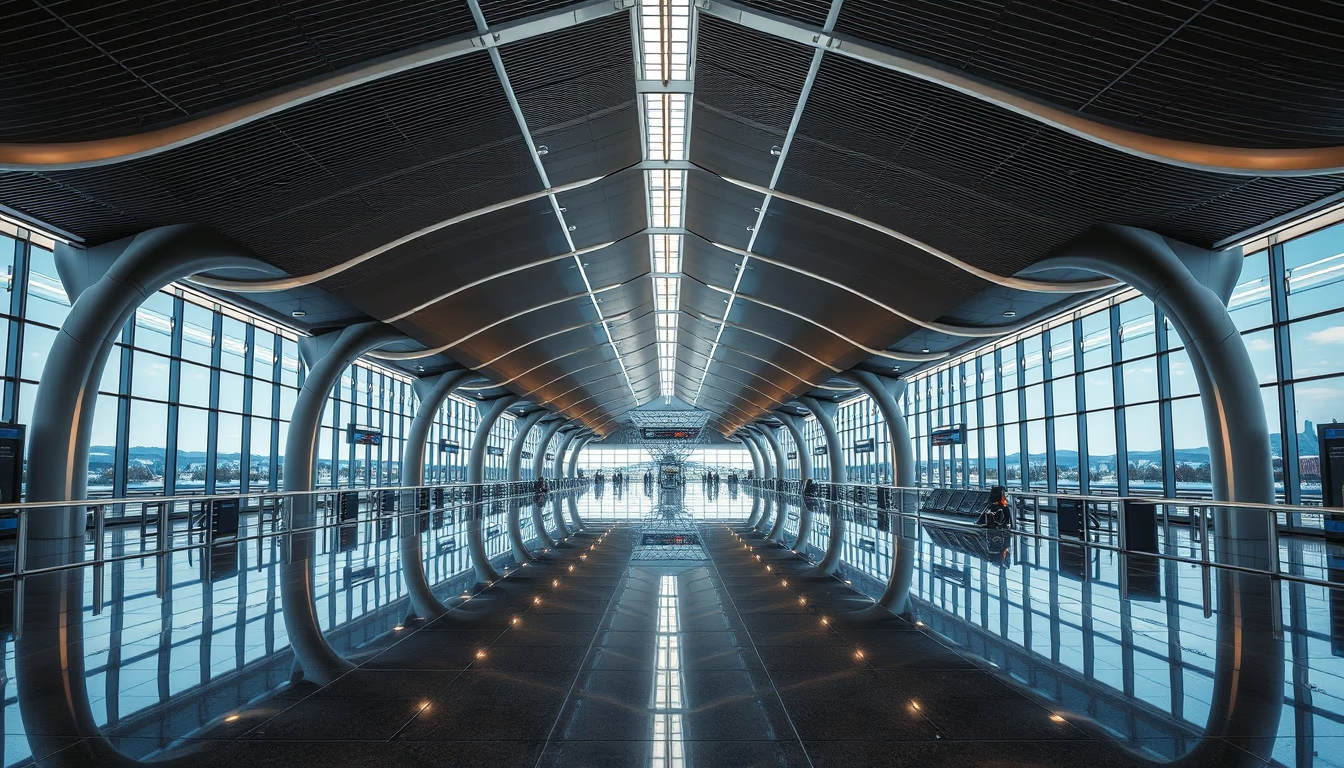
Airport terminal modern
1344×768 · AVIF · CC BY 4.0

Modern airport terminals combine innovative design, sustainability, and operational efficiency to provide comfort for travelers.
About this subject
Modern airport terminals have evolved significantly in recent decades, transforming from mere boarding points into true experience hubs. Inspired by architectural concepts such as transparency and integration with nature, projects like Singapore's Changi Airport and Istanbul International Airport have set new standards. The use of large skylights for natural lighting, intelligent climate control systems, and sustainable materials is increasingly common, reducing energy consumption and carbon footprint.
Functionality is also prioritized: modern terminals adopt layouts that minimize walking distances, intuitive digital signage, and process automation such as check-in and security. Integration with public transport, including trains and subways, is planned from the start, while leisure areas, shops, and restaurants offer entertainment and convenience. Notable examples include Hamad Airport in Qatar, with its indoor tropical garden, and Heathrow Airport, which invested in biophilic design terminals.
In Brazil, Brasília International Airport, after renovations, incorporated concepts of efficiency and comfort, but challenges remain in updating older terminals. The global trend points toward increasingly sustainable terminals, with certifications like LEED, that use technology to enhance the passenger experience, such as indoor navigation apps and robotic baggage carts. The future of airport terminals lies in personalization, where each traveler will have a journey tailored to their needs, thanks to sensors and artificial intelligence.
Frequently Asked Questions
What are the main features of a modern airport terminal?
Modern terminals prioritize sustainability (natural lighting, eco-friendly materials), operational efficiency (compact layout, automation), and passenger comfort (leisure areas, digital signage).
How does technology improve the experience in airport terminals?
Technology enables automated check-in and security, indoor navigation apps, robotic baggage carts, and monitoring systems to optimize passenger flow.
Which airport is an example of a sustainable modern terminal?
Hamad Airport in Qatar features biophilic design with an indoor garden and LEED certification, setting a benchmark in sustainability and comfort.
Direct URL
https://pub-c7d6a6ea828543ac903a74a341ccb2e1.r2.dev/imagens/airport-terminal-modern-national-geographic-style-p3.avifHow to credit
Include a visible link back to UtilizAí. Copy one of the snippets below:
<a href="https://xn--utiliza-eza.com/en/midia/imagens/airport-terminal-modern-national-geographic-style-p3">Airport terminal modern</a> by <a href="https://xn--utiliza-eza.com">UtilizAí</a>, licensed under <a href="https://creativecommons.org/licenses/by/4.0/">CC BY 4.0</a>.
[Airport terminal modern](https://xn--utiliza-eza.com/en/midia/imagens/airport-terminal-modern-national-geographic-style-p3) by [UtilizAí](https://xn--utiliza-eza.com), CC BY 4.0
License: CC-BY-4.0