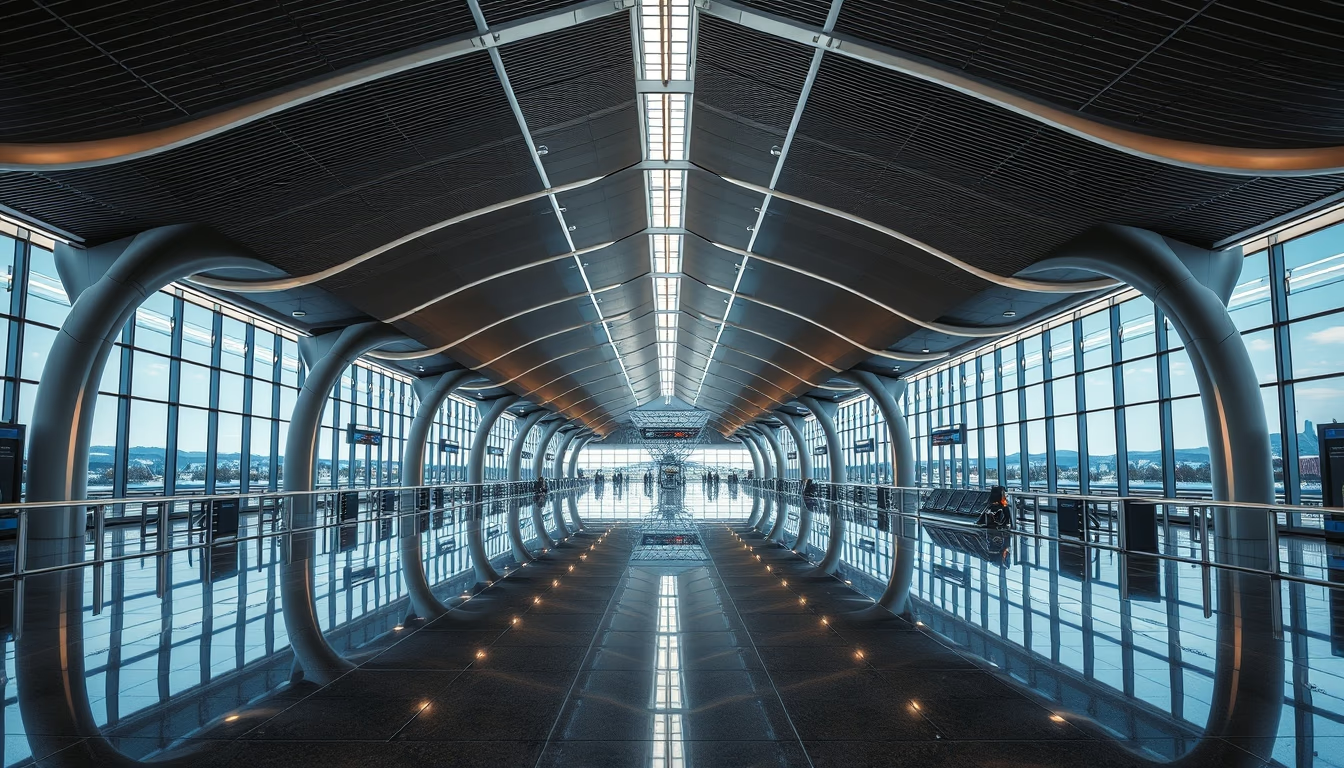
Airport terminal modern
1344×768 · AVIF · CC BY 4.0
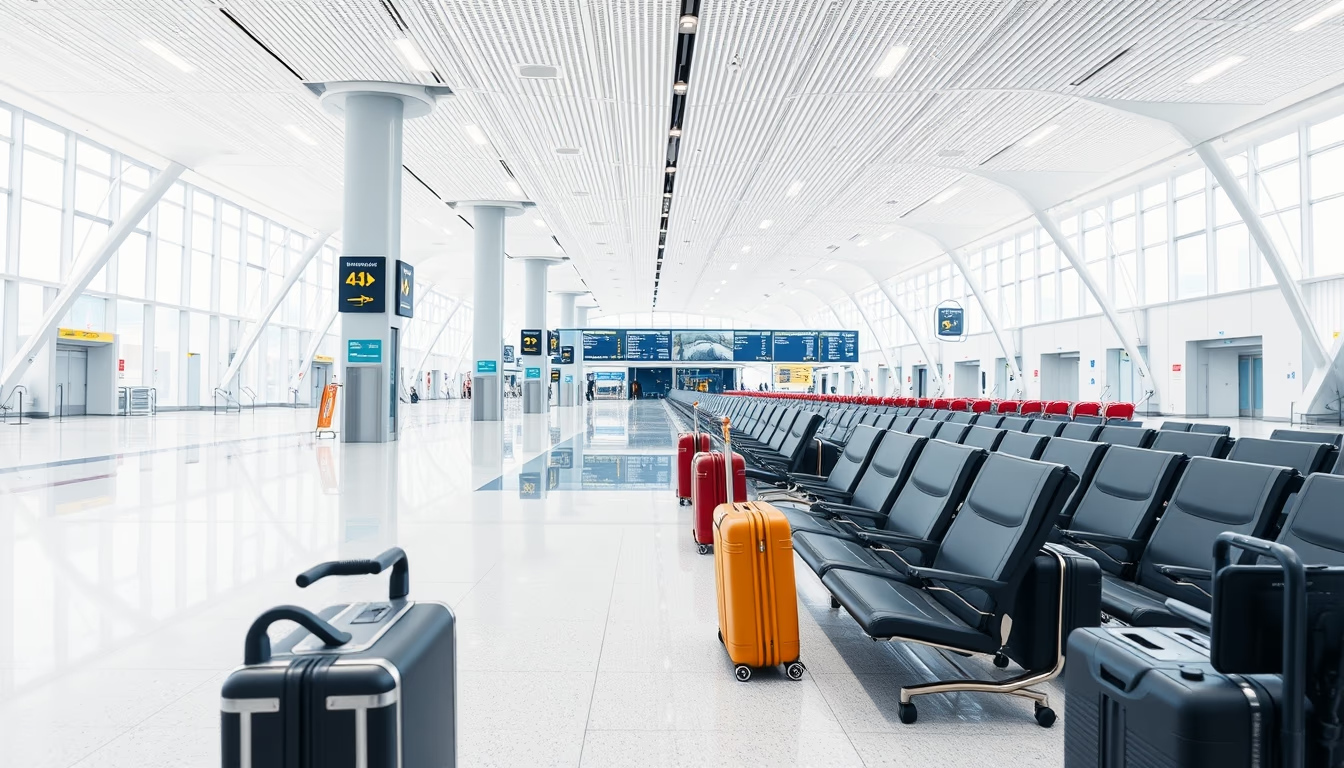
Modern airport terminals combine innovative architecture, operational efficiency, and passenger experience, reflecting the global growth of aviation.
About this subject
Modern airport terminals are designed to handle increasing passenger traffic while meeting sustainability and technology demands. Unlike older airports, these spaces prioritize smooth circulation with large atriums, elevated walkways, and internal transport systems like monorails and moving walkways. Contemporary architecture uses materials such as glass and steel to maximize natural light and create a sense of spaciousness, as seen in Terminal 3 of Guarulhos Airport in São Paulo or Singapore's Changi Airport, which integrates indoor gardens and even a waterfall.
Operational efficiency is another key focus. Modern terminals employ automated baggage sorting systems, online check-in, and biometrics to reduce queues. Air-conditioned boarding bridges and VIP lounges with free Wi-Fi are standard expectations. Major airports like Istanbul, whose single terminal covers over 1.4 million square meters, demonstrate the scale of these constructions. Sustainability also stands out, with solar panels, rainwater harvesting, and LED lighting.
Economically, terminals act as business and leisure hubs. Duty-free shops, restaurants, and lounges generate significant revenue, while connectivity to ground transport networks (trains, subways, buses) eases access. According to IATA, modern terminals must accommodate up to 100 million passengers per year, as seen at Dubai Airport. In Brazil, the modernization of terminals like Brasília and Galeão aims to improve traveler experience and attract investments.
Interestingly, terminal design influences passenger psychology: high ceilings and green spaces reduce stress. The COVID-19 pandemic accelerated the adoption of touchless technologies, such as automatic gates and self-service kiosks. These innovations consolidate terminals as true 21st-century hubs, integrating mobility, commerce, and innovation.
Frequently Asked Questions
What characterizes a modern airport terminal?
A modern terminal prioritizes efficient flow, sustainability, and technology. It uses glass-and-steel architecture, automated baggage systems, biometrics, green spaces, and multimodal connectivity. Examples include terminals at Changi, Istanbul, and Guarulhos.
What are the largest airport terminals in the world?
The largest single terminal is at Istanbul Airport, covering 1.4 million m². Other giants include Terminal 3 at Dubai Airport, Terminal 1 at Beijing Daxing, and Terminal 1 at Hong Kong Airport.
How does technology improve the terminal experience?
Technology reduces queues with online check-in, self-service kiosks, and biometrics. Automated baggage systems and real-time monitoring boost efficiency. Free Wi-Fi, USB chargers, and indoor navigation apps make waiting more productive.
Direct URL
https://pub-c7d6a6ea828543ac903a74a341ccb2e1.r2.dev/imagens/airport-terminal-modern-commercial-product-photography-p1.avifHow to credit
Include a visible link back to UtilizAí. Copy one of the snippets below:
<a href="https://xn--utiliza-eza.com/en/midia/imagens/airport-terminal-modern-commercial-product-photography-p1">Airport terminal modern</a> by <a href="https://xn--utiliza-eza.com">UtilizAí</a>, licensed under <a href="https://creativecommons.org/licenses/by/4.0/">CC BY 4.0</a>.
[Airport terminal modern](https://xn--utiliza-eza.com/en/midia/imagens/airport-terminal-modern-commercial-product-photography-p1) by [UtilizAí](https://xn--utiliza-eza.com), CC BY 4.0
License: CC-BY-4.0