Air cooler tower
1344×768 · AVIF · CC BY 4.0
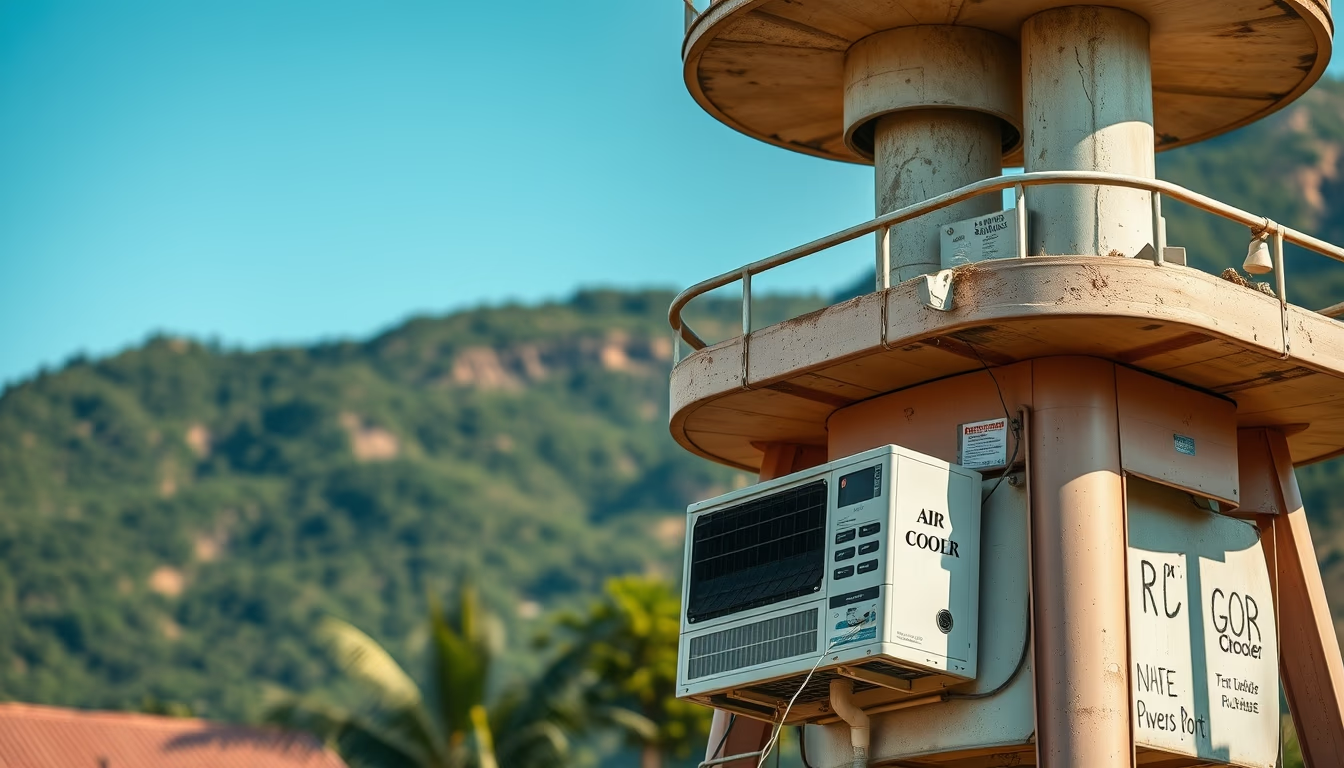
An air cooler tower is a vertical CPU heatsink that uses heat pipes and fans to dissipate heat generated by the processor, a key component in PC cooling.
About this subject
An air cooler tower is a type of CPU heatsink characterized by a vertical fin stack and heat pipes, designed to efficiently dissipate heat from the processor. Unlike low-profile stock coolers, tower coolers use multiple aluminum or copper fins attached to heat pipes that transfer heat via phase change: liquid inside the sealed pipes vaporizes at the hot end and condenses at the cooler fins. This design greatly increases the surface area available for heat exchange, improving thermal performance.
Typically, tower coolers have four to eight copper heat pipes that make direct contact with the CPU's integrated heat spreader (IHS). The base, often nickel-plated copper, spreads heat into the pipes, which carry it upward through the fin stack. One or two 120 mm or 140 mm fans mounted on the side push or pull air across the fins, expelling heat out of the case. Leading manufacturers include Noctua, Cooler Master, Be Quiet!, and Deepcool.
Air cooler towers have evolved from small aluminum blocks with fans to massive structures weighing over 1 kg and exceeding 160 mm in height, requiring wide PC cases. While liquid cooling AIOs have become popular, tower coolers remain favored for their reliability, lower cost, and silent operation when properly configured. High-end models like the Noctua NH-D15 rival many 240 mm liquid coolers in thermal performance.
Interesting engineering details: tower coolers borrow principles from industrial heat exchangers and automotive radiators. The static pressure of the fans and the thermal conductivity of the fin material are critical. In overclocking scenarios, a quality air tower can keep temperatures under 80°C for high-TDP CPUs like Intel Core i9 or AMD Ryzen 9, provided the case has good airflow. Some dual-tower designs feature two separate fin stacks for even more surface area.
Frequently Asked Questions
How does an air cooler tower work?
It uses heat pipes to transfer heat from the base to a fin stack, and a fan blows air across the fins to dissipate the heat. The heat pipes rely on evaporation and condensation cycles.
Is it worth replacing a stock cooler with a tower cooler?
Yes, for CPUs that run hot or for overclocking. A tower cooler can lower temperatures by 10-20°C and operate more quietly than stock coolers.
What is the difference between an air cooler tower and a liquid cooler?
Air towers are cheaper, more durable, and have no leak risk. Liquid coolers can perform better on very hot CPUs but cost more and have moving parts that may fail over time.
Direct URL
https://pub-c7d6a6ea828543ac903a74a341ccb2e1.r2.dev/imagens/air-cooler-tower-national-geographic-style-p12.avifHow to credit
Include a visible link back to UtilizAí. Copy one of the snippets below:
<a href="https://xn--utiliza-eza.com/en/midia/imagens/air-cooler-tower-national-geographic-style-p12">Air cooler tower</a> by <a href="https://xn--utiliza-eza.com">UtilizAí</a>, licensed under <a href="https://creativecommons.org/licenses/by/4.0/">CC BY 4.0</a>.
[Air cooler tower](https://xn--utiliza-eza.com/en/midia/imagens/air-cooler-tower-national-geographic-style-p12) by [UtilizAí](https://xn--utiliza-eza.com), CC BY 4.0
License: CC-BY-4.0