Agronomist with tablet in field analyzing crop data
1344×768 · AVIF · CC BY 4.0
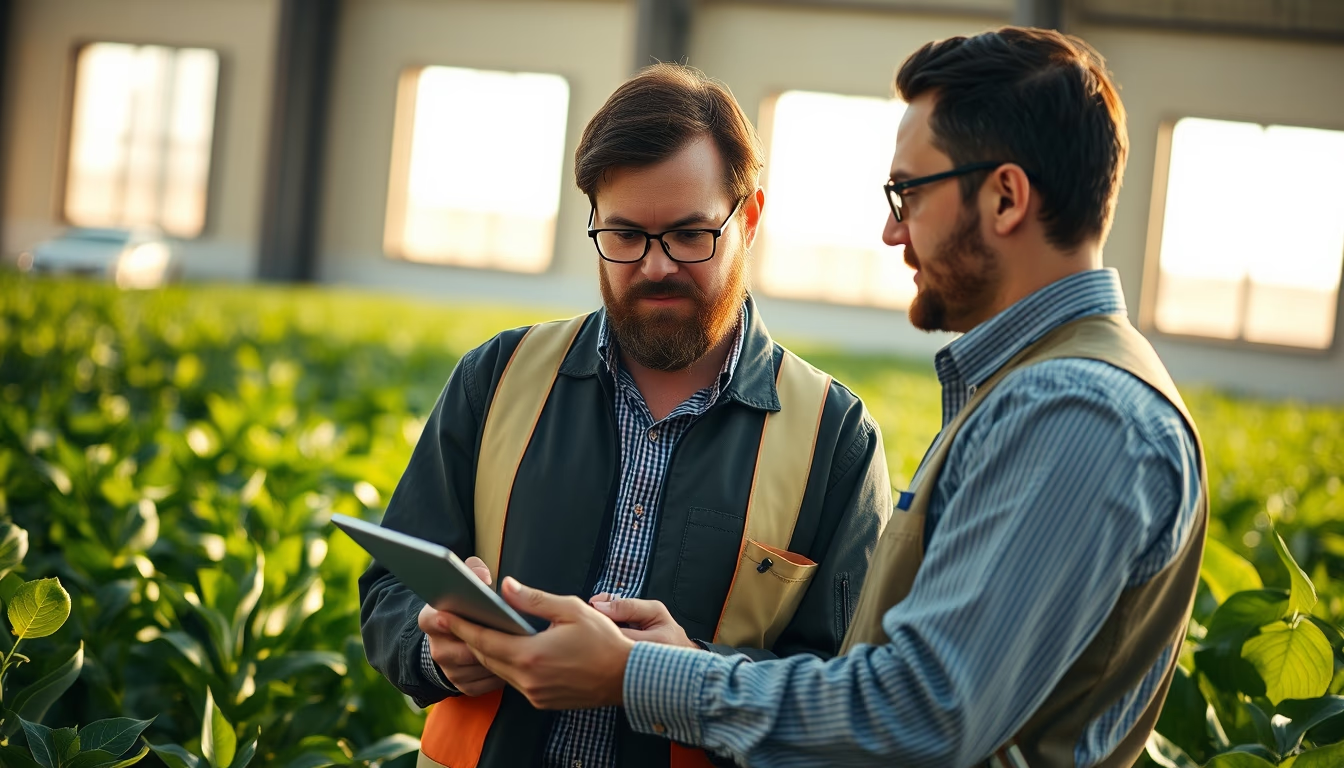
Agronomist uses tablet to analyze crop data in the field, integrating precision agriculture technology.
About this subject
Precision agriculture has revolutionized how agronomists monitor and manage crops. Using tablets and specialized software, these professionals collect real-time data on soil, climate, and plant development. In Brazil, the world's largest exporter of soybeans, coffee, and sugar, adoption of this technology has grown rapidly over the past decade. According to Embrapa, over 60% of large rural properties now employ some form of digital tool in the field.
The tablet replaces physical notebooks and spreadsheets, allowing the agronomist to record visual observations, yield maps, and drone imagery directly into cloud-based platforms. This data feeds predictive models that assist in decisions about irrigation, fertilization, and pest control. In regions like the Cerrado, where intensive agriculture faces water challenges, the use of sensors and mobile devices has become essential to optimize resources and reduce costs.
A study from the University of São Paulo showed that farms adopting precision agriculture can increase productivity by up to 20% and reduce fertilizer use by 15%. Additionally, electronic data collection facilitates traceability and certification of sustainable practices, increasingly demanded by international markets. The modern agronomist thus operates at the intersection of biology, engineering, and information technology.
The image depicts a typical early morning scene, when light and temperature conditions are ideal for visual assessments. The professional, wearing protective gear, analyzes a specific crop on a rural property. Although technology is in focus, the agronomist's empirical knowledge remains fundamental to interpret data and recommend field actions.
Frequently Asked Questions
What is precision agriculture?
Precision agriculture is a set of techniques that uses information technology, sensors, and georeferenced data to optimize crop management. It allows localized application of inputs, reducing waste and increasing productivity.
How does the tablet help the agronomist's work?
The tablet allows real-time data recording, access to maps and reports in the field, and connection to cloud-based analysis systems. This speeds up decision-making and improves the accuracy of technical recommendations.
Why is early morning important for crop analysis?
In the morning, sunlight is softer and temperatures are milder, making visual observation of disease symptoms, pests, or nutrient deficiencies easier. Additionally, dew can highlight foliar wetness issues.
Direct URL
https://pub-c7d6a6ea828543ac903a74a341ccb2e1.r2.dev/imagens/agronomist-with-tablet-in-field-analyzing-crop-data-documentary-morning-5.avifHow to credit
Include a visible link back to UtilizAí. Copy one of the snippets below:
<a href="https://xn--utiliza-eza.com/en/midia/imagens/agronomist-with-tablet-in-field-analyzing-crop-data-documentary-morning-5">Agronomist with tablet in field analyzing crop data</a> by <a href="https://xn--utiliza-eza.com">UtilizAí</a>, licensed under <a href="https://creativecommons.org/licenses/by/4.0/">CC BY 4.0</a>.
[Agronomist with tablet in field analyzing crop data](https://xn--utiliza-eza.com/en/midia/imagens/agronomist-with-tablet-in-field-analyzing-crop-data-documentary-morning-5) by [UtilizAí](https://xn--utiliza-eza.com), CC BY 4.0
License: CC-BY-4.0