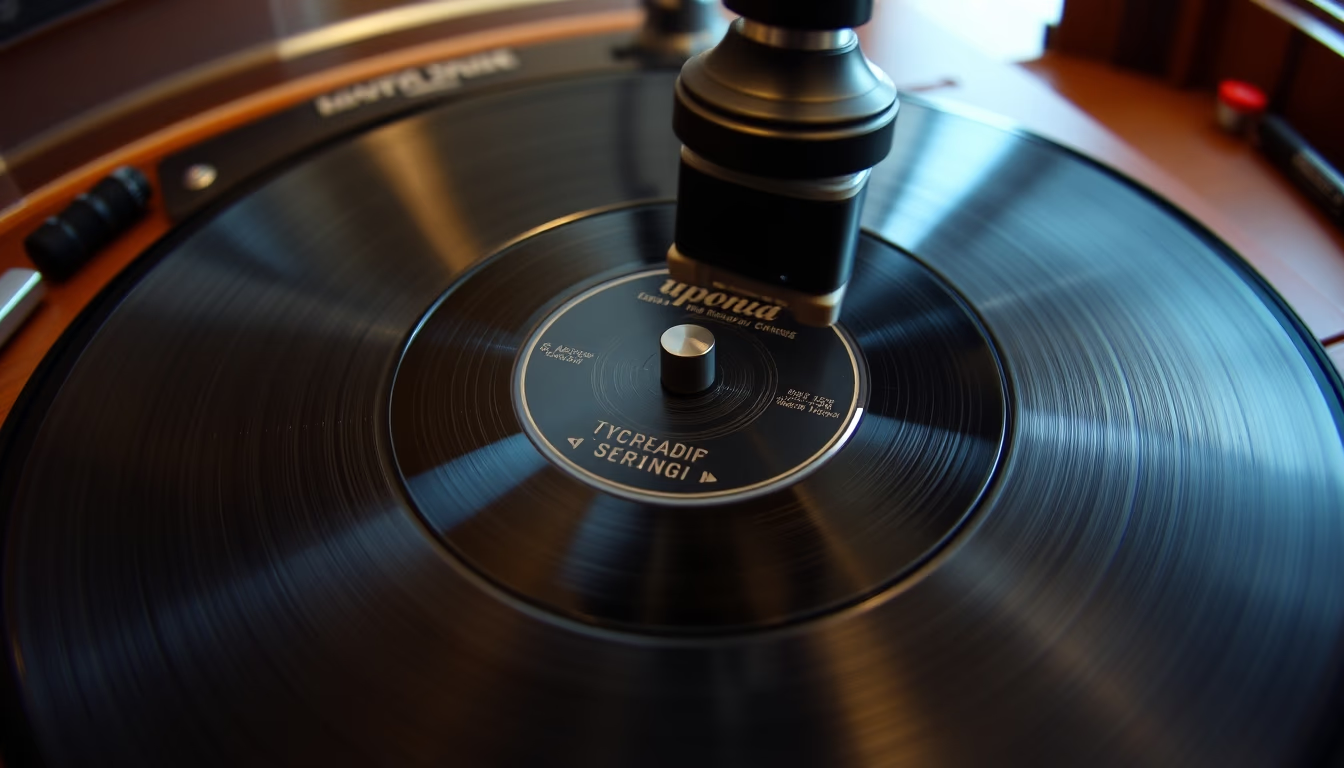
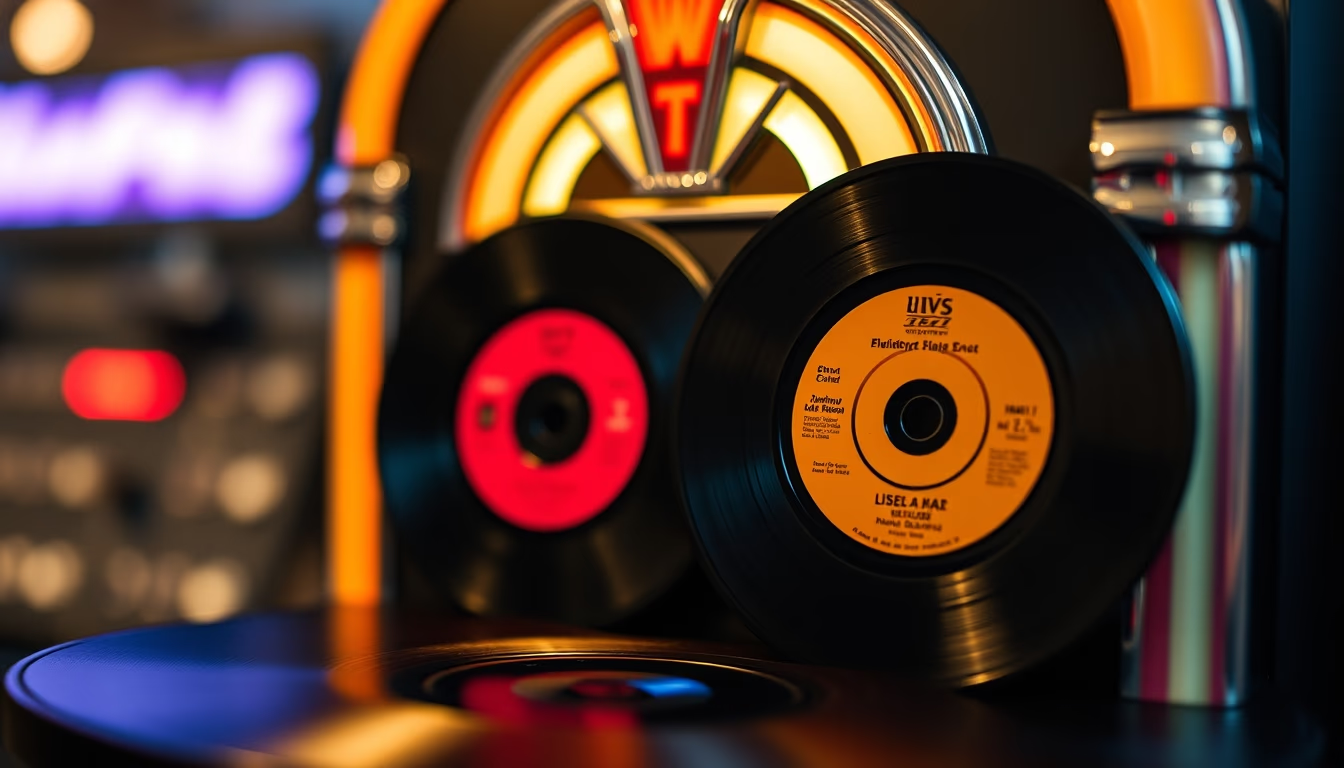
78 rpm shellac vintage
1344×768 · AVIF · CC BY 4.0
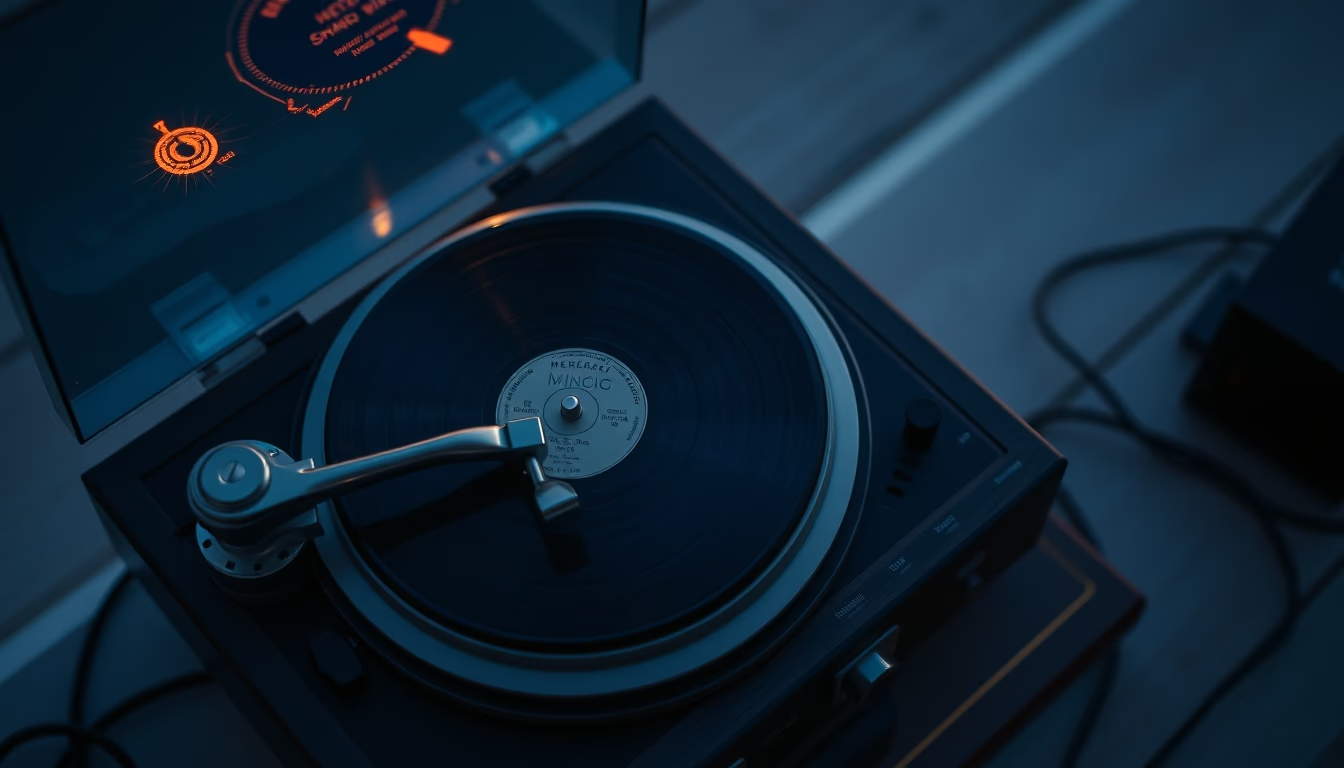
78 rpm shellac records defined the golden age of recorded music, from jazz to samba, and stand as relics of phonographic history.
About this subject
The 78 revolutions per minute (rpm) shellac record was the dominant audio format from the late 19th century through the mid-1950s. Unlike later vinyl, these discs were composed of shellac, a natural resin secreted by the lac insect (Kerria lacca), mixed with mineral fillers such as slate powder or calcium carbonate. This made them extremely brittle and heavy, weighing about 120 to 150 grams each. The 78 rpm speed became an industry standard, though variations existed, yielding roughly 3 to 5 minutes of audio per side.
Mass production began with Edison’s cylinder phonograph, but the shellac disc, popularized by the Victor Talking Machine Company and Columbia Records, soon dominated the market. Shellac allowed for high-density recording, but the constant friction from steel needles required frequent replacement. Each playback gradually wore down the groove, limiting the record’s lifespan. Despite this, 78s were the vehicle for global dissemination of genres like blues, jazz, samba, tango, and classical music. Artists such as Louis Armstrong, Carmen Miranda, Duke Ellington, and Noel Rosa immortalized their work in this format.
Obsolescence came with the introduction of vinyl microgroove records: the 33 1/3 rpm LP by Columbia in 1948 and the 45 rpm single by RCA Victor in 1949. Vinyl was lighter, unbreakable, and offered higher fidelity and longer playing time. The transition was gradual, and shellac production continued in some countries into the 1960s. Today, shellac 78s are collectors’ items, prized for their distinctive sound and historical context. Their fragility and weight make each copy a physical testament to the technological and cultural evolution of the 20th century.
Frequently Asked Questions
Why are 78 rpm records called shellac?
The term shellac refers to the natural resin secreted by the lac insect (Kerria lacca), which was a key component in these records. The resin was mixed with fillers and pigments to form the rigid, brittle material characteristic of 78 rpm discs.
What is the difference between a 78 rpm record and a vinyl record?
78 rpm records are made of shellac, heavier and more brittle, with wider grooves that limit playback to about 3-5 minutes per side. Vinyl records (LPs and singles) are made of polyvinyl chloride, lightweight, unbreakable, and feature microgrooves for higher fidelity and longer playing times.
How should 78 rpm records be stored and preserved?
Due to shellac's fragility, 78 rpm records should be stored vertically in a dry, temperature-stable environment. Avoid stacking them horizontally, as weight can cause warping. Clean only with a soft, dry cloth; never use water or chemicals. Handle by the edges to prevent scratches.
Direct URL
https://pub-c7d6a6ea828543ac903a74a341ccb2e1.r2.dev/imagens/78-rpm-shellac-vintage-aerial-drone-shot-fresh4.avifHow to credit
Include a visible link back to UtilizAí. Copy one of the snippets below:
<a href="https://xn--utiliza-eza.com/en/midia/imagens/78-rpm-shellac-vintage-aerial-drone-shot-fresh4">78 rpm shellac vintage</a> by <a href="https://xn--utiliza-eza.com">UtilizAí</a>, licensed under <a href="https://creativecommons.org/licenses/by/4.0/">CC BY 4.0</a>.
[78 rpm shellac vintage](https://xn--utiliza-eza.com/en/midia/imagens/78-rpm-shellac-vintage-aerial-drone-shot-fresh4) by [UtilizAí](https://xn--utiliza-eza.com), CC BY 4.0
License: CC-BY-4.0