45 rpm jukebox singles
1344×768 · AVIF · CC BY 4.0
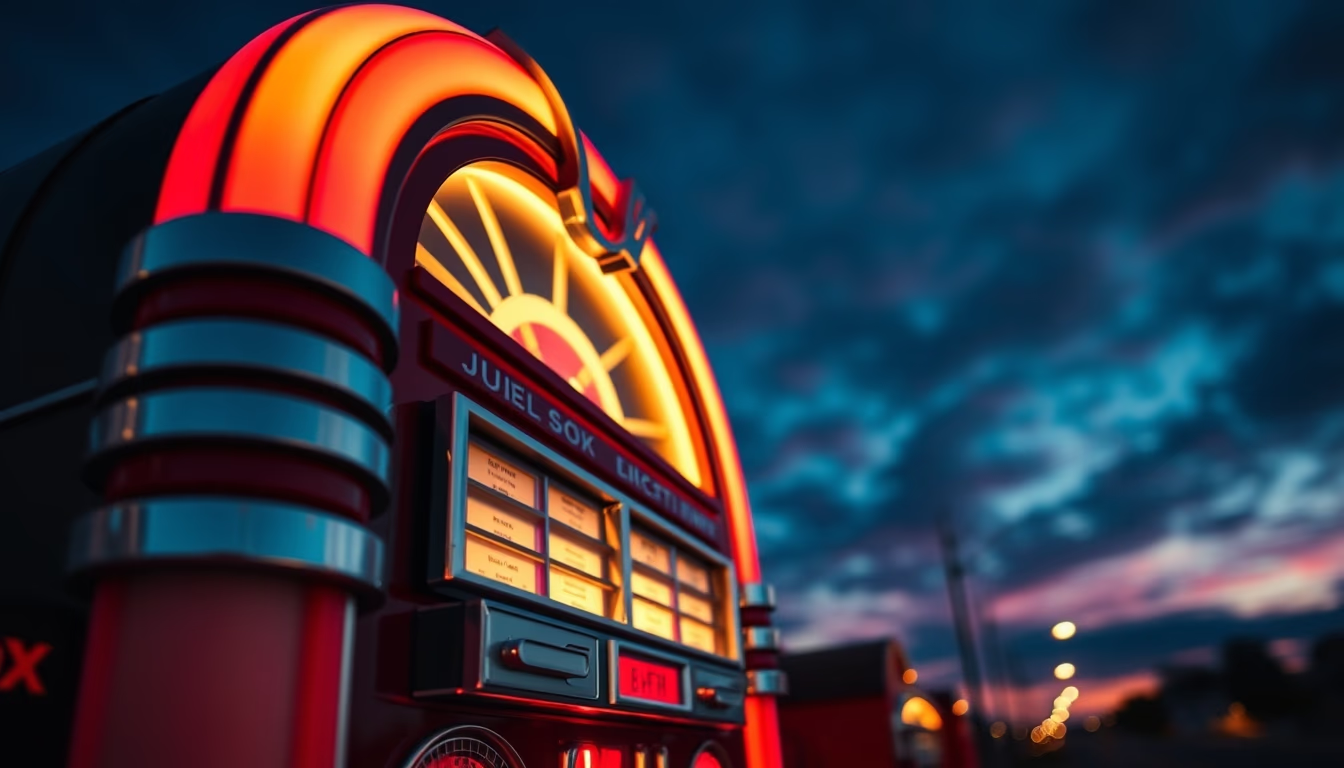
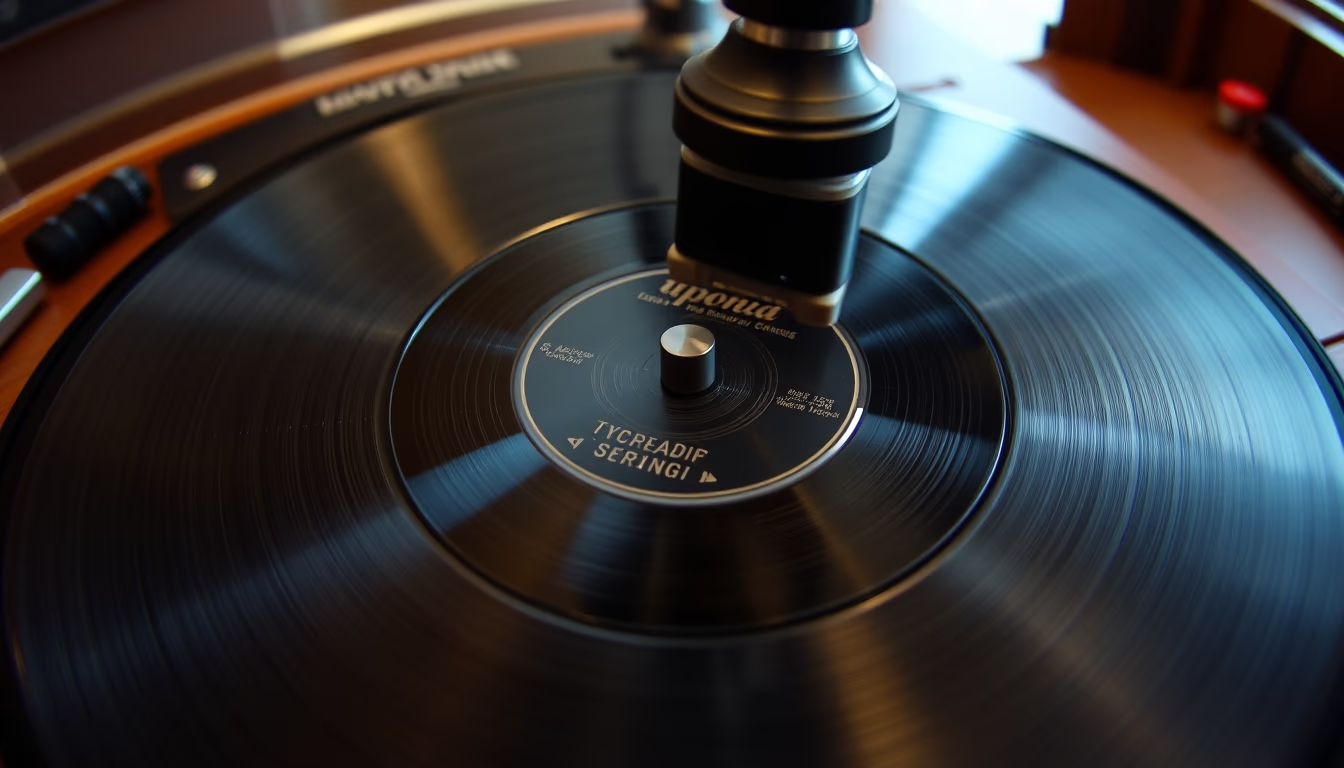
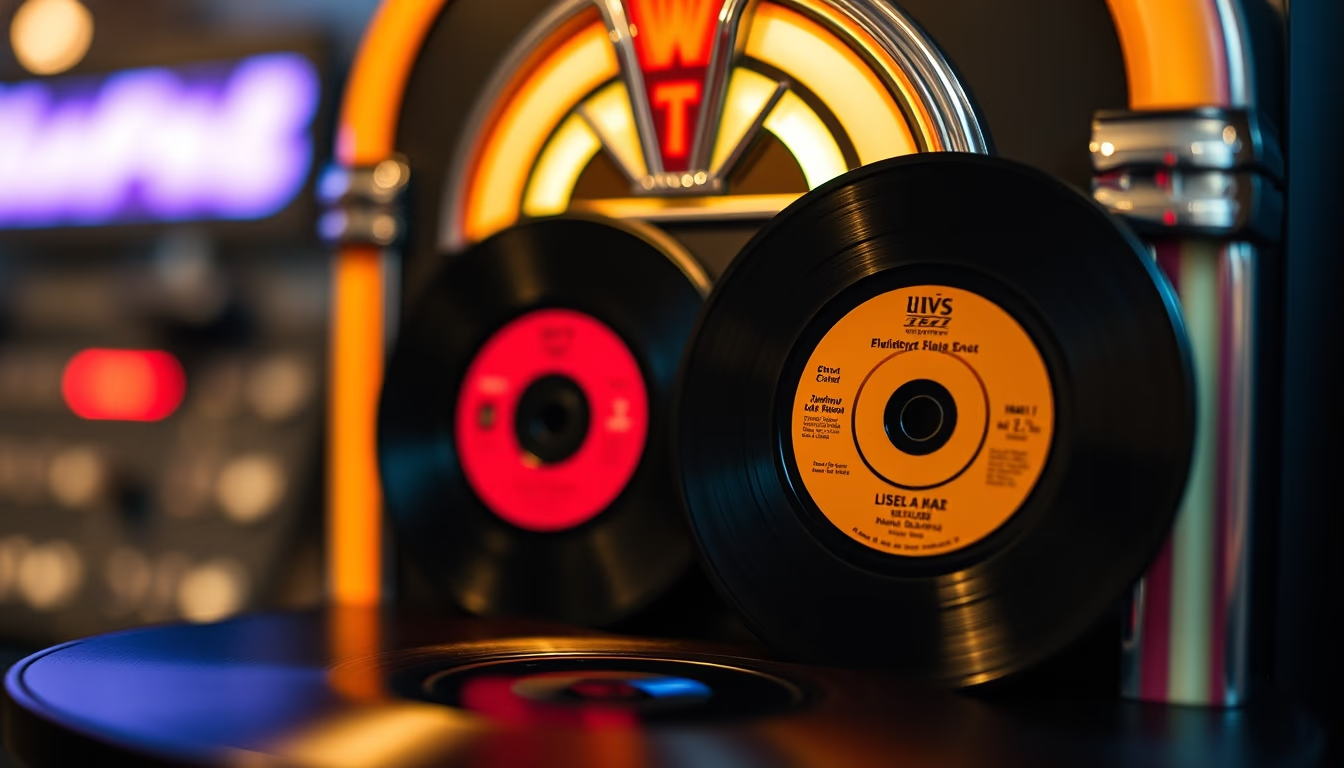
45 rpm vinyl records for jukeboxes, icons of 20th-century popular music, shaped youth culture and the recording industry.
About this subject
The 45 rpm (revolutions per minute) record was introduced by RCA Victor in 1949 as a more compact and cheaper alternative to the 33⅓ rpm LP. With a 7-inch (17.5 cm) diameter and a large center hole, a feature that facilitated automatic handling in jukeboxes, these singles quickly dominated the popular music market. Between the 1950s and 1980s, virtually all hits in rock, soul, country, and pop were released in this format.
Jukeboxes, especially Wurlitzer, Seeburg, and Rock-Ola models, were designed exclusively to play 45 rpm records. The selection mechanism allowed customers to choose from 50 to 200 titles, and the 45 rpm speed provided about 4 minutes per side, ideal for radio-friendly songs. At the peak of the format in the 1950s, there were an estimated 700,000 jukeboxes in operation in the United States alone. The single's sleeve, often with simple artwork, became a collector's item.
Mass production of 45 rpm records boosted the careers of artists like Elvis Presley, The Beatles, and Michael Jackson. In Brazil, labels such as Odeon, RCA Victor, and Philips released numerous compactos simples (as they were called) featuring samba, bossa nova, and MPB. The format began to decline with the arrival of the CD in the 1980s, but it is still revered by collectors and vinyl DJs.
Trivia: the large center hole of 45 rpm records was standardized at 1.5 inches (38.1 mm) to fit the jukebox spindle. To play them on a home turntable, a plastic adapter, colloquially known as a "spider" or "pimento", was required.
Frequently Asked Questions
What is the difference between an LP and a 45 rpm single?
An LP (Long Play) spins at 33⅓ rpm, is 12 inches wide, and holds up to 30 minutes per side. A 45 rpm single is 7 inches, holds up to 4 minutes per side, and usually contains two songs (A-side and B-side).
Why do 45 rpm records have a large hole?
The large hole (1.5 inches) was designed for the automatic mechanisms of jukeboxes, which needed to fit the record onto a spindle without a clamp. This standard also facilitated quick changes in radio stations.
Are 45 rpm records still being manufactured?
Yes, though in smaller quantities. Independent artists and collectors keep the 45 rpm format alive, especially for limited-edition vinyl releases. Some releases use the format as a nostalgic item.
Direct URL
https://pub-c7d6a6ea828543ac903a74a341ccb2e1.r2.dev/imagens/45-rpm-jukebox-singles-long-exposure-fresh15.avifHow to credit
Include a visible link back to UtilizAí. Copy one of the snippets below:
<a href="https://xn--utiliza-eza.com/en/midia/imagens/45-rpm-jukebox-singles-long-exposure-fresh15">45 rpm jukebox singles</a> by <a href="https://xn--utiliza-eza.com">UtilizAí</a>, licensed under <a href="https://creativecommons.org/licenses/by/4.0/">CC BY 4.0</a>.
[45 rpm jukebox singles](https://xn--utiliza-eza.com/en/midia/imagens/45-rpm-jukebox-singles-long-exposure-fresh15) by [UtilizAí](https://xn--utiliza-eza.com), CC BY 4.0
License: CC-BY-4.0