45 rpm jukebox singles
1344×768 · AVIF · CC BY 4.0
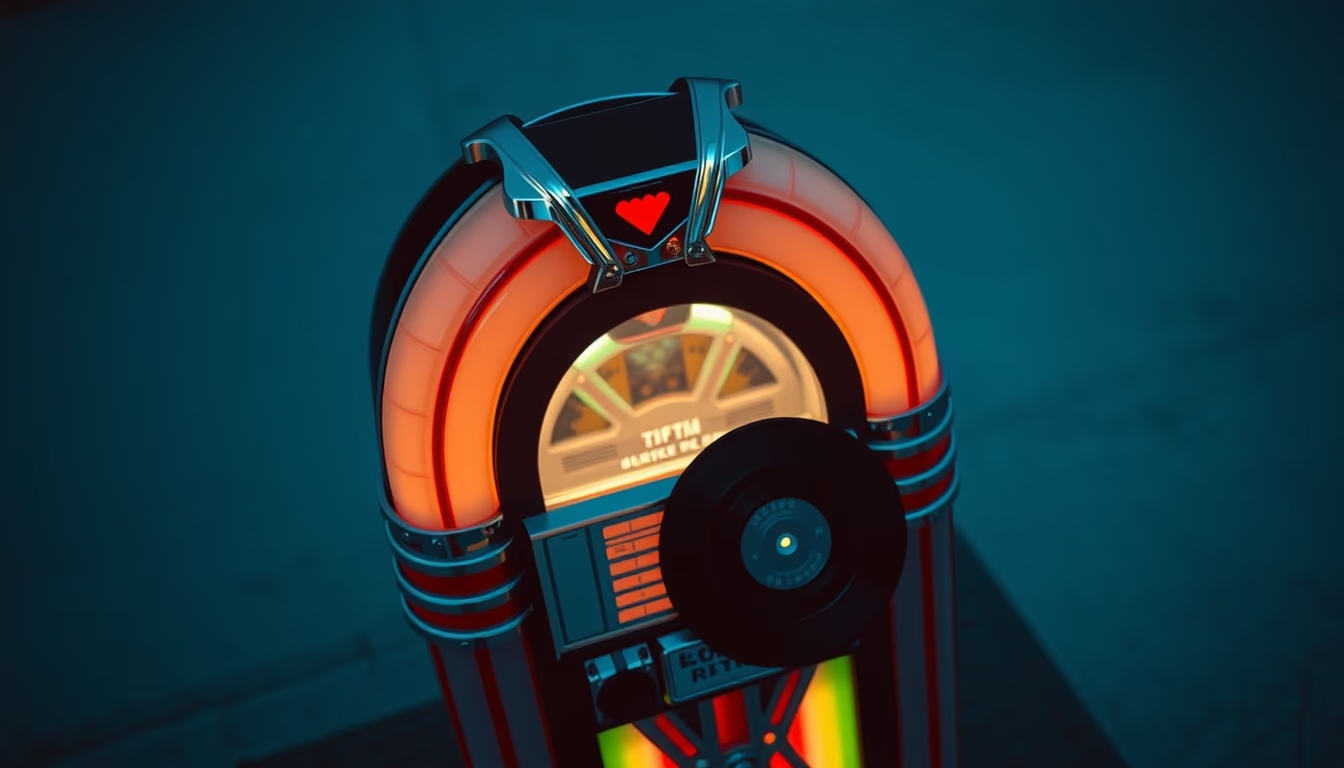
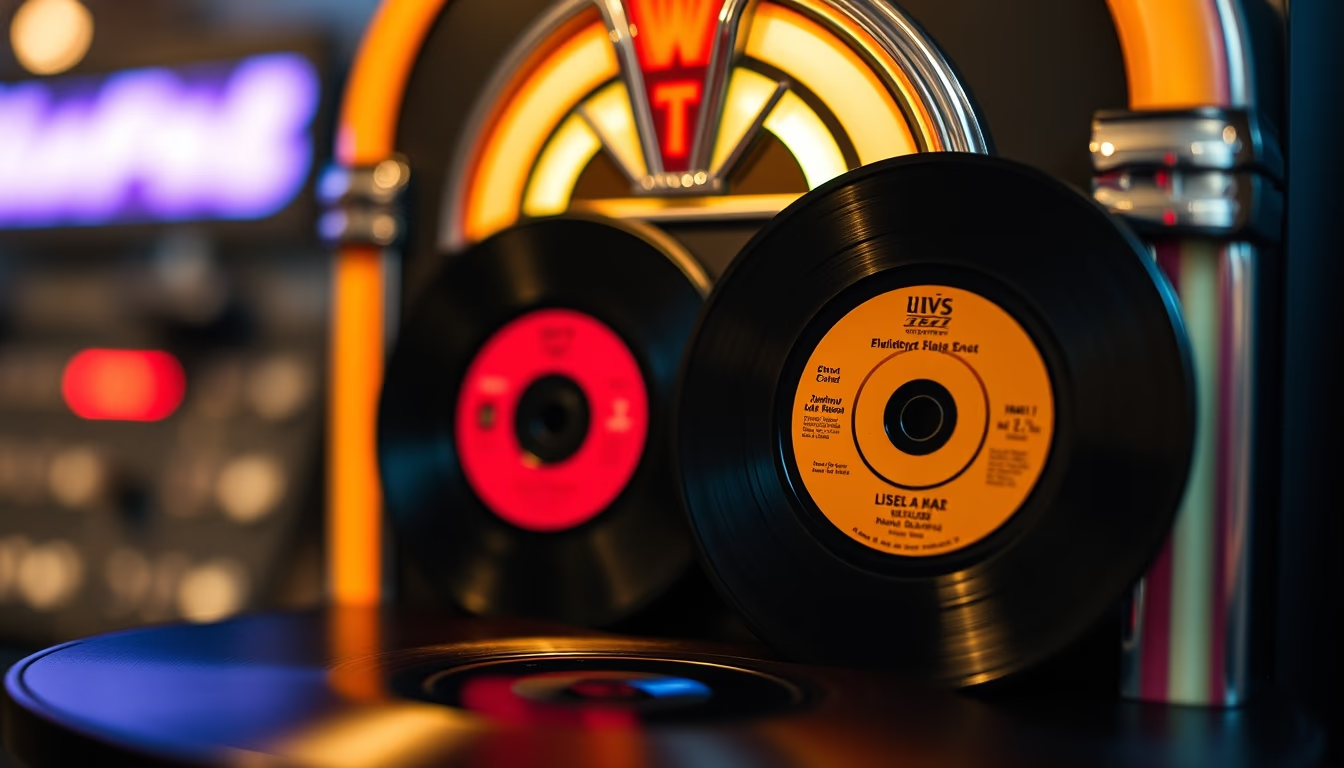
The 45 rpm record was the standard format for singles for decades, driving jukebox culture and popular music consumption in the 20th century.
About this subject
Introduced by RCA Victor in 1949, the 45 revolutions per minute (rpm) record revolutionized the recording industry. With a larger center hole (1.5 inches) and a reduced diameter of 7 inches, it offered greater durability and superior sound quality compared to its predecessor, the 78 rpm record. Each side held about 4 to 5 minutes of music, ideal for pop, rock, soul, and other hit genres. The rapid adoption by record labels made the 45 rpm the standard format for singles, fueling music charts and youth culture.
Jukeboxes, originally designed for 78 rpm records, quickly adapted to the new format. Iconic models such as the Wurlitzer 1015 (1946) and the Seeburg M100C (1948) were built to accommodate a selection of up to 50 45 rpm records. The automatic changing mechanism allowed the user to select a desired song via buttons or keys, and a mechanical arm would retrieve and place the record on the turntable. This system was crucial for bars, diners, and commercial establishments, which used jukeboxes as entertainment and a way to attract customers.
Interestingly, 45 rpm records were also used in home jukeboxes and at radio stations, which received promotional copies from labels. Starting in the 1960s, the 45 rpm single became a collector's item, with colorful sleeves and special editions. Although the format declined with the advent of CDs and streaming, it retains a nostalgic appeal and is still produced for collectors and vinyl DJs. An aerial view of a selection of 45 rpm singles highlights the variety of label colors and the compact arrangement typical of jukeboxes.
Frequently Asked Questions
What is the difference between a 45 rpm record and an LP?
A 45 rpm record is 7 inches in diameter, plays at 45 revolutions per minute, and typically contains one track per side (single). An LP (Long Play) is 12 inches, plays at 33⅓ rpm, and can hold up to 30 minutes of music per side, used for full albums.
Why did jukeboxes use 45 rpm records?
Because 45 rpm records were more durable and smaller than 78 rpm records, allowing greater song selection in compact machines. Also, the typical 4-to-5-minute playtime per side was ideal for popular songs that customers wanted to hear in bars and diners.
Are 45 rpm records still manufactured today?
Yes, although in much smaller quantities than in the past. They are produced for collectors, vinyl DJs, and special artist editions. Some labels maintain limited pressings of singles on 45 rpm.
Direct URL
https://pub-c7d6a6ea828543ac903a74a341ccb2e1.r2.dev/imagens/45-rpm-jukebox-singles-aerial-drone-shot-fresh3.avifHow to credit
Include a visible link back to UtilizAí. Copy one of the snippets below:
<a href="https://xn--utiliza-eza.com/en/midia/imagens/45-rpm-jukebox-singles-aerial-drone-shot-fresh3">45 rpm jukebox singles</a> by <a href="https://xn--utiliza-eza.com">UtilizAí</a>, licensed under <a href="https://creativecommons.org/licenses/by/4.0/">CC BY 4.0</a>.
[45 rpm jukebox singles](https://xn--utiliza-eza.com/en/midia/imagens/45-rpm-jukebox-singles-aerial-drone-shot-fresh3) by [UtilizAí](https://xn--utiliza-eza.com), CC BY 4.0
License: CC-BY-4.0