Zeppelin airship vintage
1344×768 · JPG · CC BY 4.0
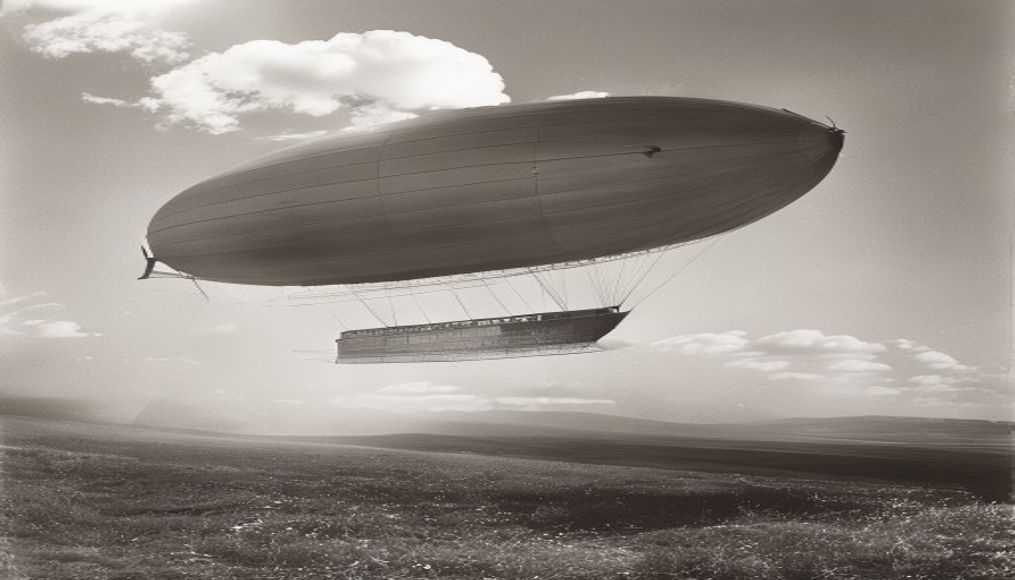
The Zeppelin, a German rigid airship that marked the era of commercial aviation in the early 20th century, combining luxury and technological innovation.
About this subject
Zeppelins were developed by Count Ferdinand von Zeppelin in the late 19th century, with the first successful flight taking place in 1900 over Lake Constance in Germany. These rigid airships had an internal metal framework covered with fabric, housing gas cells usually filled with hydrogen for lift. Unlike non-rigid balloons, Zeppelins offered greater stability and payload capacity, enabling long-distance passenger travel.
The zenith of Zeppelins occurred in the 1920s and 1930s, with aircraft such as the LZ 127 Graf Zeppelin, which completed the first aerial circumnavigation of the world in 1929, and the infamous LZ 129 Hindenburg, which burst into flames in 1937 while landing at Lakehurst, New Jersey. The Hindenburg disaster, captured in images and broadcast live on radio, shattered public confidence in airships and marked the end of the commercial Zeppelin era. Despite this, these airships represented a milestone in aeronautical engineering, influencing later designs of lighter-than-air aircraft.
Interestingly, Zeppelins served both civilian and military purposes. During World War I, Germany employed Zeppelins for bombing and reconnaissance missions, though they were vulnerable to fighter attacks and anti-aircraft fire. In the interwar period, companies like Deutsche Luftschiffahrts-AG (DELAG) operated regular passenger routes, offering luxurious service with cabins, restaurants, and panoramic lounges. The Graf Zeppelin, for instance, transported over 10,000 passengers without any serious injuries throughout its career.
Today, the legacy of Zeppelins lives on in museums, such as the Zeppelin Museum in Friedrichshafen, Germany, which houses a full-scale replica of the Hindenburg and exhibits on the history of airships. Although commercial airship flights have ceased, the concept of lighter-than-air aircraft is still explored for tourism, scientific research, and cargo transport, with modern projects like the Airlander 10 in the United Kingdom.
Frequently Asked Questions
How did a Zeppelin stay aloft?
Zeppelins used hydrogen (or helium in later models) in internal cells to generate lift. Hydrogen is lighter than air, allowing the airship to float. The rigid frame maintained shape and supported engines and cargo.
What caused the Hindenburg disaster?
The exact cause is still debated, but it is believed that an electrostatic discharge or spark ignited leaking hydrogen. The accident resulted in 36 deaths and marked the end of the commercial airship era.
Are there Zeppelins in operation today?
Yes, the German company Zeppelin NT produces modern non-rigid airships for tourism and research. They use helium, are smaller and safer than historical ones, and operate in several cities worldwide.
Direct URL
https://pub-c7d6a6ea828543ac903a74a341ccb2e1.r2.dev/imagens/zeppelin-airship-vintage-documentary-photography-p4.jpgHow to credit
Include a visible link back to UtilizAí. Copy one of the snippets below:
<a href="https://xn--utiliza-eza.com/en/midia/imagens/zeppelin-airship-vintage-documentary-photography-p4">Zeppelin airship vintage</a> by <a href="https://xn--utiliza-eza.com">UtilizAí</a>, licensed under <a href="https://creativecommons.org/licenses/by/4.0/">CC BY 4.0</a>.
[Zeppelin airship vintage](https://xn--utiliza-eza.com/en/midia/imagens/zeppelin-airship-vintage-documentary-photography-p4) by [UtilizAí](https://xn--utiliza-eza.com), CC BY 4.0
License: CC-BY-4.0