Rocket launch night
1344×768 · AVIF · CC BY 4.0
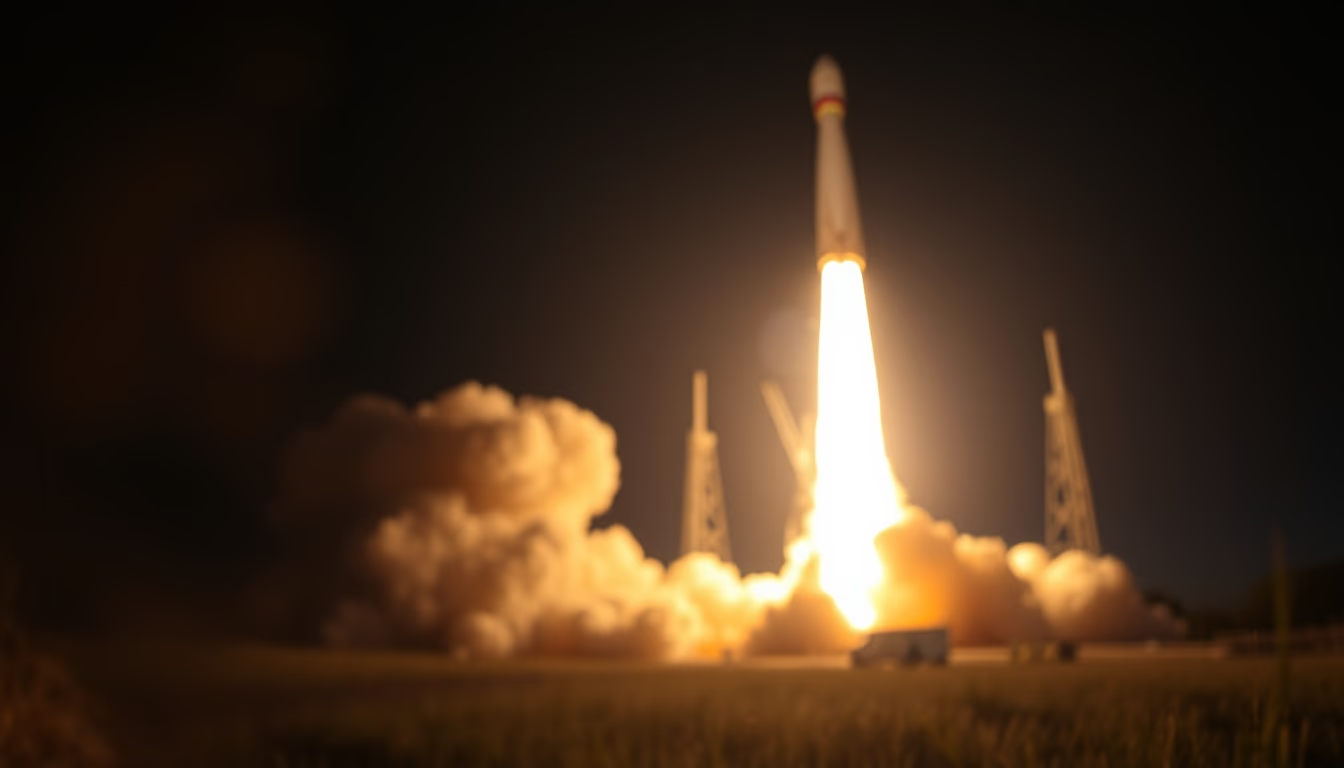
A night rocket launch captured in macro close-up highlights the technical details and precision of modern space engineering.
About this subject
A rocket launch is an event that combines advanced engineering and millimeter-precision. Nighttime launches, as shown in the image, are conducted to optimize visibility and minimize risks to surrounding areas, especially in populated regions. The macro close-up image focuses on critical details such as propulsion systems and heat-resistant materials used during liftoff. Rockets like the Falcon series (SpaceX) or the SLS (NASA) utilize cryogenic fuels (liquid hydrogen + liquid oxygen) that generate energy sufficient to overcome Earth's gravity.
Rocket technology has evolved from the WWII-era V-2, reaching speeds of over 28,000 km/h in low Earth orbit today. Modern flight control relies on onboard computers adjusting the trajectory in real time with centimeter-level precision. Interestingly, the noise from a launch can reach 180 decibels, 100 times louder than a jet aircraft. The ISS and the Moon remain the most common destinations for recent missions, though projects like Martian exploration are in development.
The global aerospace industry's impact is massive: in 2023, over 200 launches were recorded worldwide, driving sectors like communication (5G satellites) and environmental monitoring. Brazil, for instance, has the Alcântara Base Activation Program, aiming for 20 launches by 2025, strengthening its presence in the space map.
Frequently Asked Questions
Why are rockets launched at night?
Night launches are preferred to improve long-distance visibility (avoiding solar glare) and reduce risks for commercial aircraft, which operate mainly during the day. Nighttime also aids in detecting particles and rocket plumes with sensitive cameras.
How do rockets generate energy to overcome gravity?
Rockets use exothermic chemical reactions in jet engines (like SpaceX's Raptor), burning propellants (cryogens + liquid oxygen) at 3,000°C. This generates 100-1,000 tons of thrust, sufficient to reach orbital velocity (28,000 km/h).
What are the main risks of a space launch?
Risks include engine failures (occurring in 1-2% of launches), collision with space debris (over 500,000 objects tracked), and environmental impacts like noise pollution and CO2 emissions (a single SLS launch emits 1,500 tons of carbon dioxide).
Direct URL
https://pub-c7d6a6ea828543ac903a74a341ccb2e1.r2.dev/imagens/rocket-launch-night-macro-closeup-v5.avifHow to credit
Include a visible link back to UtilizAí. Copy one of the snippets below:
<a href="https://xn--utiliza-eza.com/en/midia/imagens/rocket-launch-night-macro-closeup-v5">Rocket launch night</a> by <a href="https://xn--utiliza-eza.com">UtilizAí</a>, licensed under <a href="https://creativecommons.org/licenses/by/4.0/">CC BY 4.0</a>.
[Rocket launch night](https://xn--utiliza-eza.com/en/midia/imagens/rocket-launch-night-macro-closeup-v5) by [UtilizAí](https://xn--utiliza-eza.com), CC BY 4.0
License: CC-BY-4.0