Quantum computer chip detail
1344×768 · AVIF · CC BY 4.0
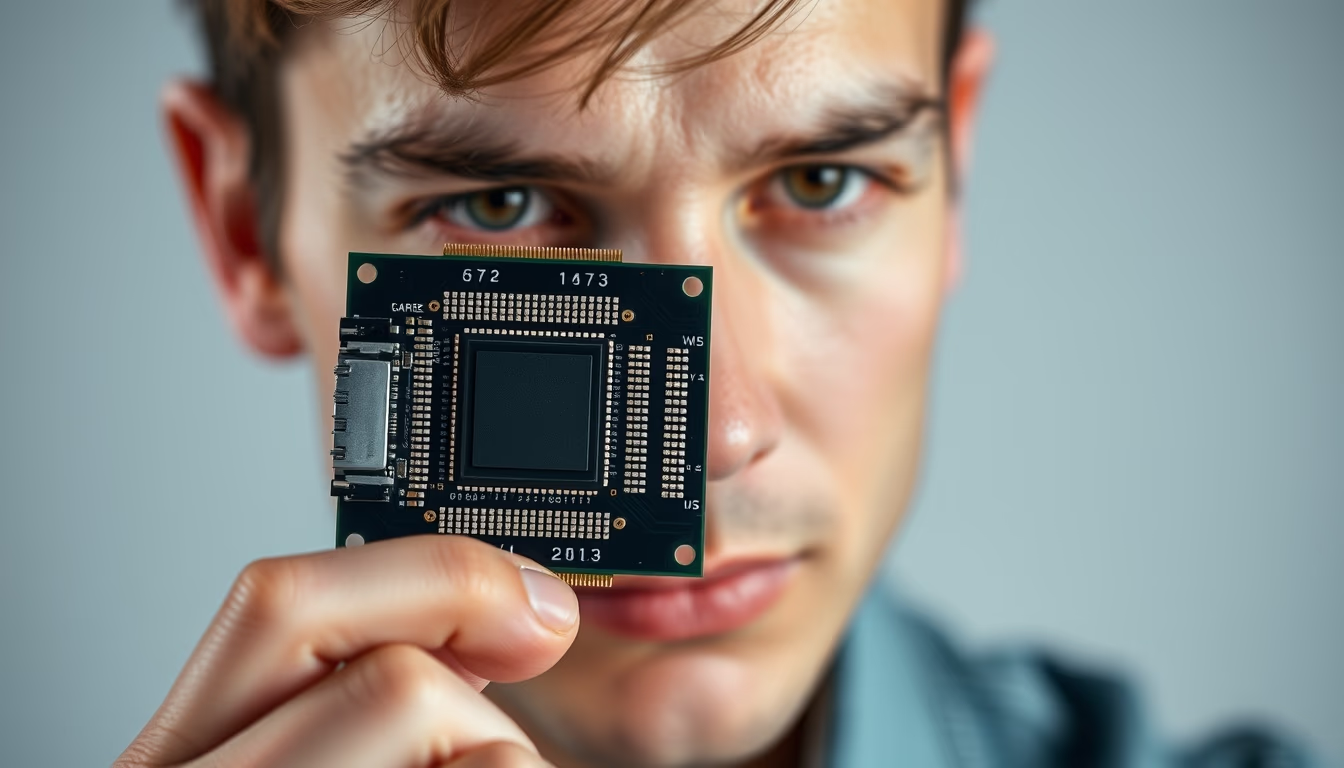
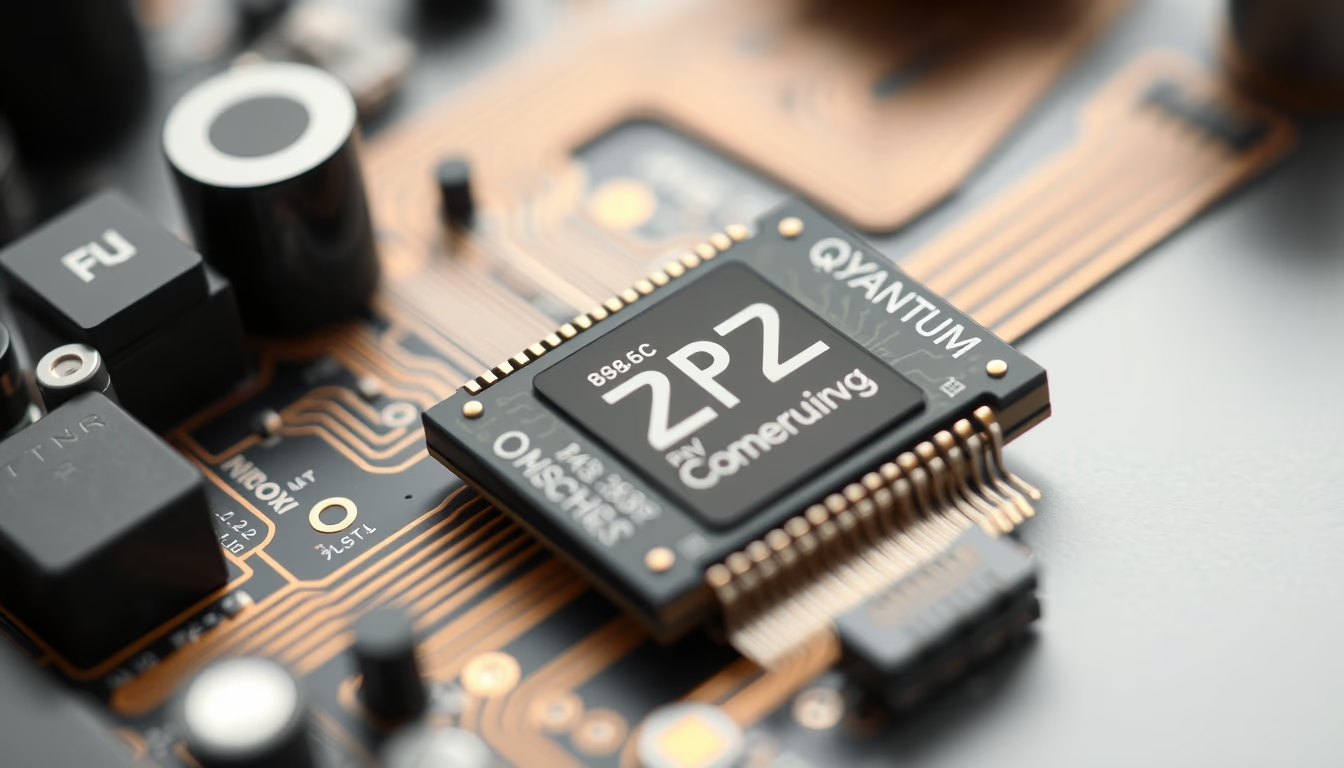
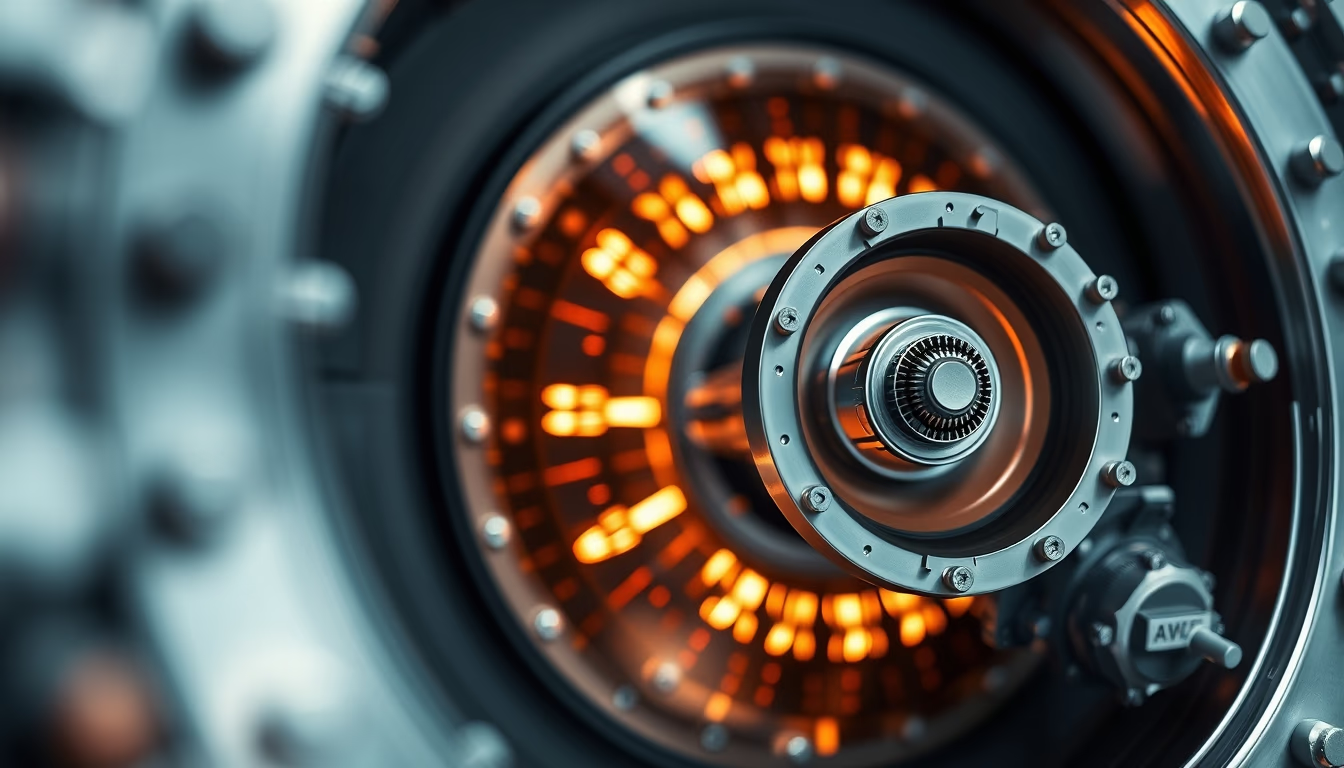
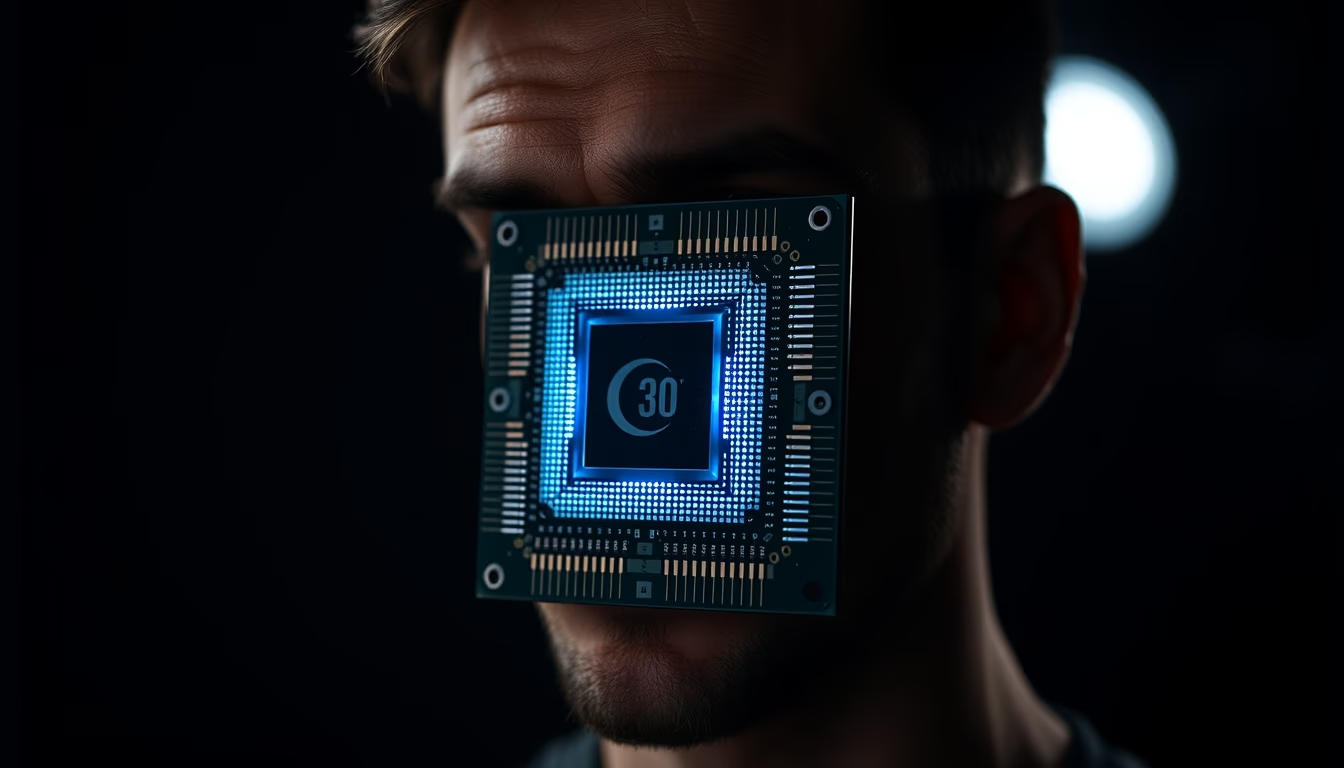
A close look at the details of a quantum computer chip, revealing the complexity of qubits and superconducting circuits.
About this subject
The quantum computer chip is the epicenter of a technological revolution. Unlike classical computer chips, which use transistors to represent bits (0 or 1), quantum chips use qubits. These qubits can be in superposition states, allowing exponentially more efficient information processing for certain problems. The image shows the detail of a superconducting chip, common in approaches by IBM, Google, and Rigetti. These chips are fabricated on silicon wafers and operate at cryogenic temperatures near absolute zero (about -273 °C). The visible structure includes resonators and Josephson junctions, essential components for forming qubits. Each qubit is sensitive to external noise, so chips are shielded in vacuum chambers and cooled in dilution refrigerators. The manufacturing complexity requires cleanrooms and nanometer-precision lithography.
Advances in quantum chips promise impact in areas such as cryptography, molecular simulation, and optimization. Companies like IBM already provide cloud-accessible quantum computers, such as the IBM Quantum System One. The chip shown may contain dozens to hundreds of qubits, but we are still in the NISQ (Noisy Intermediate-Scale Quantum) era, where qubits are error-prone and quantum correction is challenging. The race for quantum supremacy also involves approaches like trapped ions and topological qubits. The chip detail highlights the precision engineering required to control quantum phenomena at a macroscopic scale.
Frequently Asked Questions
What is a quantum computer chip?
It is the central component of a quantum computer, containing qubits that process information using quantum mechanics principles such as superposition and entanglement.
How does a quantum chip differ from a classical chip?
While classical chips use bits (0 or 1), quantum chips use qubits that can be in multiple states simultaneously, allowing them to solve certain problems much faster.
Why do quantum chips need to be cooled to such low temperatures?
To minimize thermal noise that disturbs qubits, they must operate near absolute zero, using dilution refrigerators that reach a few millikelvin.
Direct URL
https://pub-c7d6a6ea828543ac903a74a341ccb2e1.r2.dev/imagens/quantum-computer-chip-detail-studio-editorial-portrait-p6.avifHow to credit
Include a visible link back to UtilizAí. Copy one of the snippets below:
<a href="https://xn--utiliza-eza.com/en/midia/imagens/quantum-computer-chip-detail-studio-editorial-portrait-p6">Quantum computer chip detail</a> by <a href="https://xn--utiliza-eza.com">UtilizAí</a>, licensed under <a href="https://creativecommons.org/licenses/by/4.0/">CC BY 4.0</a>.
[Quantum computer chip detail](https://xn--utiliza-eza.com/en/midia/imagens/quantum-computer-chip-detail-studio-editorial-portrait-p6) by [UtilizAí](https://xn--utiliza-eza.com), CC BY 4.0
License: CC-BY-4.0