Cyclotron particle
1344×768 · AVIF · CC BY 4.0
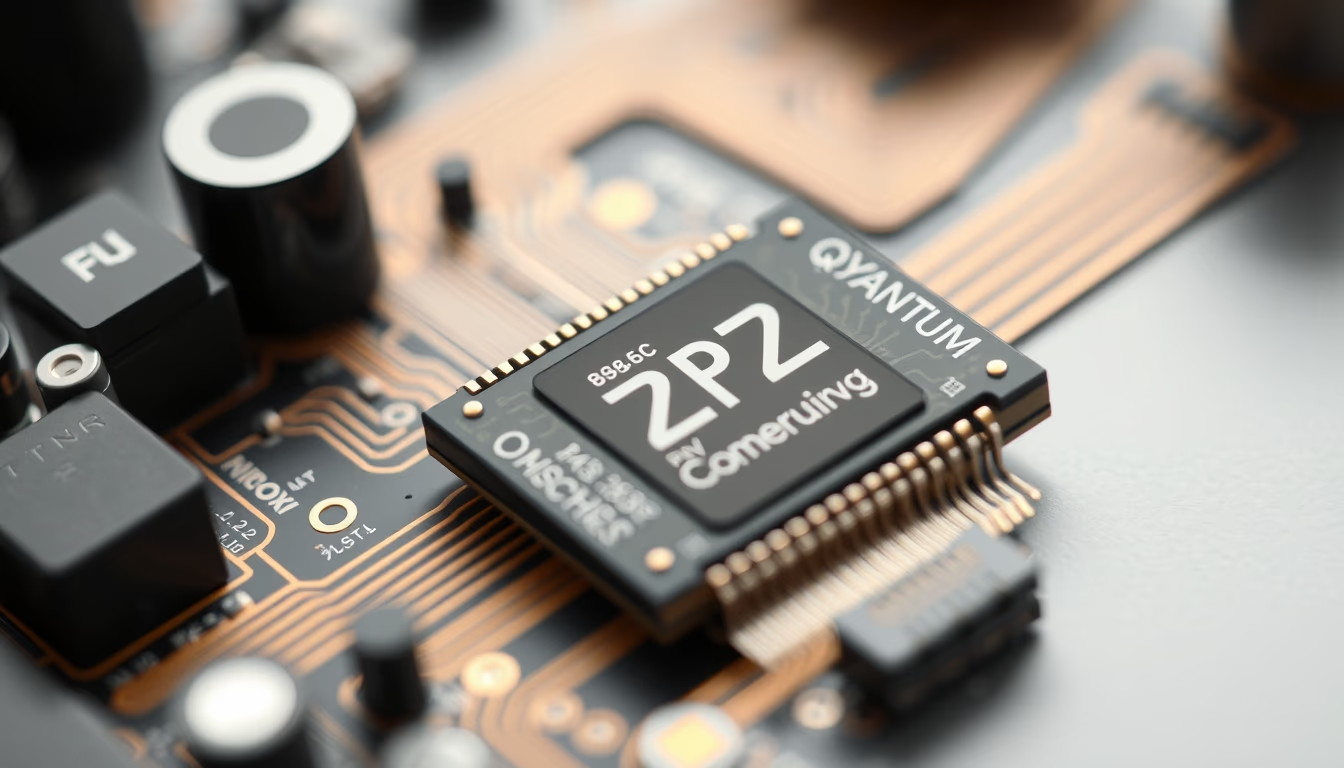
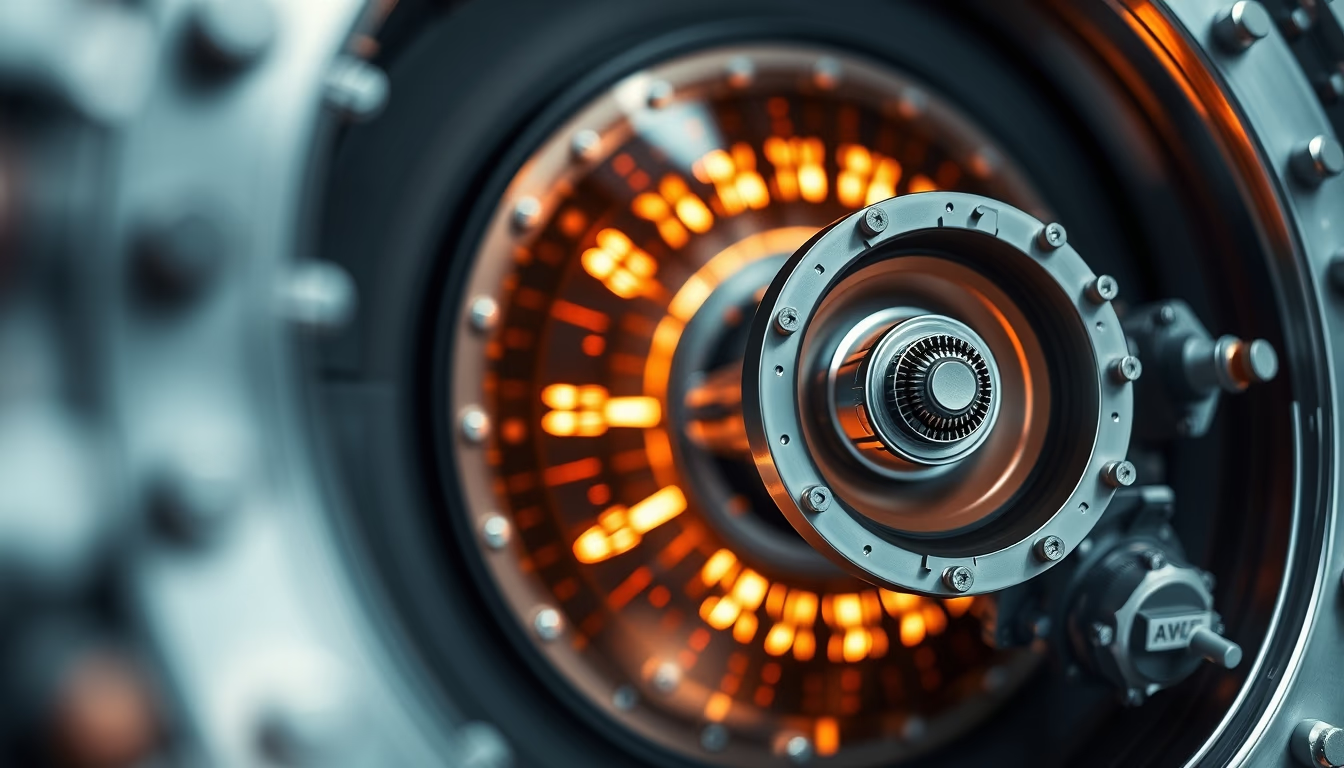
The cyclotron accelerates charged particles in a spiral path, crucial for nuclear physics and medical research.
About this subject
The cyclotron is a type of particle accelerator invented by Ernest Lawrence in 1932, for which he won the Nobel Prize in Physics in 1939. It uses a constant magnetic field and an oscillating electric field to accelerate charged particles, such as protons or ions, in spiral trajectories. As the particles gain energy, their radius of curvature increases until they are ejected at high speeds for experiments. Its importance is immense: beyond fundamental nuclear physics research, the cyclotron is used to produce radioisotopes for medical diagnosis and treatment, such as in positron emission tomography (PET) scans. In Brazil, the first cyclotron was installed at the University of São Paulo (USP) in the 1950s, boosting nuclear physics research in the country. Today, several cyclotrons are in operation in hospitals and research centers, including at the Institute for Energy and Nuclear Research (IPEN) and the Albert Einstein Hospital. Interestingly, the idea for the cyclotron came from a 1929 paper on particle accelerators, and Lawrence and his graduate student M. Stanley Livingston built the first model using household items like cans and wax. The cyclotron also inspired the development of more modern accelerators, such as the synchrotron and the Large Hadron Collider (LHC). Its relevance extends beyond physics: proton therapy, which uses proton beams generated by cyclotrons, is an advanced cancer radiotherapy technique offering precision and fewer side effects.
Frequently Asked Questions
How does a cyclotron work?
A cyclotron accelerates charged particles using a constant magnetic field that curves them in a spiral and an alternating electric field that speeds them up each half-turn.
What are the medical applications of cyclotrons?
Cyclotrons produce radioisotopes for PET scans and are also used in proton therapy to treat cancer with high precision.
Who invented the cyclotron and when?
The cyclotron was invented by American physicist Ernest Lawrence in 1932, earning him the Nobel Prize in Physics in 1939.
Direct URL
https://pub-c7d6a6ea828543ac903a74a341ccb2e1.r2.dev/imagens/cyclotron-particle-fine-art-photography-p12.avifHow to credit
Include a visible link back to UtilizAí. Copy one of the snippets below:
<a href="https://xn--utiliza-eza.com/en/midia/imagens/cyclotron-particle-fine-art-photography-p12">Cyclotron particle</a> by <a href="https://xn--utiliza-eza.com">UtilizAí</a>, licensed under <a href="https://creativecommons.org/licenses/by/4.0/">CC BY 4.0</a>.
[Cyclotron particle](https://xn--utiliza-eza.com/en/midia/imagens/cyclotron-particle-fine-art-photography-p12) by [UtilizAí](https://xn--utiliza-eza.com), CC BY 4.0
License: CC-BY-4.0