Quantum computer chip detail
1344×768 · AVIF · CC BY 4.0
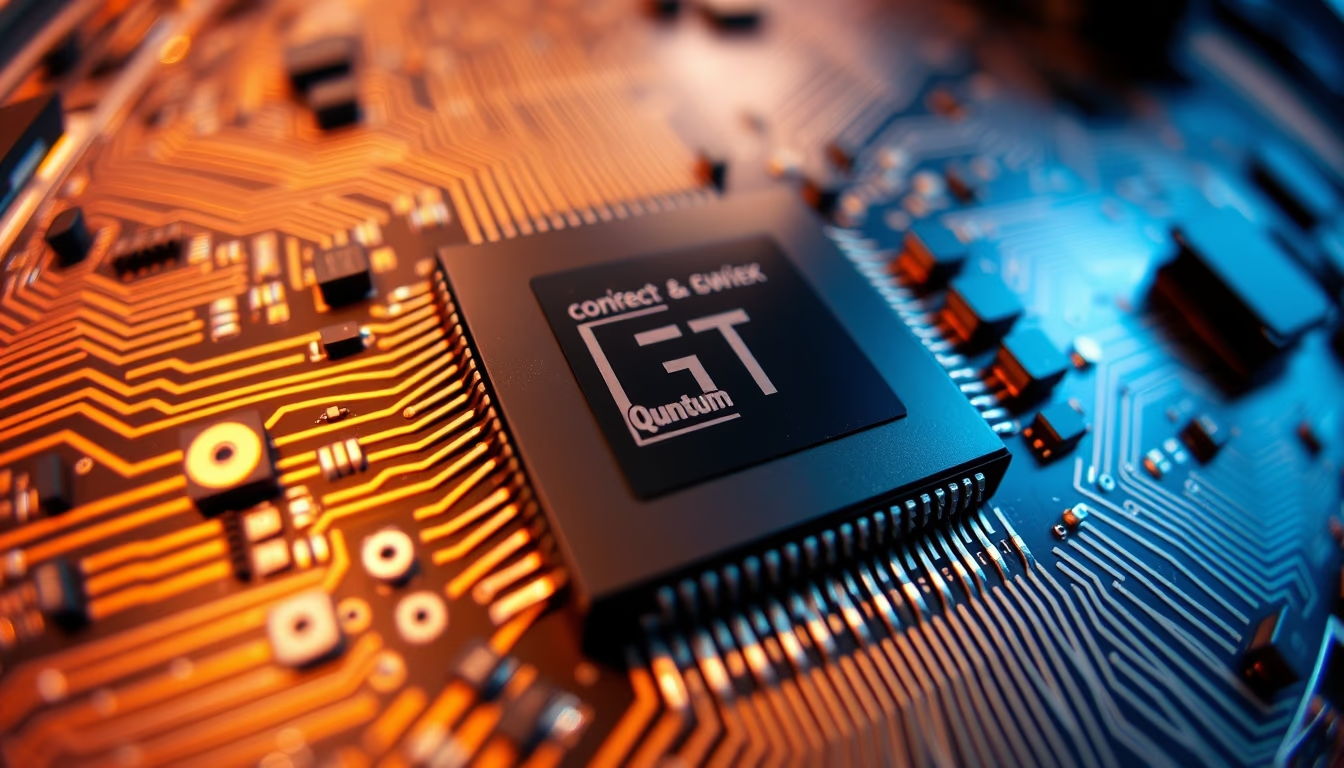
A detailed look at a quantum computer chip, showcasing the complexity of superconducting circuits that perform quantum calculations.
About this subject
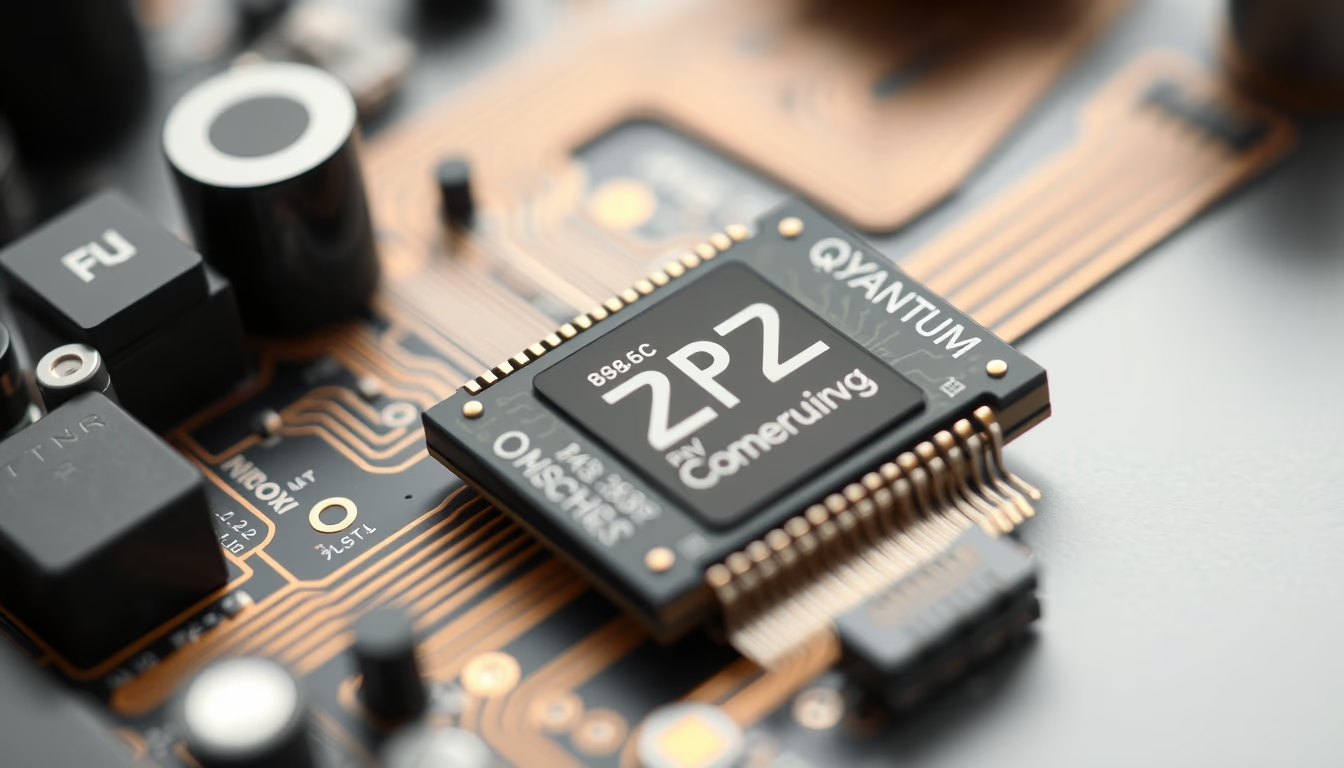
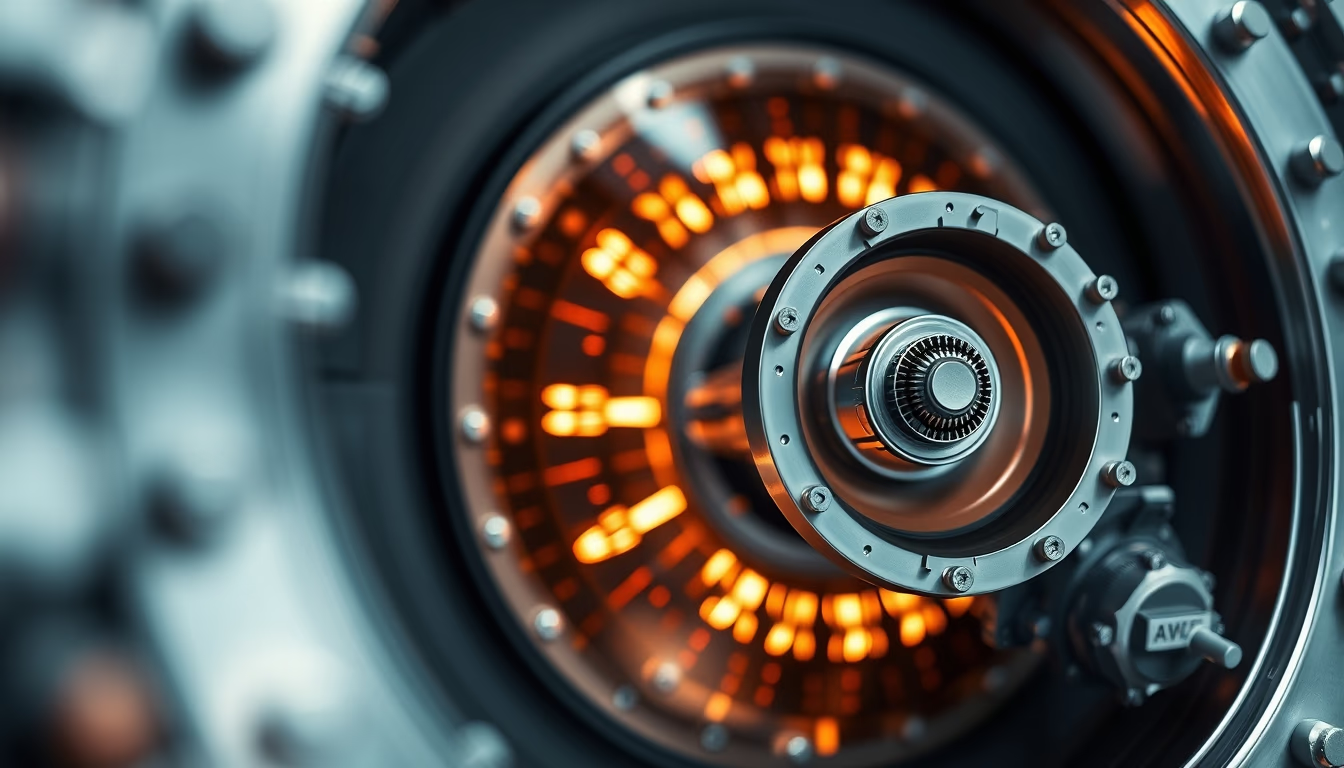
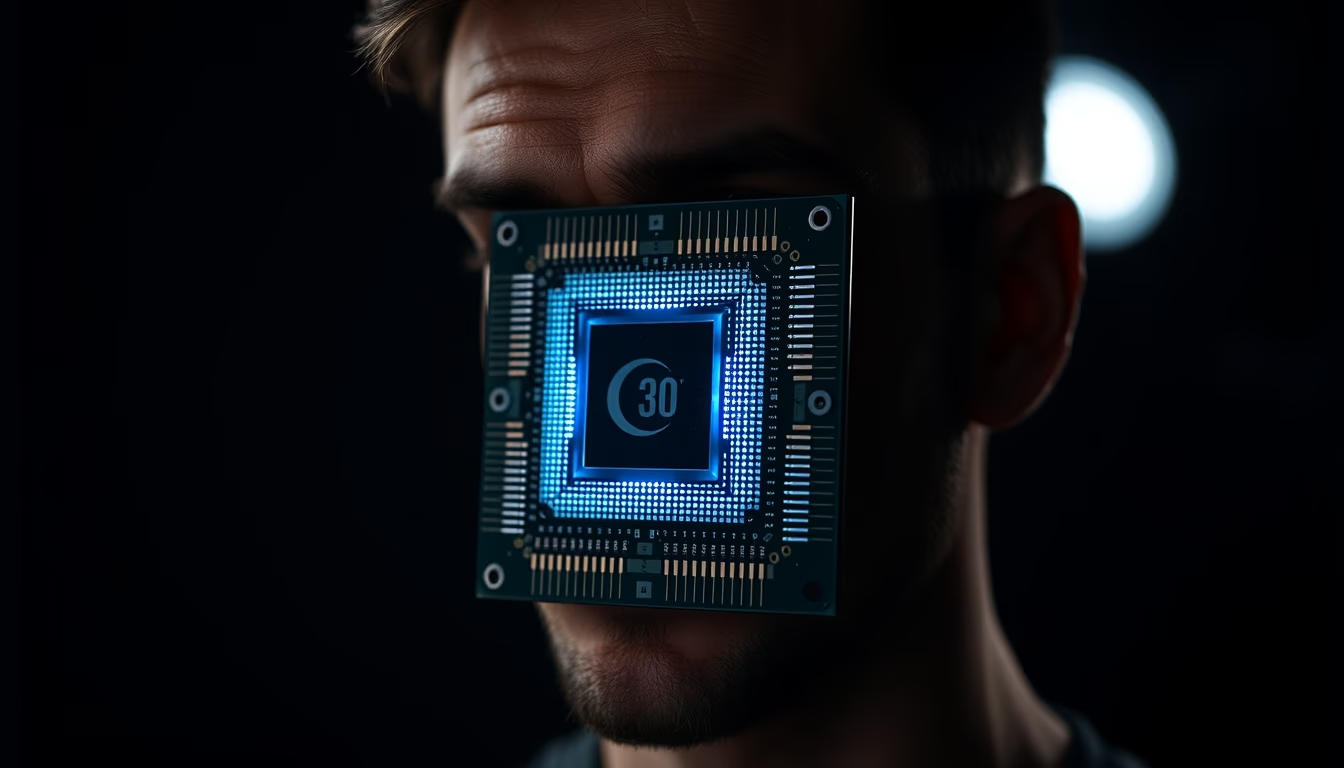
The quantum computer chip is the heart of devices that exploit principles of quantum mechanics to process information. Unlike classical chips, which use transistors to represent bits (0 or 1), quantum chips use qubits, which can be in superposition states. This allows solving complex problems in areas such as cryptography, molecular simulation, and optimization. The image depicts a superconducting chip, typical of companies like Google, IBM, and Rigetti. These chips operate at cryogenic temperatures, close to 15 millikelvins, inside dilution refrigerators. The visible structure includes qubits made of niobium or aluminum, arranged in a grid, with resonators and control lines that apply microwave pulses to manipulate the qubits. The fish-eye lens used in the capture amplifies depth perception, highlighting the intricate network of wires and connectors that carry electrical and microwave signals to the chip. In 2019, Google's Sycamore chip performed a calculation in 200 seconds that would take 10,000 years on a classical supercomputer, demonstrating quantum supremacy. Qubit reliability remains a challenge: they suffer from decoherence, requiring error correction. Each chip can contain dozens to hundreds of qubits, but future projects aim for thousands or millions for practical applications.
Frequently Asked Questions
What is the difference between a quantum chip and a classical chip?
A classical chip uses transistors to represent bits with values 0 or 1. A quantum chip uses qubits, which can be in superposition of both states simultaneously, allowing processing of multiple possibilities at once.
Why do quantum chips need to be cooled?
They operate at temperatures near absolute zero (about -273°C) to minimize thermal vibrations and maintain quantum coherence. Superconducting qubits only work in this cryogenic regime.
How many qubits does a current quantum chip have?
Current commercial chips have dozens to a few hundred qubits. For example, the IBM Osprey processor has 433 qubits, and Google Sycamore has 53 qubits. Practical applications are estimated to require thousands or millions of qubits with error correction.
Direct URL
https://pub-c7d6a6ea828543ac903a74a341ccb2e1.r2.dev/imagens/quantum-computer-chip-detail-fish-eye-wide-angle-p2.avifHow to credit
Include a visible link back to UtilizAí. Copy one of the snippets below:
<a href="https://xn--utiliza-eza.com/en/midia/imagens/quantum-computer-chip-detail-fish-eye-wide-angle-p2">Quantum computer chip detail</a> by <a href="https://xn--utiliza-eza.com">UtilizAí</a>, licensed under <a href="https://creativecommons.org/licenses/by/4.0/">CC BY 4.0</a>.
[Quantum computer chip detail](https://xn--utiliza-eza.com/en/midia/imagens/quantum-computer-chip-detail-fish-eye-wide-angle-p2) by [UtilizAí](https://xn--utiliza-eza.com), CC BY 4.0
License: CC-BY-4.0