Pencil sharpener vintage
1344×768 · AVIF · CC BY 4.0
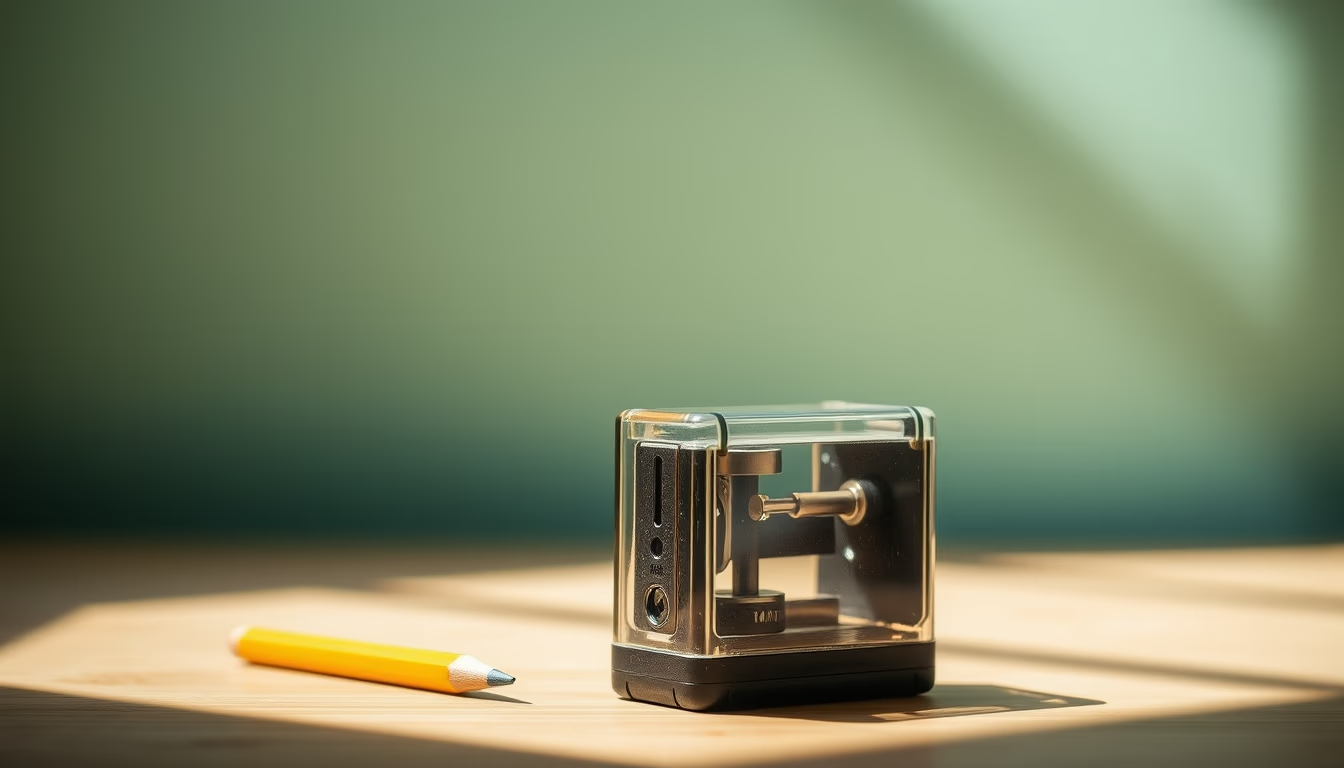
The vintage pencil sharpener, an object of design and functionality, marked generations before modern electric models.
About this subject
The vintage pencil sharpener represents an important chapter in the history of writing instruments. Emerging in the 19th century, its basic principle of a rotating or fixed blade revolutionized how we prepare our pencils for use. Before its invention, people used knives for sharpening, which was imprecise and dangerous. The first mechanical sharpener was patented by Frenchman Therry des Estwaux in 1847, but American John Lee Love popularized the portable prismatic design in 1897.
In Brazil, the most common vintage sharpeners are made of metal with holes of different diameters, fixed to desks or school tables. Many people remember the cube-shaped or small box models that collected graphite dust. These objects not only served a practical function but also became collector's items. The variety of designs includes animal figures, characters, and geometric shapes, reflecting Art Deco or industrial styles of the time.
The durability of vintage sharpeners is remarkable. Made of cast or stamped metal, with replaceable steel blades, many still work perfectly after decades of use. Collectors seek rare models, such as wall-mounted sharpeners manufactured by the German company KUM or Japanese models with gear mechanisms. Additionally, the graphite dust produced by these sharpeners was often reused as lubricant for locks or to create homemade pigment.
Today, vintage sharpeners are appreciated for their aesthetic appeal and connection to a pre-digital era. They represent a time when objects were built to last and designed with care. Whether in antique shops or private collections, these utensils continue to tell stories about the evolution of writing materials and functional design.
Frequently Asked Questions
What was the first patented pencil sharpener?
The first mechanical sharpener was patented by Frenchman Therry des Estwaux in 1847. Later, in 1897, John Lee Love patented the portable prismatic model.
Why are vintage sharpeners considered collectible?
They are valued for their varied designs, durability, and representation of a pre-digital era. Rare models from brands like KUM (Germany) or vintage Japanese sharpeners are especially sought after.
How was graphite dust from vintage sharpeners reused?
The graphite dust, rich in carbon, was used as a lubricant for locks, to polish metals, or even to create homemade drawing pigments.
Direct URL
https://pub-c7d6a6ea828543ac903a74a341ccb2e1.r2.dev/imagens/pencil-sharpener-vintage-minimalist-composition-fresh18.avifHow to credit
Include a visible link back to UtilizAí. Copy one of the snippets below:
<a href="https://xn--utiliza-eza.com/en/midia/imagens/pencil-sharpener-vintage-minimalist-composition-fresh18">Pencil sharpener vintage</a> by <a href="https://xn--utiliza-eza.com">UtilizAí</a>, licensed under <a href="https://creativecommons.org/licenses/by/4.0/">CC BY 4.0</a>.
[Pencil sharpener vintage](https://xn--utiliza-eza.com/en/midia/imagens/pencil-sharpener-vintage-minimalist-composition-fresh18) by [UtilizAí](https://xn--utiliza-eza.com), CC BY 4.0
License: CC-BY-4.0