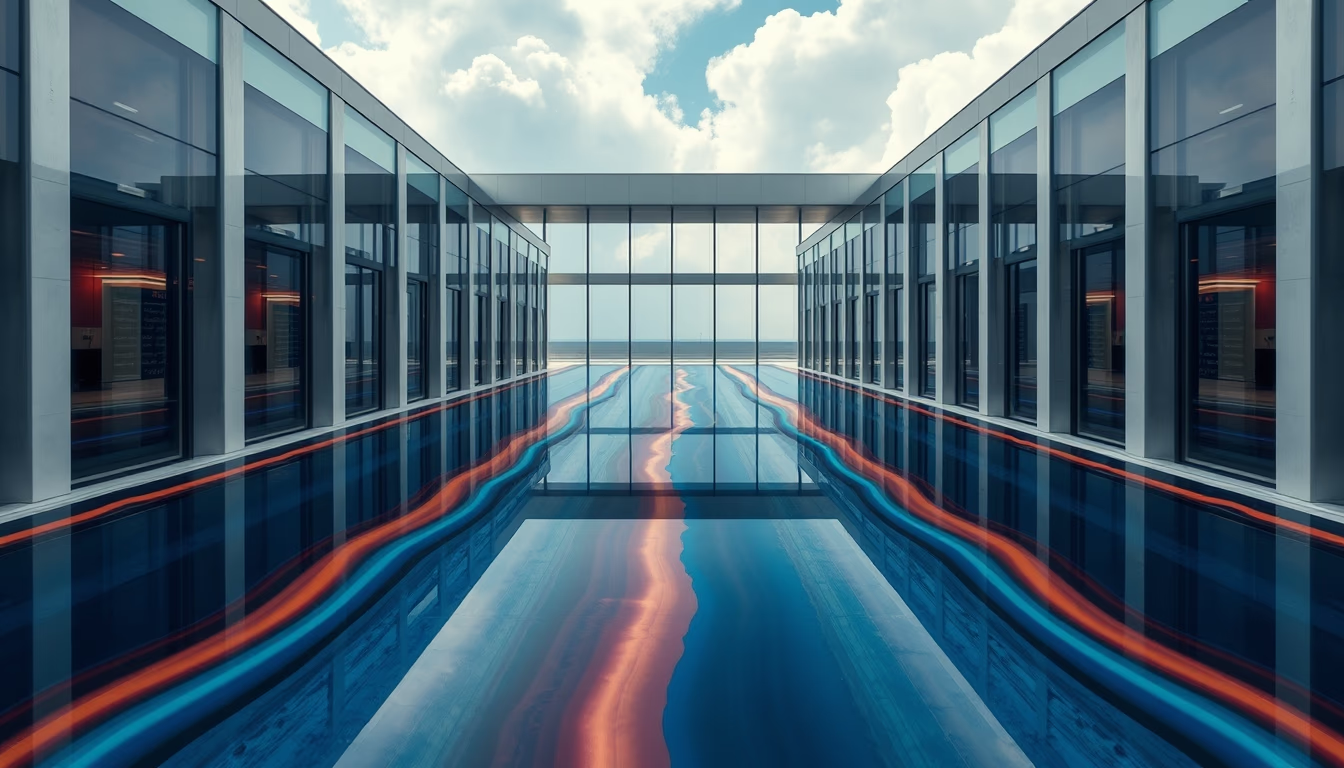
Particles glowing dark
1344×768 · AVIF · CC BY 4.0

Dark glowing particles in abstract photography: technique, aesthetics, and symbolism in contemporary art.
About this subject
The depiction of dark glowing particles is a recurring theme in abstract photography and digital art. It evokes concepts such as infinity, the microcosm, and invisible energy pervading the universe. In photographic practice, this effect can be achieved through long exposures, moving point lights (light painting), or digital manipulation of real particles like dust or illuminated smoke. Artists such as Eric Staller and Vitor Schietti have explored variations of this aesthetic, creating compositions that resemble nebulae, stellar explosions, or fragments of dark matter. Culturally, the image of glowing particles in darkness echoes the Impressionist tradition of capturing light's nuances and kinetic art's emphasis on movement and transformation. In the Brazilian context, immersive art exhibitions like those by the Oi Kabum! collective use projections of luminous particles to engage viewers in sensory experiences. Technically, capturing dark glowing particles requires deep knowledge of exposure, ISO, and aperture, as well as post-processing to enhance contrast between the black background and light points. This style gained traction on platforms like Instagram and Behance from 2018 onward, associated with trends such as vaporwave, glitch art, and cyberpunk aesthetics. By 2026, particle photography is expected to further integrate augmented reality and generative AI, enabling real-time creations that respond to the user's environment. For collectors, these artworks represent a link between the scientific and the poetic, serving as visual metaphors for quantum theory or the fragility of existence.
Frequently Asked Questions
How are images of dark glowing particles created in photography?
They are made using long exposures with moving light sources like LEDs or lasers, or by capturing real particles (dust, smoke) illuminated and later enhancing contrast and brightness digitally.
What is the relationship of this style to contemporary art?
It dialogues with movements such as Impressionism (light), kinetic art (movement), and cyberpunk (nighttime aesthetics), and is used in immersive installations and NFTs.
Are these images considered fine art?
Yes, when created with artistic intent and refined technique. Many photographers exhibit in galleries and sell limited edition prints, being accepted in both digital and physical art markets.
Direct URL
https://pub-c7d6a6ea828543ac903a74a341ccb2e1.r2.dev/imagens/particles-glowing-dark-fine-art-photography-p3.avifHow to credit
Include a visible link back to UtilizAí. Copy one of the snippets below:
<a href="https://xn--utiliza-eza.com/en/midia/imagens/particles-glowing-dark-fine-art-photography-p3">Particles glowing dark</a> by <a href="https://xn--utiliza-eza.com">UtilizAí</a>, licensed under <a href="https://creativecommons.org/licenses/by/4.0/">CC BY 4.0</a>.
[Particles glowing dark](https://xn--utiliza-eza.com/en/midia/imagens/particles-glowing-dark-fine-art-photography-p3) by [UtilizAí](https://xn--utiliza-eza.com), CC BY 4.0
License: CC-BY-4.0