Particles glowing dark
1344×768 · AVIF · CC BY 4.0
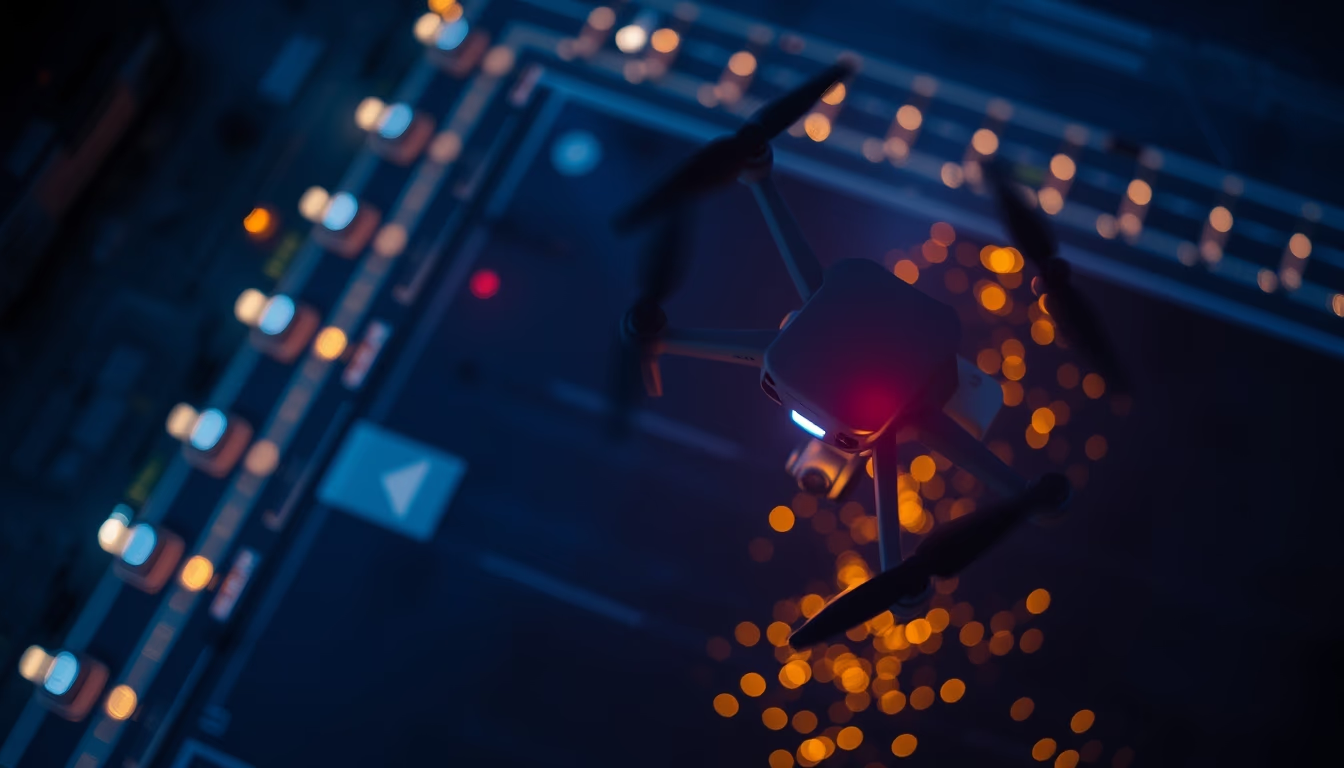
Glowing particles in darkness reveal the marine bioluminescence phenomenon, captured by aerial drone in tropical regions.
About this subject
Glowing particles in darkness, such as those depicted in this abstract image, are often associated with the bioluminescence of marine microorganisms, especially the dinoflagellate Noctiluca scintillans, commonly known as 'sea sparkle'. This phenomenon occurs when these plankton are agitated by waves, currents, or boat movement, emitting a blue or green glow. It is most frequently observed in tropical and temperate regions, such as the Maldives, Jervis Bay (Australia), and Mosquito Bay (Puerto Rico), where dense concentrations create spectacular nighttime visual effects.
The intensity and color of the luminescence depend on the species and environmental conditions. Noctiluca, for example, produces blue light due to a pH-sensitive luciferin. Other organisms, like ctenophores (comb jellies), generate green flashes. Global warming and eutrophication can increase the frequency of bioluminescent blooms, making the phenomenon more common in some areas, but also potentially indicating ecological imbalances such as red tides, which release toxins harmful to marine life.
From a scientific perspective, bioluminescence is a form of chemiluminescence produced in specialized cells called photophores. It is estimated that over 80% of deep-sea species possess this ability, used for defense, prey attraction, or communication. On the surface, dinoflagellate blooms are monitored by satellites and drones, aiding in red tide prediction and coastal ecosystem conservation.
Culturally, the nocturnal glow of the sea has inspired myths and legends across civilizations. In ancient India, the lights were believed to be sea fairies. Today, the phenomenon drives ecotourism in destinations such as Phi Phi Islands (Thailand) and Toyama Bay (Japan), where nighttime kayak tours with glass bottoms allow observation of the underwater spectacle. The drone image, showing dispersed particles against a dark background, evokes this unique experience between the marine microcosm and the vast ocean.
Frequently Asked Questions
What causes glowing particles in the dark in the sea?
They are caused by bioluminescent organisms, mainly dinoflagellates like Noctiluca scintillans, which emit light when agitated. The chemical reaction involves luciferin and oxygen, catalyzed by the enzyme luciferase.
Where can I see the phenomenon of glowing particles in the dark?
In locations with high concentrations of bioluminescent plankton, such as the Maldives, Puerto Rico (Mosquito Bay), Jamaica (Luminous Lagoon), and the coast of San Diego (USA). The best time is during moonless nights, in summer, or after rains that bring nutrients.
Are glowing particles dangerous?
Generally no. But some dinoflagellate blooms produce toxins that can kill fish and cause irritation in humans, known as red tide. The bioluminescence itself is harmless.
Direct URL
https://pub-c7d6a6ea828543ac903a74a341ccb2e1.r2.dev/imagens/particles-glowing-dark-aerial-drone-shot-p0.avifHow to credit
Include a visible link back to UtilizAí. Copy one of the snippets below:
<a href="https://xn--utiliza-eza.com/en/midia/imagens/particles-glowing-dark-aerial-drone-shot-p0">Particles glowing dark</a> by <a href="https://xn--utiliza-eza.com">UtilizAí</a>, licensed under <a href="https://creativecommons.org/licenses/by/4.0/">CC BY 4.0</a>.
[Particles glowing dark](https://xn--utiliza-eza.com/en/midia/imagens/particles-glowing-dark-aerial-drone-shot-p0) by [UtilizAí](https://xn--utiliza-eza.com), CC BY 4.0
License: CC-BY-4.0