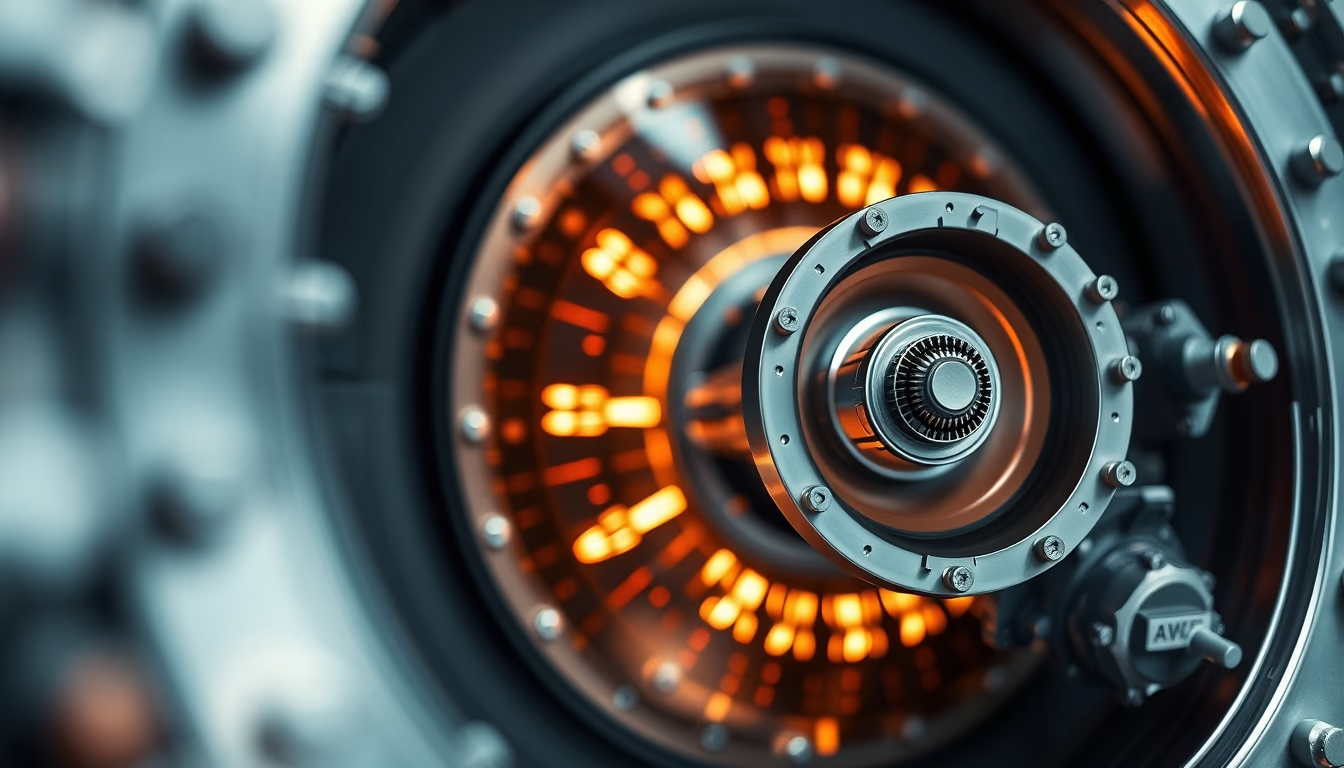
Acelerador de partículas interior cern
1344×768 · AVIF · CC BY 4.0
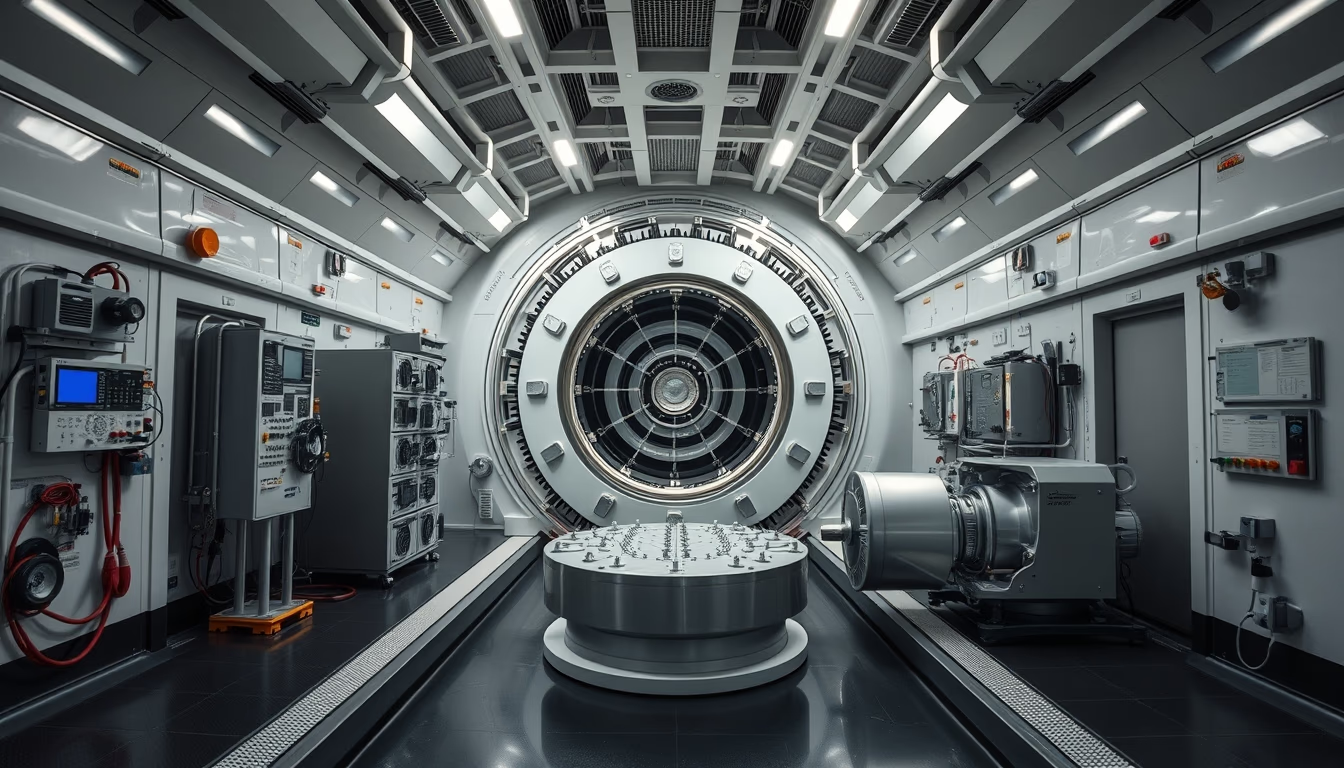
O interior do acelerador de partículas do CERN revela a engenharia complexa que permite colidir prótons a velocidades próximas à da luz.
Sobre o tema
O Grande Colisor de Hádrons (LHC) do CERN, localizado na fronteira entre a Suíça e a França, é o maior e mais potente acelerador de partículas do mundo. Seu anel principal tem 27 quilômetros de circunferência, instalado a cerca de 100 metros de profundidade. No interior, milhares de ímãs supercondutores guiam e aceleram partículas subatômicas, como prótons, até que atinjam 99,9999991% da velocidade da luz.
Esses ímãs operam a uma temperatura de -271,3°C, mais fria que o espaço interestelar, utilizando hélio líquido para manter a supercondutividade. As colisões geram condições similares às do universo instantes após o Big Bang. Quatro grandes detectores (ATLAS, CMS, ALICE e LHCb) analisam os destroços das colisões, processando petabytes de dados por ano. Foi nesse ambiente que, em 2012, se confirmou a existência do bóson de Higgs, partícula fundamental para explicar a origem da massa.
Construído entre 1998 e 2008, o LHC envolveu mais de 10.000 cientistas e engenheiros de 100 países. Além da física de partículas, suas inovações tecnológicas contribuíram para áreas como a computação distribuída (GRID) e a criogenia. O interior do acelerador, com seus cabos, dutos e estruturas metálicas, é um exemplo notável de arquitetura industrial de alta precisão.
Perguntas frequentes
Qual a finalidade do acelerador de partículas do CERN?
Acelerar partículas subatômicas, como prótons, a altíssimas velocidades e colidi-las para estudar as leis fundamentais da matéria, reproduzindo condições do início do Universo.
Como os prótons são acelerados no LHC?
Os prótons passam por uma série de aceleradores menores antes de serem injetados no anel principal. Ali, campos elétricos alternados os impulsionam, enquanto ímãs supercondutores os curvam e focalizam ao longo dos 27 km.
Qual a temperatura dentro do acelerador e por que ela é tão baixa?
Os ímãs supercondutores operam a -271,3°C (1,9 K) para eliminar resistência elétrica e gerar campos magnéticos intensos, essenciais para controlar as partículas.
URL direta
https://pub-c7d6a6ea828543ac903a74a341ccb2e1.r2.dev/imagens/particle-accelerator-interior-cern-architectural-photography-p7.avifComo creditar
Inclua um link visível de volta pro UtilizAí. Copie um dos snippets abaixo:
<a href="https://xn--utiliza-eza.com/midia/imagens/particle-accelerator-interior-cern-architectural-photography-p7">Acelerador de partículas interior cern</a> by <a href="https://xn--utiliza-eza.com">UtilizAí</a>, licensed under <a href="https://creativecommons.org/licenses/by/4.0/">CC BY 4.0</a>.
[Acelerador de partículas interior cern](https://xn--utiliza-eza.com/midia/imagens/particle-accelerator-interior-cern-architectural-photography-p7) by [UtilizAí](https://xn--utiliza-eza.com), CC BY 4.0
Licença: CC-BY-4.0