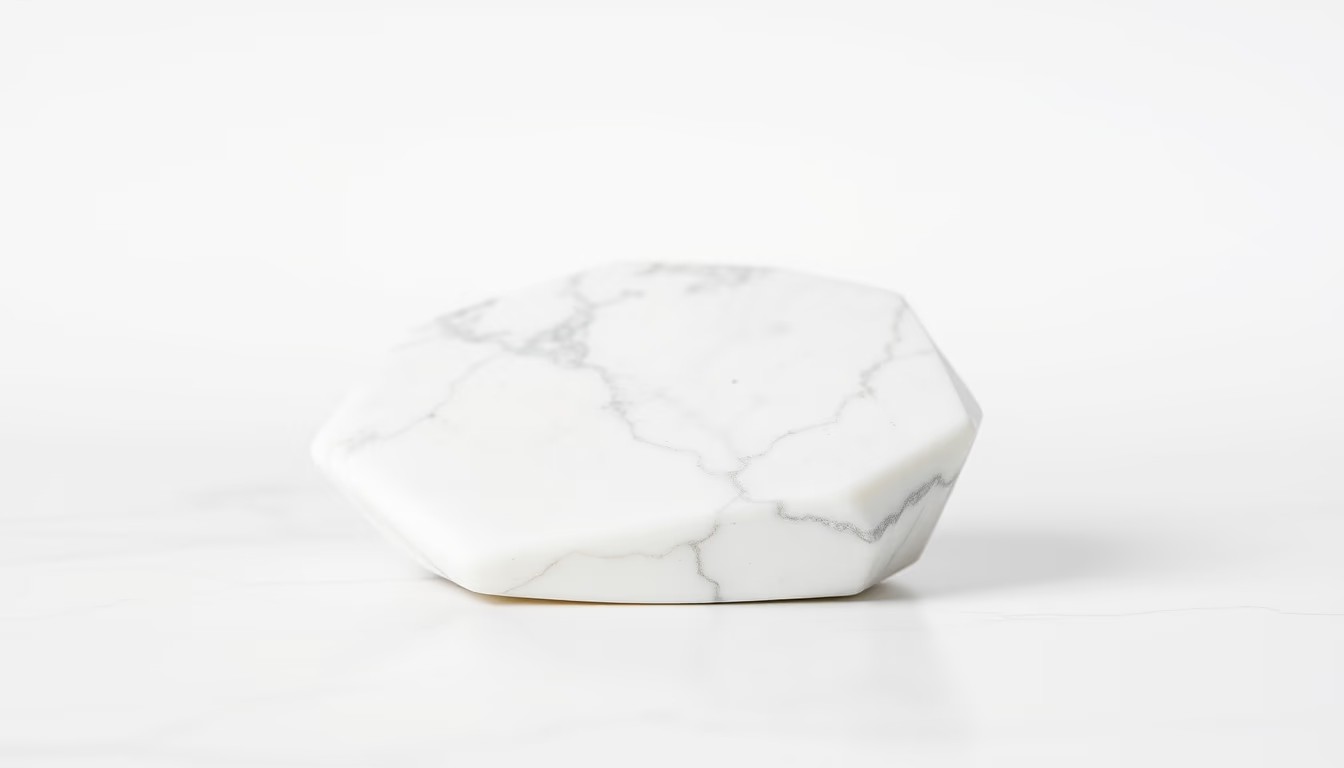
Minimalist white space
1344×768 · AVIF · CC BY 4.0

Minimalist white space is an essential element in visual composition, valued by contemporary design and lo-fi photography.
About this subject
White space, also known as negative space, is the empty area surrounding elements in a visual composition. In graphic design and photography, it is not merely an inert background but an active component that defines hierarchy, balance, and breathing room. Minimalism, a movement that gained momentum in the 1960s in the visual arts, elevated empty space to a leading role: less is more, as architect Ludwig Mies van der Rohe advocated. In lo-fi aesthetics, often associated with disposable cameras and grainy film, white space acquires a nostalgic and imperfect quality, evoking spontaneous records and emotional memories.
Applied to street photography or portraits, negative space directs the viewer's gaze to the main subject, creating a sense of isolation, calm, or contemplation. In Brazil, the use of wide empty spaces is noticeable in the work of photographers like Maureen Bisilliat, who explored the contours of the human body against neutral backgrounds, or in the production of contemporary artists who work with visual absence as a critique of information overload. By 2026, the global trend of 2026 points to a return to digital minimalism, with cleaner interfaces and compositions that prioritize clarity, contrasting with the visual pollution of social media.
Interestingly, white space is not necessarily white: it can be any color or texture as long as it does not compete with the main element. In disposable cameras, the grain and vignette of the film turn emptiness into texture, adding a tactile layer to the image. The composition technique known as the rule of thirds often leaves two-thirds of the frame empty, maximizing the impact of the subject. Studies in visual perception show that well-distributed empty spaces can improve readability and information retention by up to 20%, which justifies their ubiquity in logos and website layouts.
For the beginner photographer, mastering the use of negative space is a fundamental step toward creating images with personality. Instead of filling every inch of the frame, learning to value emptiness allows each element to exist with more weight and meaning.
Frequently Asked Questions
What is white space in design?
White space or negative space is the empty area around elements in a composition. It helps organize information, emphasize the main content, and improve readability.
How to use white space in photography?
In photography, leave empty areas around the main subject. The rule of thirds is a good starting point: place the subject at one of the intersection points and leave the rest of the frame empty or simple.
What is the relationship between minimalism and white space?
Minimalism advocates simplicity and the elimination of the superfluous. White space is an essential tool to achieve this aesthetic, providing breathing room and clarity to the composition.
Direct URL
https://pub-c7d6a6ea828543ac903a74a341ccb2e1.r2.dev/imagens/minimalist-white-space-lo-fi-disposable-camera-p1.avifHow to credit
Include a visible link back to UtilizAí. Copy one of the snippets below:
<a href="https://xn--utiliza-eza.com/en/midia/imagens/minimalist-white-space-lo-fi-disposable-camera-p1">Minimalist white space</a> by <a href="https://xn--utiliza-eza.com">UtilizAí</a>, licensed under <a href="https://creativecommons.org/licenses/by/4.0/">CC BY 4.0</a>.
[Minimalist white space](https://xn--utiliza-eza.com/en/midia/imagens/minimalist-white-space-lo-fi-disposable-camera-p1) by [UtilizAí](https://xn--utiliza-eza.com), CC BY 4.0
License: CC-BY-4.0