Marble white veined
1344×768 · AVIF · CC BY 4.0

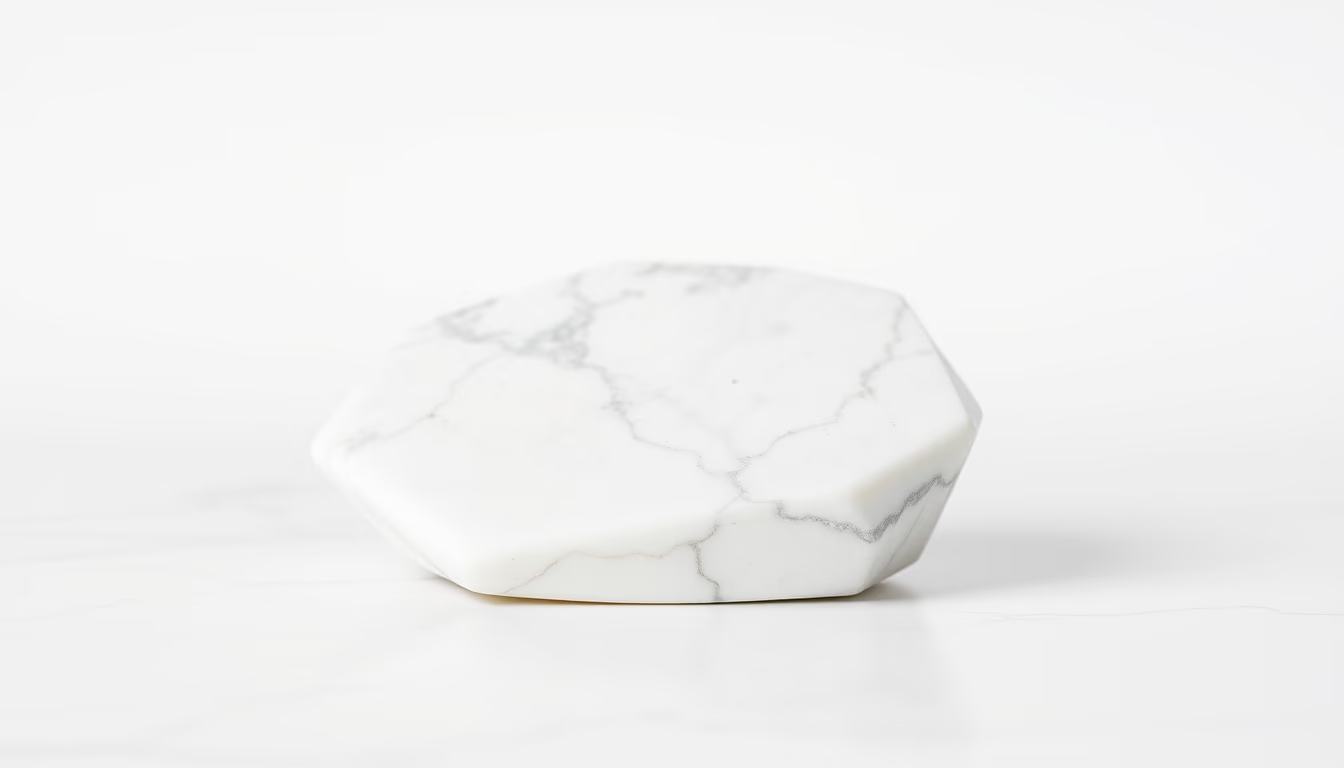
White marble with sinuous veins, a metamorphic rock formed by heat and pressure, used in sculpture and architecture for millennia.
About this subject
White veined marble is a metamorphic rock formed from limestone subjected to high temperatures and pressures within the Earth's crust. This process recrystallizes calcium carbonate grains, creating a compact, shiny texture. The characteristic veins arise from mineral impurities such as clay, sand, or metal oxides that infiltrated cracks before metamorphism. Each block of marble has a unique pattern, making it valuable for decorative applications.
Famous white marbles include Carrara from Italy, quarried since Roman times and used by Michelangelo for works like the Pietà and David. Other notable types are Calacatta, also Italian, with thicker golden veins, and Thassos from Greece, known for its pure whiteness. In Brazil, deposits in Minas Gerais and Espírito Santo produce white marbles with grayish or bluish veins, sold worldwide.
Marble is widely used for flooring, countertops, sculptures, and facades. Its strength and beauty make it a symbol of luxury and durability. However, it is a porous stone requiring sealants to prevent stains. Extraction and processing generate waste, but recycling scraps into gravel or powder is common. Aerial views of marble quarries reveal impressive geometric patterns, where precise cuts expose veins on a large scale.
Frequently Asked Questions
How do veins form in white marble?
Veins arise from mineral impurities such as clay, sand, or metal oxides that infiltrated fractures in limestone before metamorphism. During recrystallization, these materials deform and create the characteristic lines.
What is the difference between Carrara and Calacatta marble?
Carrara has a grayish-white background with fine, soft veins. Calacatta is whiter with thicker, dramatic veins often golden or brownish. Both come from Italy, but Calacatta is rarer and more expensive.
Is white marble resistant to stains?
Not naturally. Marble is porous and can stain from acidic liquids like wine or coffee. Periodic sealing and immediate cleanup of spills are recommended to preserve its appearance.
Direct URL
https://pub-c7d6a6ea828543ac903a74a341ccb2e1.r2.dev/imagens/marble-white-veined-aerial-drone-shot-p0.avifHow to credit
Include a visible link back to UtilizAí. Copy one of the snippets below:
<a href="https://xn--utiliza-eza.com/en/midia/imagens/marble-white-veined-aerial-drone-shot-p0">Marble white veined</a> by <a href="https://xn--utiliza-eza.com">UtilizAí</a>, licensed under <a href="https://creativecommons.org/licenses/by/4.0/">CC BY 4.0</a>.
[Marble white veined](https://xn--utiliza-eza.com/en/midia/imagens/marble-white-veined-aerial-drone-shot-p0) by [UtilizAí](https://xn--utiliza-eza.com), CC BY 4.0
License: CC-BY-4.0