Lightning bolt night sky
1344×768 · AVIF · CC BY 4.0
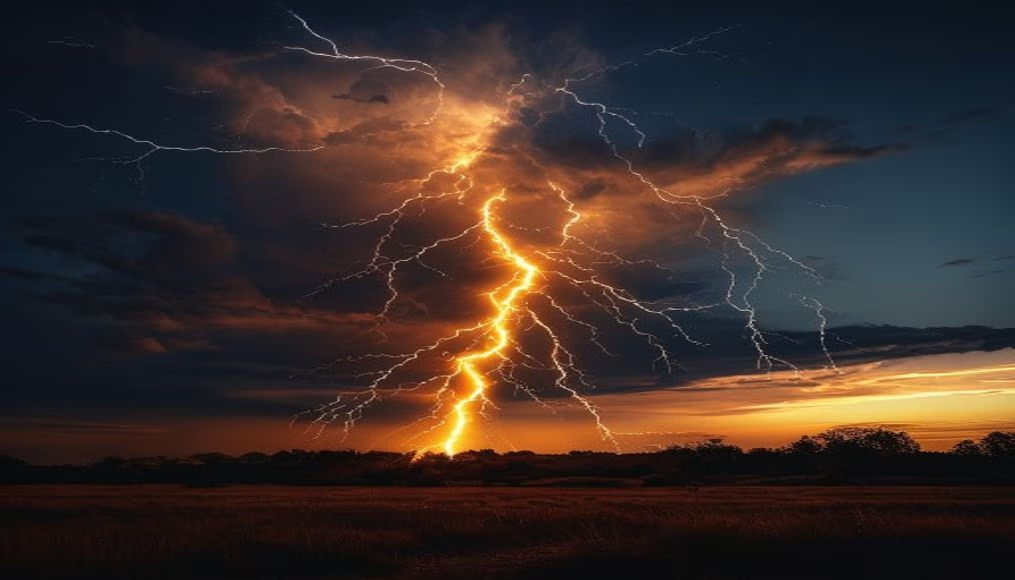
Lightning is an intense electrical discharge during thunderstorms, illuminating the night sky with instantaneous flashes of light.
About this subject
Lightning, also known as a thunderbolt, is an atmospheric phenomenon consisting of a high-intensity electrical discharge. It occurs when electrical charges accumulate in thunderstorm clouds, particularly cumulonimbus. The potential difference between the cloud and the ground, or within the cloud, can reach hundreds of millions of volts, generating currents up to 30 thousand amperes and temperatures above 30 thousand degrees Celsius, five times hotter than the Sun's surface. The sudden heating of the surrounding air causes violent expansion, producing thunder.
In Brazil, São Paulo state records high lightning activity, with over 100 days of lightning per year in some areas. The Amazon region also has high incidence. Globally, the highest frequency is at Lake Maracaibo in Venezuela, with about 250 strikes per square kilometer per year. Lightning holds scientific and cultural significance, linked to mythologies of gods like Zeus and Tupã.
Despite their beauty, lightning is dangerous. In Brazil, an average of 150 people die annually from lightning strikes, according to INPE. Safety measures include avoiding open areas, disconnecting electronic devices, and seeking shelter in sturdy buildings. For photographers, capturing lightning requires techniques like long exposure and tripods, making it a popular subject in travel photography.
Frequently Asked Questions
How does lightning form?
During thunderstorms, collisions between ice particles inside clouds generate electrical charges. The separation of positive and negative charges creates a strong electric field, which discharges as lightning.
What is the difference between lightning and thunderbolt?
In common usage, 'lightning' refers to the flash and 'thunderbolt' to the electrical discharge, but they are often used interchangeably. Technically, lightning is the entire phenomenon, while a thunderbolt is a lightning strike accompanied by thunder.
Is it safe to photograph lightning?
Yes, if you maintain a safe distance from the storm. Use a tripod and preferably shoot from a sheltered location. Never photograph in open fields or under rain if there is risk of a strike.
Direct URL
https://pub-c7d6a6ea828543ac903a74a341ccb2e1.r2.dev/imagens/lightning-bolt-night-sky-travel-photography-v10.avifHow to credit
Include a visible link back to UtilizAí. Copy one of the snippets below:
<a href="https://xn--utiliza-eza.com/en/midia/imagens/lightning-bolt-night-sky-travel-photography-v10">Lightning bolt night sky</a> by <a href="https://xn--utiliza-eza.com">UtilizAí</a>, licensed under <a href="https://creativecommons.org/licenses/by/4.0/">CC BY 4.0</a>.
[Lightning bolt night sky](https://xn--utiliza-eza.com/en/midia/imagens/lightning-bolt-night-sky-travel-photography-v10) by [UtilizAí](https://xn--utiliza-eza.com), CC BY 4.0
License: CC-BY-4.0