Gold leaf abstract
1344×768 · AVIF · CC BY 4.0
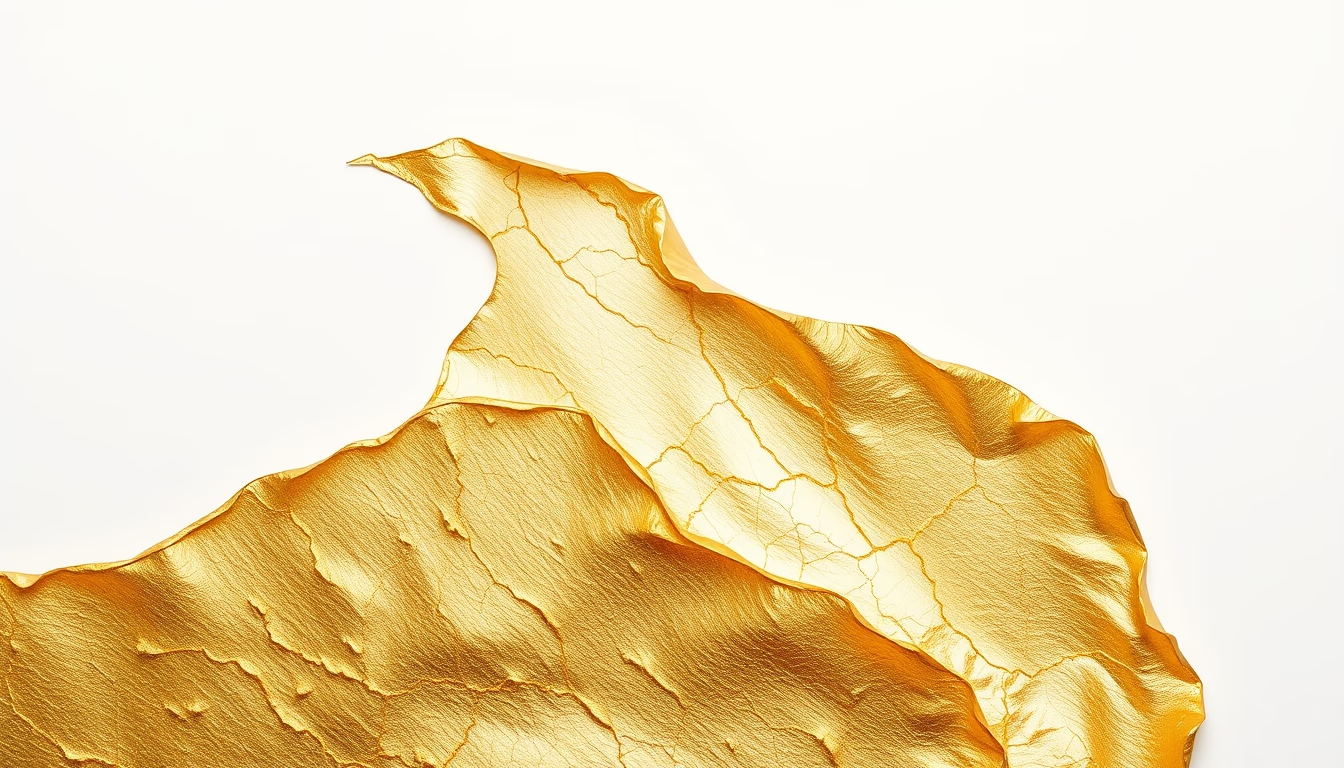
Gold leaf is an ancient material used in art and decoration. Discover its history, techniques, and contemporary applications.
About this subject
Gold leaf consists of extremely thin sheets of pure gold or alloys, obtained by hammering or rolling. This technique dates back thousands of years: in Ancient Egypt, artisans applied gold leaf to statues and jewelry. In Asia, gold leaf was used in Buddha sculptures in Thailand and Japanese temples. During the European Middle Ages and Renaissance, gilding with gold leaf became essential in illuminated manuscripts, altarpieces, and religious paintings.
Artisanal production requires hammering gold until it reaches thicknesses of only 0.1 micrometers, about 500 times thinner than a human hair. Each leaf is transferred to paper pages or temporary carriers before application. The water gilding process, known as 'water gilding', involves preparing a surface with gesso and glue, then applying the leaf with a special brush. The result is a metallic luster that does not tarnish because gold is a noble metal.
Culturally, gold leaf symbolizes wealth, power, and divinity. In many cultures, gilded objects are offered as offerings in religious ceremonies. In contemporary art, artists like Gustav Klimt used gold leaf in works such as 'The Kiss', and today the material is employed in photography, lampshades, furniture, and even gastronomy as edible leaf. The versatility of gold leaf ranges from restoration of antiques to modern abstract creations.
Despite its high cost, alternatives like Dutch metal (brass) or synthetic metallic foils imitate the appearance without the expense. However, true connoisseurs value the authenticity and tradition of gold leaf, whose luster lasts for centuries without fading. Gilding techniques are preserved by specialized craftspeople, ensuring this ancient craft continues.
Frequently Asked Questions
How is gold leaf produced?
Gold leaf is produced by hammering or rolling small ingots of gold into extremely thin sheets. The gold is repeatedly beaten between layers of paper or plastic until it reaches thicknesses of about 0.1 micrometers.
What are the differences between real gold leaf and imitation?
Real gold leaf does not tarnish and retains its luster for centuries, while imitations like Dutch metal (brass) may darken over time. Real gold leaf is more malleable and expensive, while synthetic alternatives are more affordable and easier to handle.
How to apply gold leaf on surfaces?
Traditional application involves cleaning the surface, applying a layer of gesso or primer, and then carefully placing the gold leaf with a brush. For water gilding, an adhesive solution is used and the leaf is transferred after partial drying. Excess is removed with a soft brush, and the surface can be burnished with agate.
Direct URL
https://pub-c7d6a6ea828543ac903a74a341ccb2e1.r2.dev/imagens/gold-leaf-abstract-magazine-editorial-p3.avifHow to credit
Include a visible link back to UtilizAí. Copy one of the snippets below:
<a href="https://xn--utiliza-eza.com/en/midia/imagens/gold-leaf-abstract-magazine-editorial-p3">Gold leaf abstract</a> by <a href="https://xn--utiliza-eza.com">UtilizAí</a>, licensed under <a href="https://creativecommons.org/licenses/by/4.0/">CC BY 4.0</a>.
[Gold leaf abstract](https://xn--utiliza-eza.com/en/midia/imagens/gold-leaf-abstract-magazine-editorial-p3) by [UtilizAí](https://xn--utiliza-eza.com), CC BY 4.0
License: CC-BY-4.0