Fusion reactor tokamak
1344×768 · AVIF · CC BY 4.0
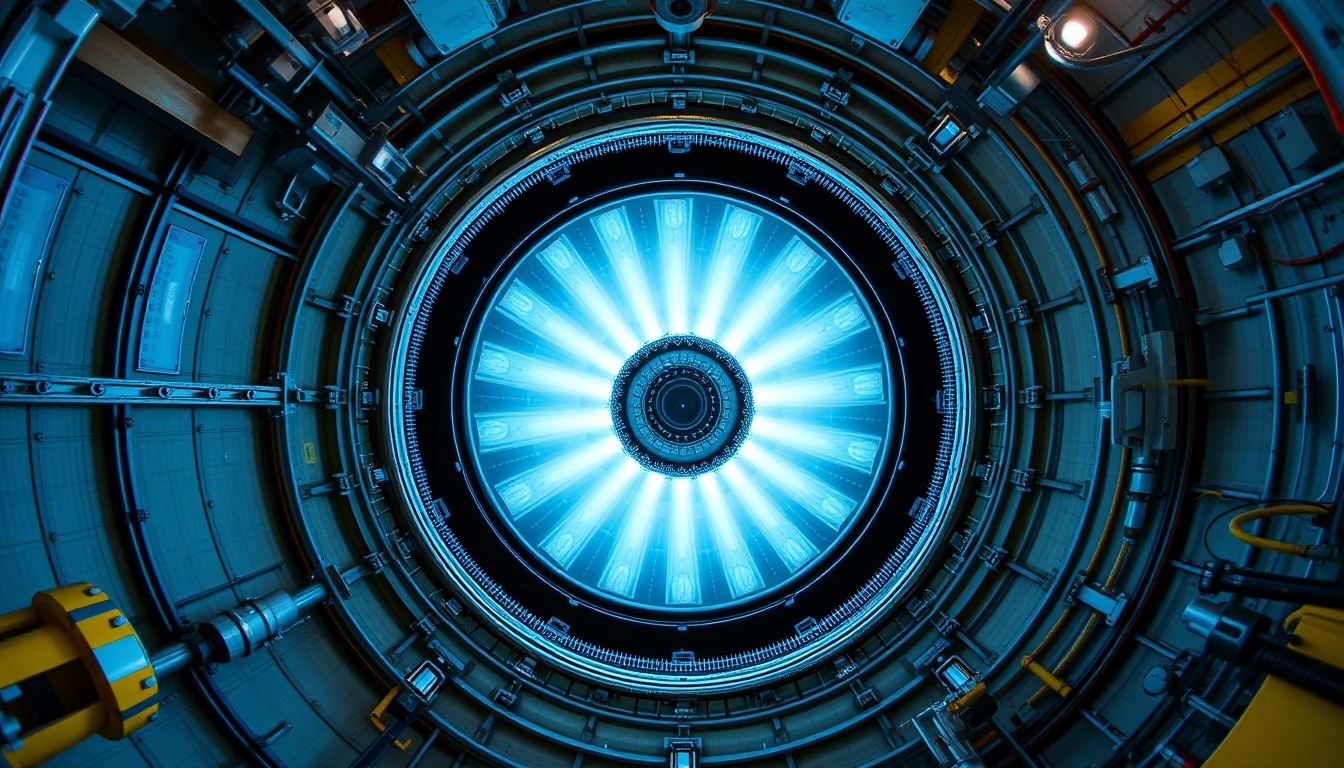
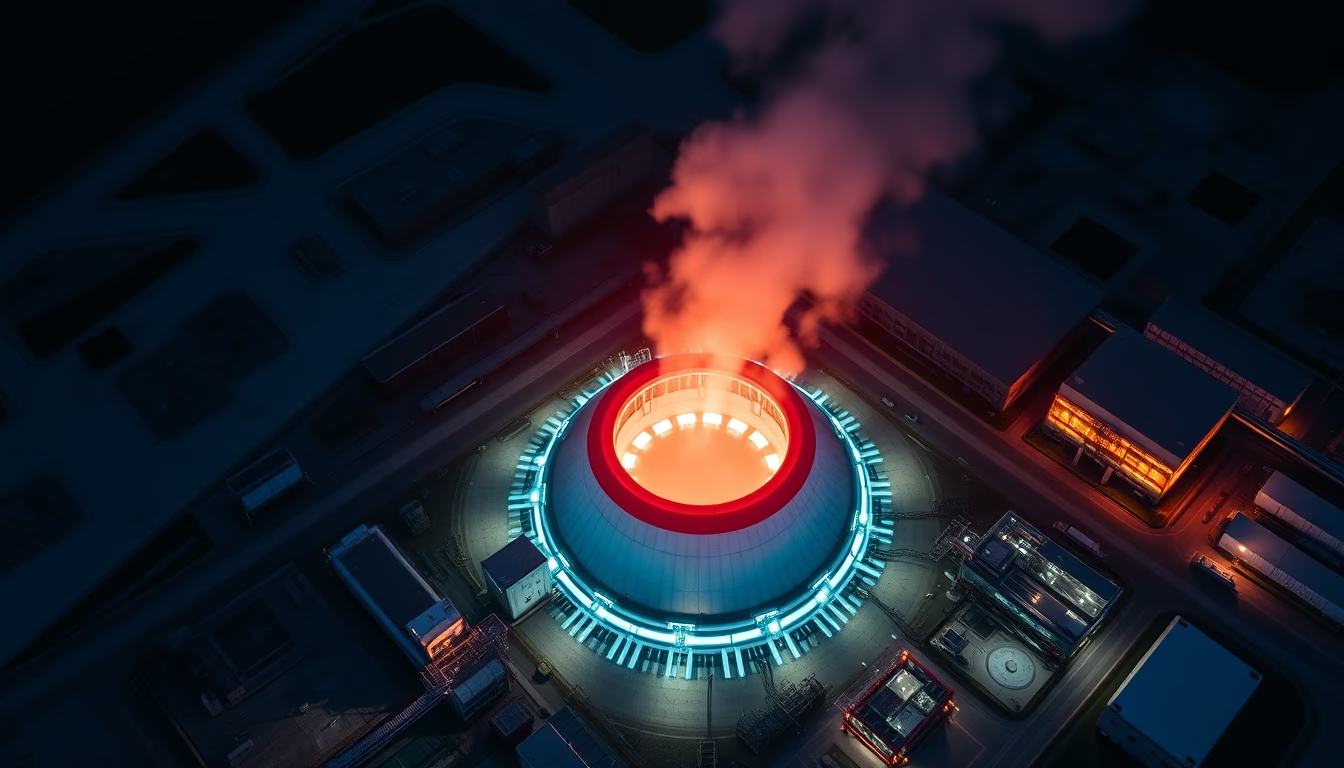
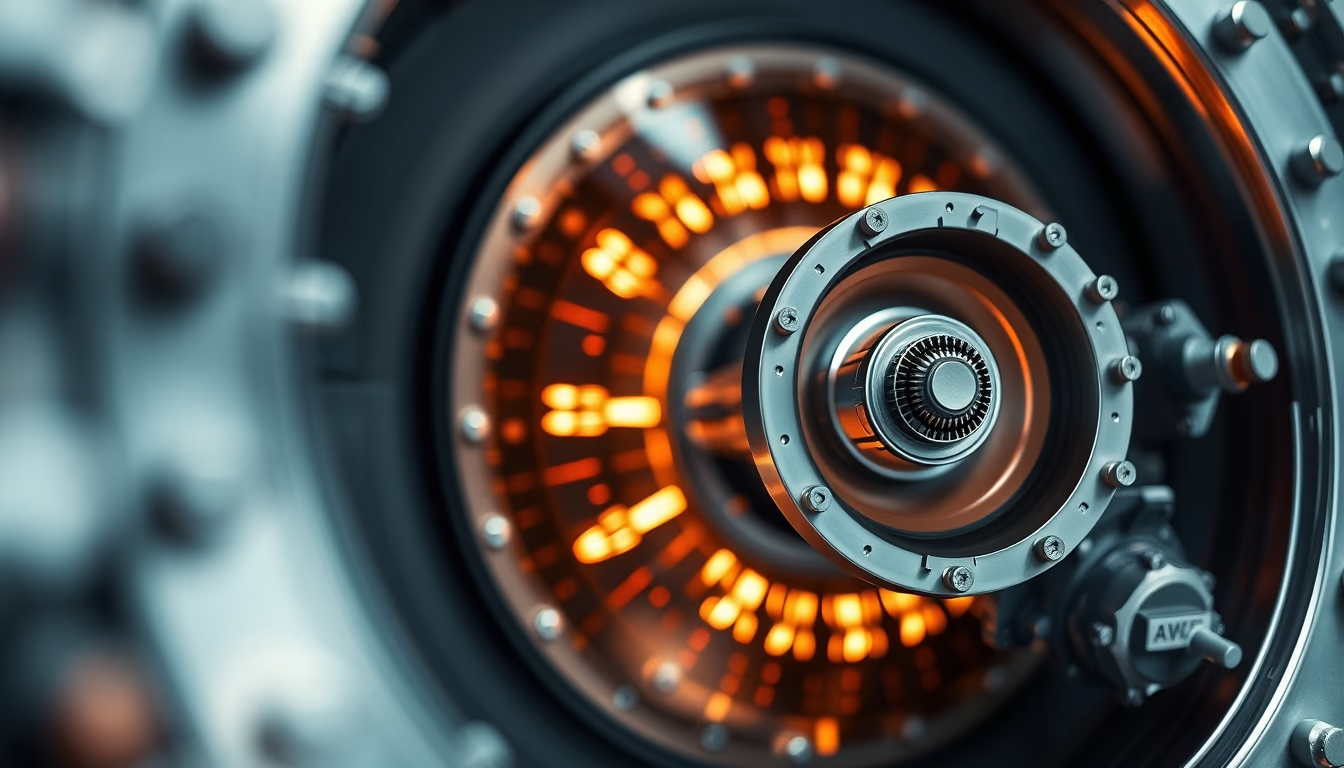
A tokamak is a fusion reactor that uses a doughnut-shaped magnetic field to confine hot plasma, representing the leading hope for clean and abundant energy.
About this subject
The tokamak is one of the most promising designs for controlled nuclear fusion, a process that replicates the energy of the Sun. Its name comes from the Russian acronym for "toroidal chamber with magnetic coils". The basic principle involves heating hydrogen plasma to over 150 million degrees Celsius, suspending it with powerful magnetic fields shaped like a donut (torus). This confinement prevents the plasma from touching the reactor walls, avoiding damage and energy loss.
The largest experimental tokamak under construction is ITER in France, an international collaboration of 35 countries. Its goal is to demonstrate the scientific and technological feasibility of fusion, producing 500 MW of power from 50 MW input. Other notable tokamaks include JET (UK), which holds the fusion power record, and KSTAR (South Korea), which sustained plasma at 100 million degrees for 30 seconds. China also operates EAST, focusing on long-duration plasmas.
Despite progress, commercial fusion still faces challenges. The tokamak must operate in long pulses or continuously, avoid plasma instabilities, and develop materials resistant to neutron bombardment. If overcome, fusion reactors could provide virtually unlimited energy, with abundant fuel (deuterium from water and lithium) and no carbon emissions. After 70 years of research, the tokamak design remains the cornerstone of the global fusion race.
Frequently Asked Questions
What does tokamak mean?
Tokamak is a Russian acronym for "toroidal chamber with magnetic coils". It describes a fusion reactor that uses helical magnetic fields to confine plasma in a doughnut shape.
Why does a tokamak need such high temperatures?
For hydrogen nuclei to overcome electrical repulsion and fuse, they need extreme kinetic energy, corresponding to temperatures above 100 million degrees Celsius. This produces helium and neutrons, releasing energy.
What is the difference between a tokamak and a stellarator?
A stellarator uses twisted coils to confine plasma, without needing an electric current in the plasma (as in a tokamak). This allows continuous operation, but the design is mechanically more complex.
Direct URL
https://pub-c7d6a6ea828543ac903a74a341ccb2e1.r2.dev/imagens/fusion-reactor-tokamak-fish-eye-wide-angle-p6.avifHow to credit
Include a visible link back to UtilizAí. Copy one of the snippets below:
<a href="https://xn--utiliza-eza.com/en/midia/imagens/fusion-reactor-tokamak-fish-eye-wide-angle-p6">Fusion reactor tokamak</a> by <a href="https://xn--utiliza-eza.com">UtilizAí</a>, licensed under <a href="https://creativecommons.org/licenses/by/4.0/">CC BY 4.0</a>.
[Fusion reactor tokamak](https://xn--utiliza-eza.com/en/midia/imagens/fusion-reactor-tokamak-fish-eye-wide-angle-p6) by [UtilizAí](https://xn--utiliza-eza.com), CC BY 4.0
License: CC-BY-4.0