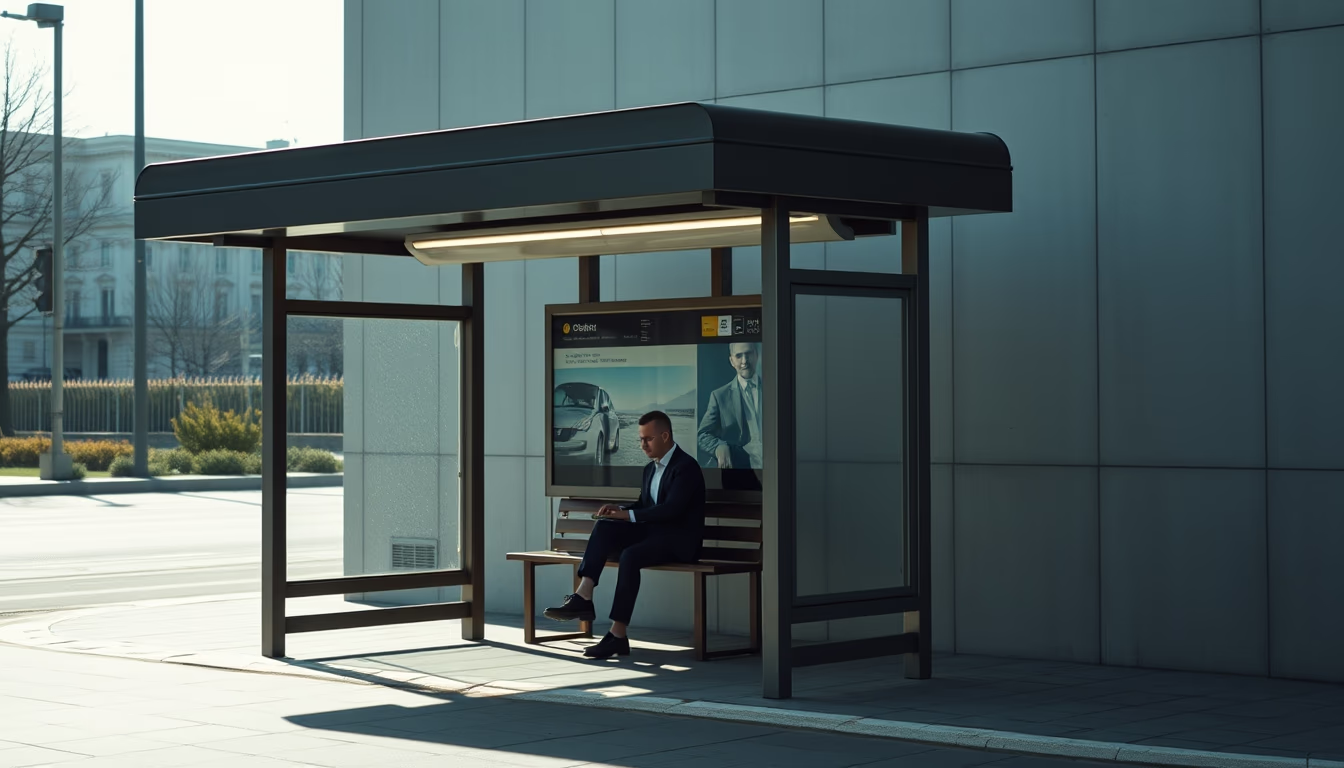
Bus stop minimalist
1344×768 · AVIF · CC BY 4.0

Minimalist bus stops are transforming urban public transport with functional design and landscape integration.
About this subject
The minimalist bus stop concept emerged as a response to the need for efficient and visually clean urban furniture. Unlike traditional shelters, these models prioritize straight lines, materials like Corten steel and tempered glass, and flat roofs that reduce visual impact. Cities such as Curitiba and Copenhagen have adopted these structures to optimize passenger flow and harmonize with the surroundings. In Brazil, the trend gained momentum after the revitalization of BRT corridors in São Paulo and Belo Horizonte, where the reduction of unnecessary elements improved accessibility and maintenance.
Beyond aesthetic appeal, minimalist stops reflect a sustainable approach: many use green roofs or solar panels to power LED lighting. The streamlined design simplifies cleaning and cuts repair costs, while the absence of excessive advertising reduces visual pollution. In metropolises like Tokyo, this simplification helped integrate bus stops into squares and bike lanes, creating compact multimodal hubs.
The popularity of these stops is also linked to the global smart city movement. Through sensors and connectivity, modern versions provide real-time information on schedules and occupancy. By 2026, more Brazilian municipalities are expected to adopt this standard, especially in tourist regions, where the minimalist aesthetic dialogues with local architecture without competing with it.
Frequently Asked Questions
What defines a minimalist bus stop?
Straight lines, materials like steel and glass, flat roof, lack of excessive decorative elements, and integration with the urban landscape.
Which Brazilian cities have examples of this type of stop?
São Paulo, Belo Horizonte, and Curitiba have BRT corridors with minimalist stops, especially after recent revitalizations.
How does minimalist design contribute to sustainability?
It reduces maintenance costs, facilitates cleaning, allows installation of solar panels and green roofs, and decreases visual pollution.
Direct URL
https://pub-c7d6a6ea828543ac903a74a341ccb2e1.r2.dev/imagens/bus-stop-minimalist-aerial-drone-shot-p3.avifHow to credit
Include a visible link back to UtilizAí. Copy one of the snippets below:
<a href="https://xn--utiliza-eza.com/en/midia/imagens/bus-stop-minimalist-aerial-drone-shot-p3">Bus stop minimalist</a> by <a href="https://xn--utiliza-eza.com">UtilizAí</a>, licensed under <a href="https://creativecommons.org/licenses/by/4.0/">CC BY 4.0</a>.
[Bus stop minimalist](https://xn--utiliza-eza.com/en/midia/imagens/bus-stop-minimalist-aerial-drone-shot-p3) by [UtilizAí](https://xn--utiliza-eza.com), CC BY 4.0
License: CC-BY-4.0