Antarctic ozone hole
1344×768 · AVIF · CC BY 4.0

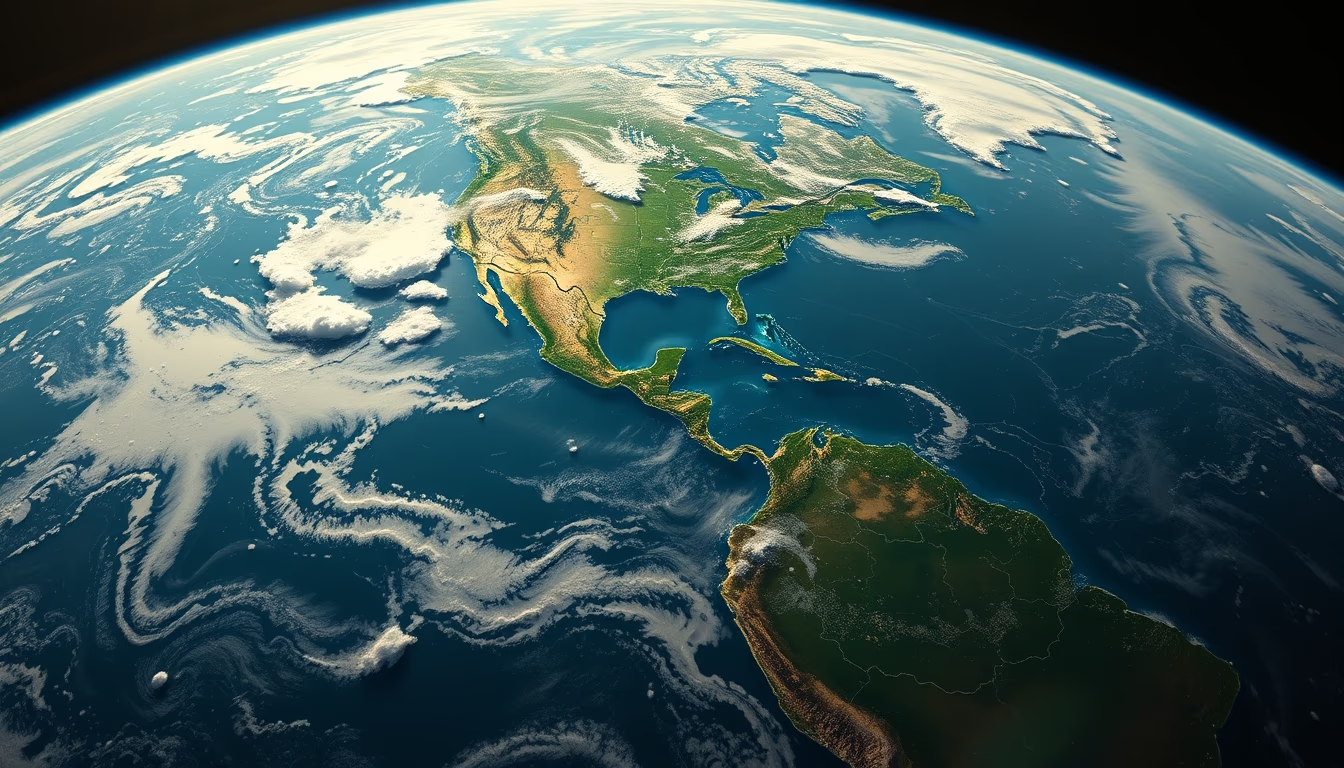
The Antarctic ozone hole is a seasonal phenomenon that forms during the austral spring, with global implications for health and climate.
About this subject
The Antarctic ozone hole is a region of severely depleted ozone in the stratosphere over Antarctica, occurring mainly from September to November. Discovered in the 1980s by British scientists and confirmed by NASA's Nimbus 7 satellite data, the phenomenon is caused by emissions of chlorofluorocarbons (CFCs) from aerosols, refrigerants, and foams. These compounds reach the stratosphere, where ultraviolet radiation breaks them down, releasing chlorine atoms that destroy ozone molecules.
The Montreal Protocol, signed in 1987 and ratified by 197 countries, banned the production of CFCs and other ozone-depleting substances. As a result, atmospheric concentrations of these gases have slowly declined. NASA and NOAA annually monitor the extent of the hole, which varies with weather conditions. In 2023, the hole reached about 26 million km², the 12th largest on record. The historical maximum occurred in 2000, at approximately 29.9 million km².
Full recovery of the ozone layer is projected for the mid-21st century, contingent on continued CFC bans and mitigation of other factors such as climate change. The Antarctic hole stands as a testament to successful international cooperation in tackling a global environmental issue. Each spring, scientific measurements help refine climate models and understand the interplay between ozone and the greenhouse effect.
Frequently Asked Questions
What causes the ozone hole over Antarctica?
The ozone hole is caused by substances such as CFCs, which rise to the stratosphere and release chlorine, destroying ozone molecules. The extremely cold conditions of the Antarctic stratosphere accelerate this process.
Is the ozone hole recovering?
Yes, since the Montreal Protocol, the concentration of ozone-depleting gases has declined. Projections indicate full recovery around 2050 to 2065, depending on emissions and climate.
Why does the ozone hole form over Antarctica and not elsewhere?
The formation occurs over Antarctica due to the extremely low temperatures in the polar stratosphere, which create polar stratospheric clouds. These clouds catalyze reactions that release active chlorine, accelerating ozone destruction.
Direct URL
https://pub-c7d6a6ea828543ac903a74a341ccb2e1.r2.dev/imagens/antarctic-ozone-hole-studio-still-life-fresh10.avifHow to credit
Include a visible link back to UtilizAí. Copy one of the snippets below:
<a href="https://xn--utiliza-eza.com/en/midia/imagens/antarctic-ozone-hole-studio-still-life-fresh10">Antarctic ozone hole</a> by <a href="https://xn--utiliza-eza.com">UtilizAí</a>, licensed under <a href="https://creativecommons.org/licenses/by/4.0/">CC BY 4.0</a>.
[Antarctic ozone hole](https://xn--utiliza-eza.com/en/midia/imagens/antarctic-ozone-hole-studio-still-life-fresh10) by [UtilizAí](https://xn--utiliza-eza.com), CC BY 4.0
License: CC-BY-4.0