Antarctic ozone hole
1344×768 · AVIF · CC BY 4.0
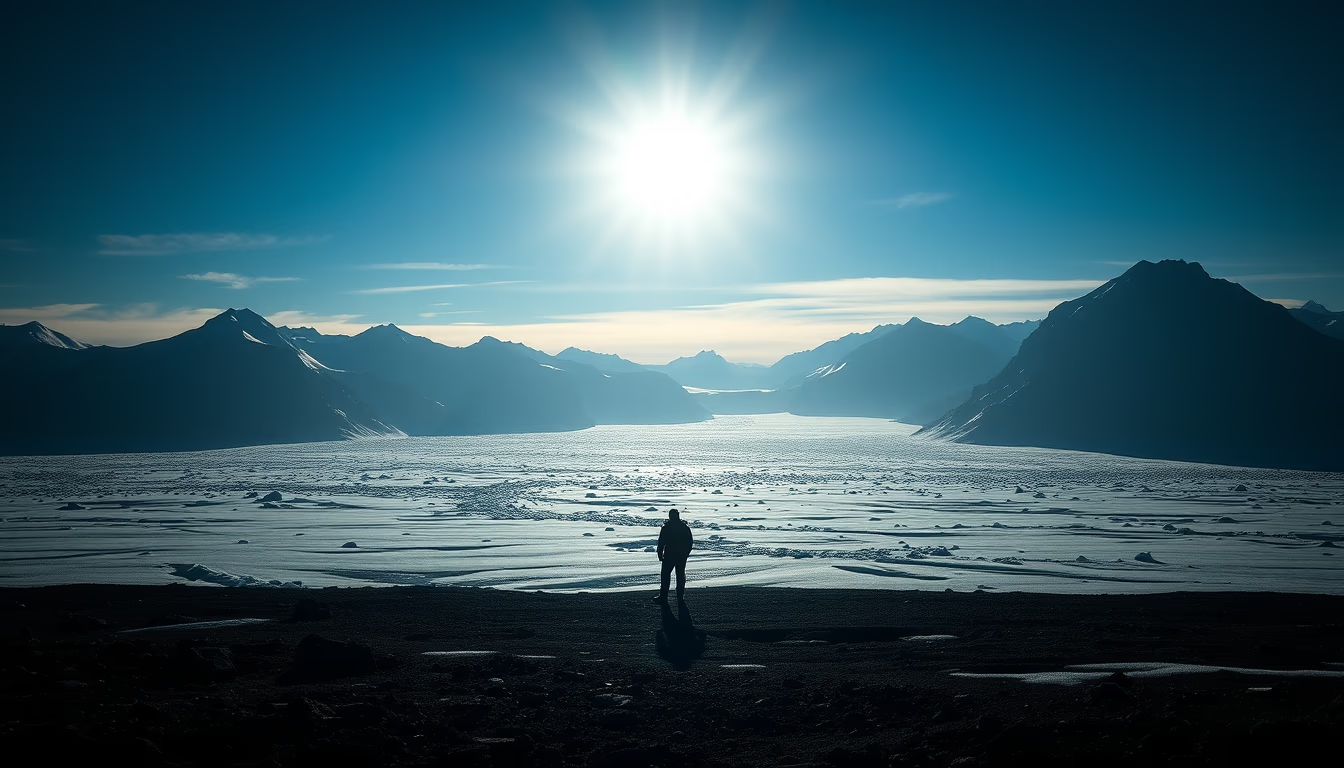
The Antarctic ozone hole, discovered in the 1980s, is monitored by satellites as a key indicator of atmospheric recovery.
About this subject
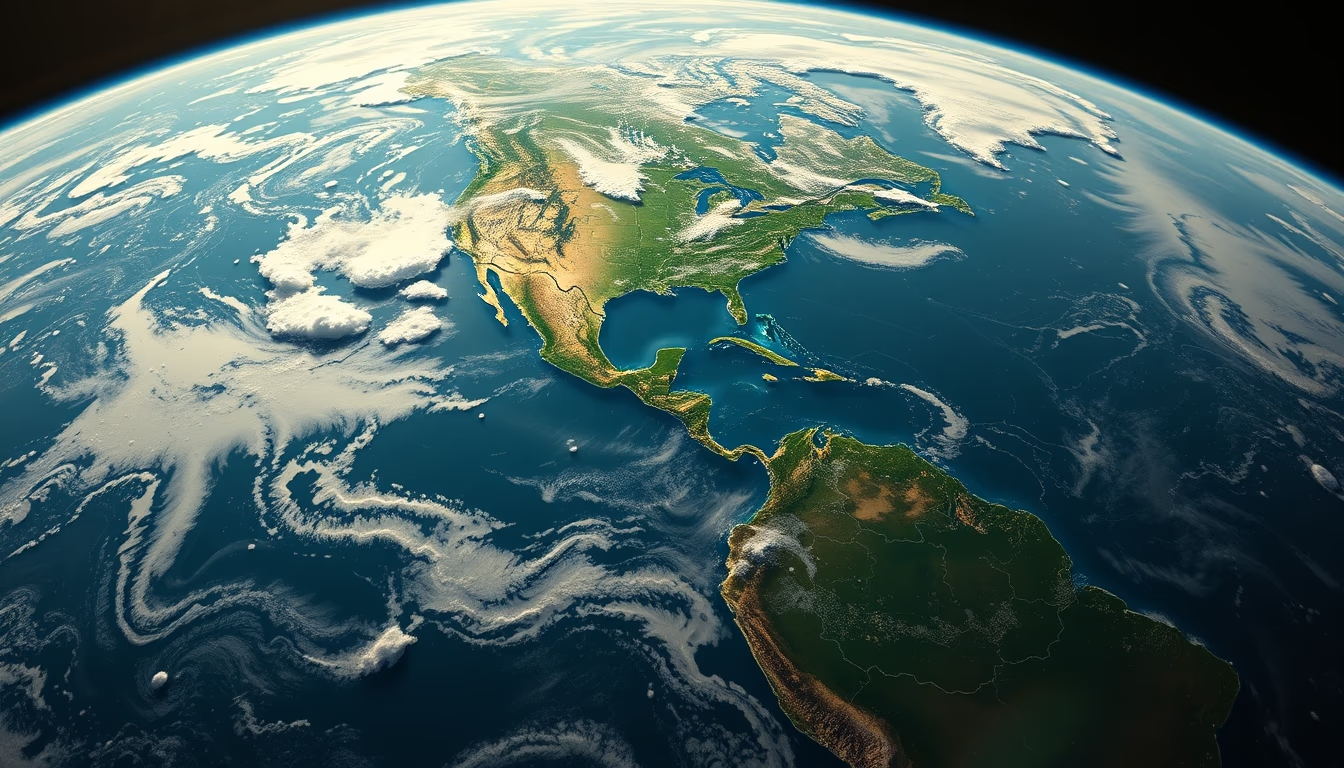
The Antarctic ozone hole is a region of severe thinning of the ozone layer that occurs annually over Antarctica during the Southern Hemisphere spring (September to November). It is caused by chemical substances called chlorofluorocarbons (CFCs), released from aerosols, refrigerants, and solvents. CFCs rise to the stratosphere, where ultraviolet radiation breaks them down, releasing chlorine that destroys ozone molecules. The cold conditions over Antarctica form polar stratospheric clouds that accelerate these reactions.
The phenomenon was discovered in 1985 by British Antarctic Survey scientists led by Joe Farman, who observed drastic drops in ozone concentration over Halley Station. The discovery sparked global alarm and led to the signing of the Montreal Protocol in 1987, which banned the production of CFCs and other ozone-depleting substances. This treaty is regarded as one of the most successful international environmental agreements.
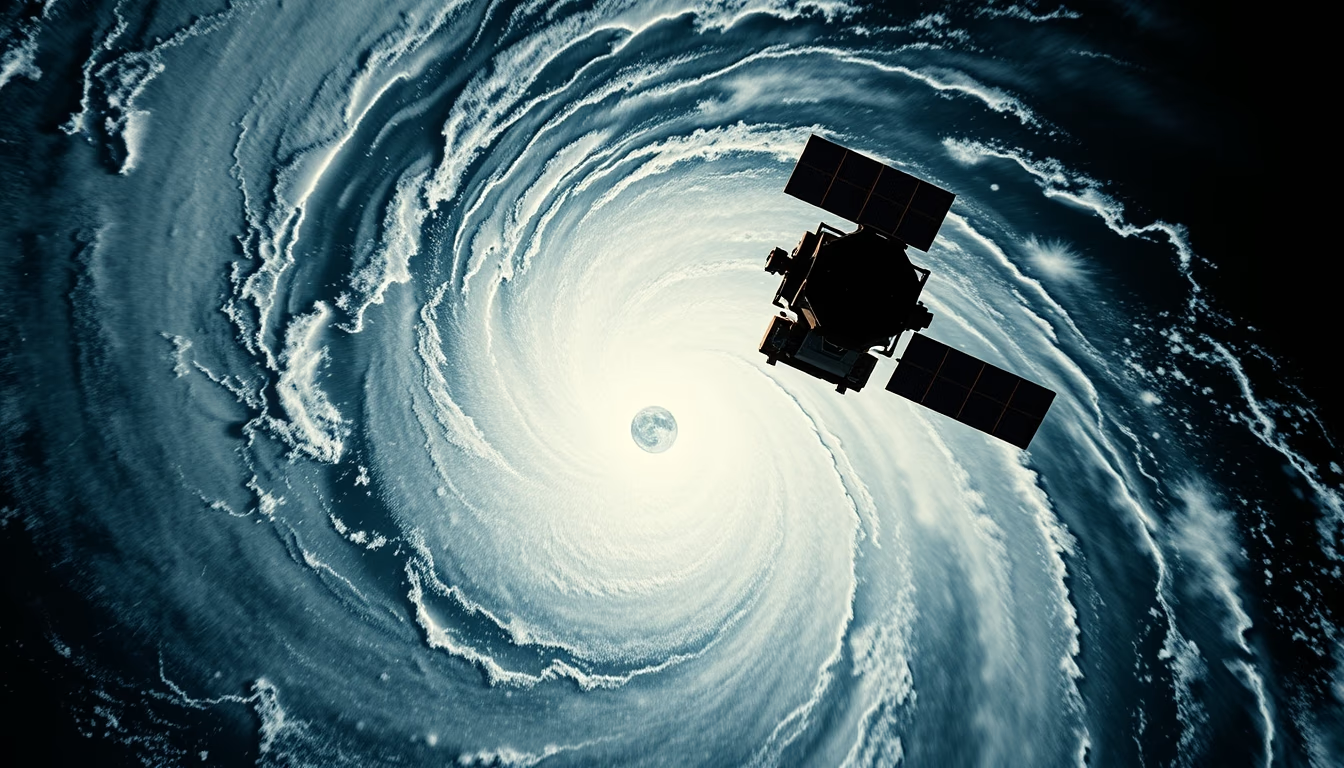
Since then, satellites such as NASA's Aura and the Swiss Federal Institute of Technology's TOCON instrument continuously monitor the hole. Data show that the ozone layer is slowly recovering, with full closure projected between 2060 and 2070. However, climate variability and events like volcanic eruptions can temporarily affect its evolution. The Antarctic ozone hole remains a symbol of both vulnerability and humanity's capacity for coordinated action.
Frequently Asked Questions
What causes the Antarctic ozone hole?
The hole is caused by substances like CFCs that release chlorine in the stratosphere. This chlorine destroys ozone, especially over Antarctica where polar stratospheric clouds accelerate the process.
Is the ozone hole recovering?
Yes, since the ban on CFCs by the Montreal Protocol, the ozone layer is slowly recovering. The Antarctic ozone hole is expected to close completely between 2060 and 2070.
How do satellites monitor ozone?
Satellites like NASA's Aura use spectrometers to measure ozone concentration in the atmosphere. They provide daily global maps of the ozone layer and track the evolution of the Antarctic ozone hole.
Direct URL
https://pub-c7d6a6ea828543ac903a74a341ccb2e1.r2.dev/imagens/antarctic-ozone-hole-rembrandt-lighting-dramatic-shadows-fresh15.avifHow to credit
Include a visible link back to UtilizAí. Copy one of the snippets below:
<a href="https://xn--utiliza-eza.com/en/midia/imagens/antarctic-ozone-hole-rembrandt-lighting-dramatic-shadows-fresh15">Antarctic ozone hole</a> by <a href="https://xn--utiliza-eza.com">UtilizAí</a>, licensed under <a href="https://creativecommons.org/licenses/by/4.0/">CC BY 4.0</a>.
[Antarctic ozone hole](https://xn--utiliza-eza.com/en/midia/imagens/antarctic-ozone-hole-rembrandt-lighting-dramatic-shadows-fresh15) by [UtilizAí](https://xn--utiliza-eza.com), CC BY 4.0
License: CC-BY-4.0