AI engineer training neural network on workstation
1344×768 · AVIF · CC BY 4.0
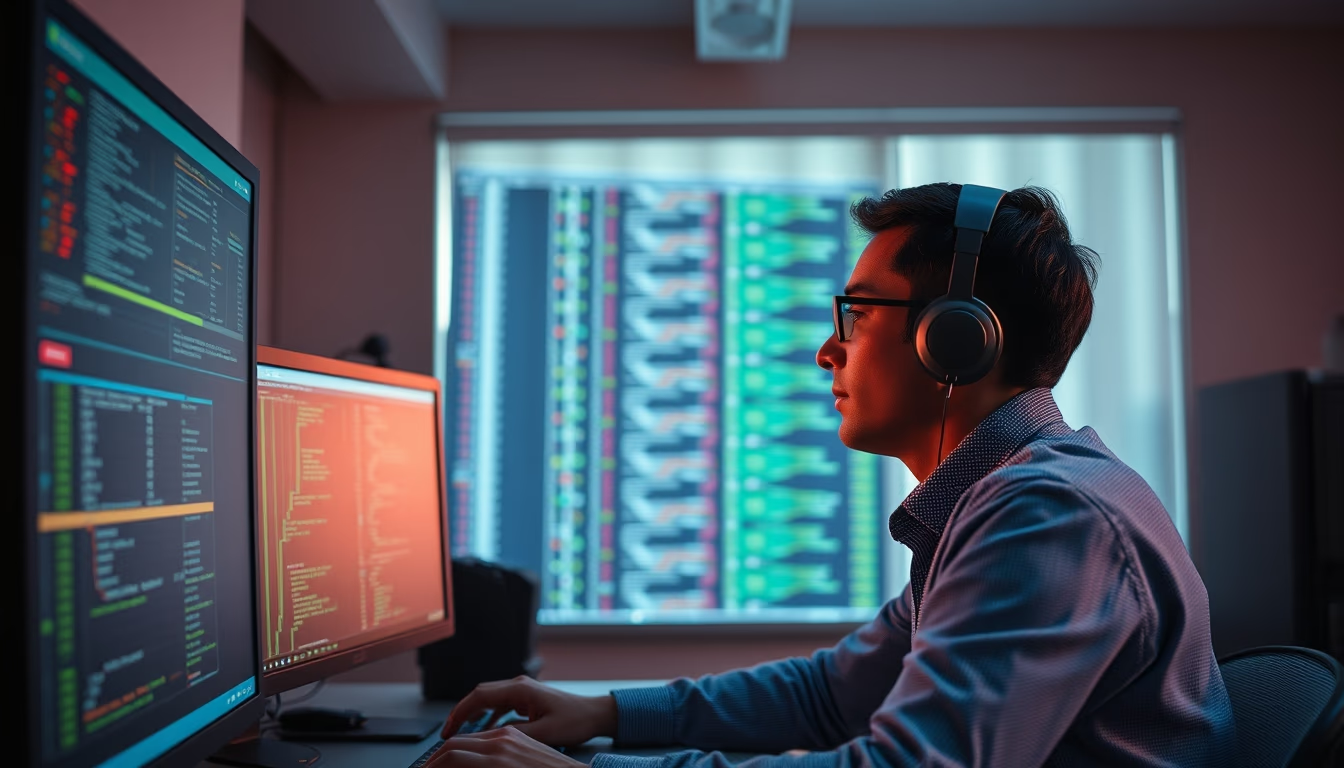
AI engineer trains neural network on a workstation at twilight, highlighting intensive computing work.
About this subject
Training neural networks is a crucial step in developing artificial intelligence systems. This process involves feeding large volumes of data to a model so it can learn patterns and make decisions. AI engineers spend hours tuning hyperparameters, such as learning rate and number of layers, to optimize model accuracy. The work is computationally intensive, often requiring high-performance GPUs and long processing periods.
The typical work environment includes multiple monitors, terminal consoles, and tools like TensorFlow or PyTorch. Twilight symbolizes the long working hours, as training can last days or weeks. The workstation, with its coolers and LEDs, reflects the infrastructure needed to handle high thermal loads.
Interestingly, fine-tuning pretrained models like BERT or GPT has reduced training time but still requires expertise. Engineers monitor metrics such as loss and accuracy in real time, intervening to prevent overfitting. This work is fundamental to advances in computer vision, natural language processing, and other fields.
The image captures a moment of concentration and technique, where the professional deals with complex algorithms. The dim lighting suggests a focused environment, free from distractions. This dedication is the engine behind the AI innovations we see today.
Frequently Asked Questions
How long does it take to train a neural network?
Time ranges from hours to weeks, depending on model complexity, data volume, and hardware. Simple models may take a few hours, while deep networks like GPT-3 require days or weeks on GPU clusters.
What tools are used for training neural networks?
Popular frameworks include TensorFlow, PyTorch, and Keras. Engineers also use libraries like NumPy for data manipulation and monitoring tools like TensorBoard to visualize metrics.
What is overfitting and how to avoid it?
Overfitting occurs when the model memorizes training data instead of learning generalizable patterns. To avoid it, techniques like regularization, dropout, early stopping, and data augmentation are used.
Direct URL
https://pub-c7d6a6ea828543ac903a74a341ccb2e1.r2.dev/imagens/ai-engineer-training-neural-network-on-workstation-closeup-twilight-2.avifHow to credit
Include a visible link back to UtilizAí. Copy one of the snippets below:
<a href="https://xn--utiliza-eza.com/en/midia/imagens/ai-engineer-training-neural-network-on-workstation-closeup-twilight-2">AI engineer training neural network on workstation</a> by <a href="https://xn--utiliza-eza.com">UtilizAí</a>, licensed under <a href="https://creativecommons.org/licenses/by/4.0/">CC BY 4.0</a>.
[AI engineer training neural network on workstation](https://xn--utiliza-eza.com/en/midia/imagens/ai-engineer-training-neural-network-on-workstation-closeup-twilight-2) by [UtilizAí](https://xn--utiliza-eza.com), CC BY 4.0
License: CC-BY-4.0