Abstract waves blue
1344×768 · AVIF · CC BY 4.0
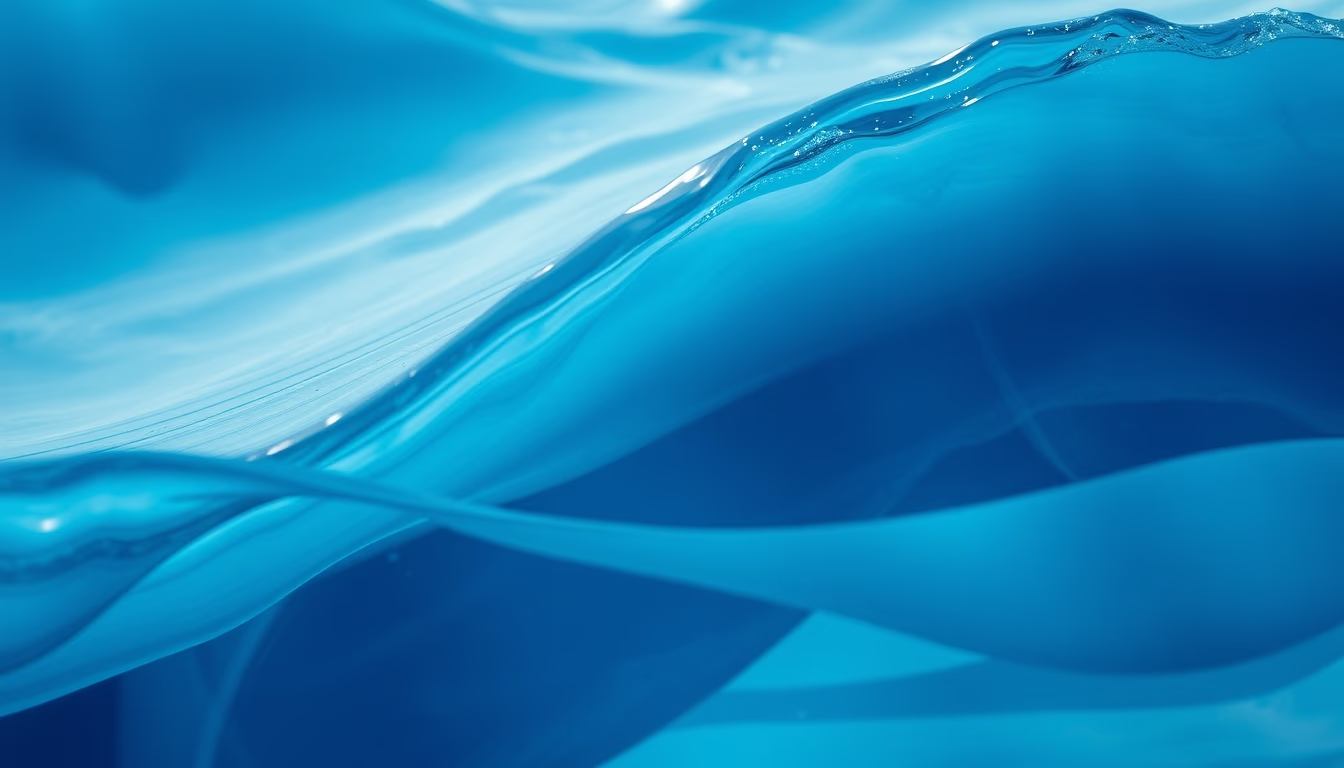
Abstract blue waves symbolize movement and depth, explored in contemporary art as visual representations of emotions and flows.
About this subject
Abstract blue waves are a recurring motif in contemporary art, especially in abstract expressionism and digital art. Blue is associated with calm, depth, and introspection, widely used by artists such as Yves Klein, who created the famous International Klein Blue (IKB), and Mark Rothko, whose monochrome paintings explore emotion through color. The wave form, in turn, evokes the continuous movement of water, sound, and even brain waves, connecting the abstract to natural and psychological phenomena.
In art history, abstract waves gained prominence with the Op Art and kinetic art movements, where undulating patterns create optical illusions of motion. Artists like Bridget Riley and Victor Vasarely used curved lines to challenge visual perception. In contemporary digital art, algorithms generate abstract waves in real time, combining mathematics and aesthetics. Blue is often chosen for its ability to convey both serenity and emotional intensity, as seen in James Turrell's works that manipulate light to create immersive environments.
Interestingly, studies in neuroaesthetics show that the human brain responds more strongly to wave patterns and the color blue, associating them with relaxation and meditative states. This explains why abstract blue waves are popular in interior design and visual therapy applications. Furthermore, the word “wave” carries cultural meanings: from ocean waves in Japanese art (e.g., “The Great Wave off Kanagawa”) to sound waves in electronic music. Abstraction thus allows infinite interpretations, each tied to the viewer's individual experience.
Frequently Asked Questions
What is abstract art?
Abstract art is a style that does not depict recognizable objects from the real world, using shapes, colors, and lines to express emotions or concepts. It emerged in the early 20th century with artists like Wassily Kandinsky.
Why is blue used in abstract waves?
Blue is associated with calm and depth, and in abstract waves it enhances the sensation of fluid movement. Scientifically, blue light has a short wavelength, which can induce relaxation.
What is the meaning of waves in art?
Waves symbolize movement, transformation, and fluidity. In abstract art, they represent emotional states or natural phenomena like water or sound, inviting the viewer to a sensory experience.
Direct URL
https://pub-c7d6a6ea828543ac903a74a341ccb2e1.r2.dev/imagens/abstract-waves-blue-magazine-editorial-p5.avifHow to credit
Include a visible link back to UtilizAí. Copy one of the snippets below:
<a href="https://xn--utiliza-eza.com/en/midia/imagens/abstract-waves-blue-magazine-editorial-p5">Abstract waves blue</a> by <a href="https://xn--utiliza-eza.com">UtilizAí</a>, licensed under <a href="https://creativecommons.org/licenses/by/4.0/">CC BY 4.0</a>.
[Abstract waves blue](https://xn--utiliza-eza.com/en/midia/imagens/abstract-waves-blue-magazine-editorial-p5) by [UtilizAí](https://xn--utiliza-eza.com), CC BY 4.0
License: CC-BY-4.0