5G antenna tower silhouette against deep blue twilight sky
1344×768 · AVIF · CC BY 4.0
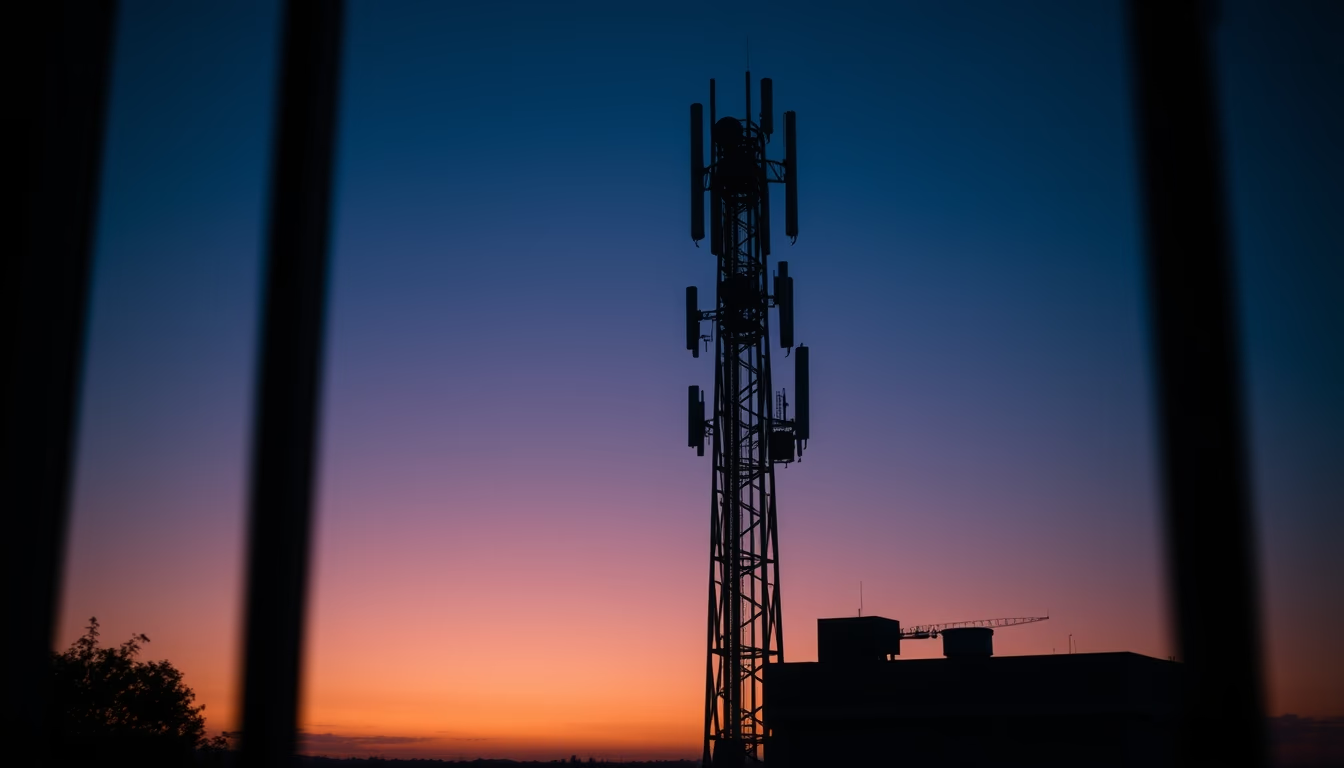
A 5G antenna tower silhouetted against a deep blue twilight sky, symbolizing the new era of mobile connectivity in Brazil.
About this subject
5G antenna towers are the physical infrastructure for fifth-generation mobile networks, which promise download speeds up to 20 Gbps, latency under 1 millisecond, and the ability to connect up to 1 million devices per square kilometer. In Brazil, the 5G auction took place in November 2021, with Anatel setting deadlines for activation in state capitals starting July 2022. The technology uses millimeter waves (mmWave) and frequency bands such as 3.5 GHz, requiring a higher density of antennas compared to 4G. This is because shorter waves have shorter range and are more susceptible to obstacles like buildings and trees. Therefore, towers must be installed in strategic locations, often on poles, rooftops, or dedicated structures like the one in the image. The evening sky, with deep blue and orange hues on the horizon, is a common time for telecommunications infrastructure photography because the contrast highlights the tower's silhouette. The deployment of 5G in Brazil faces challenges such as the need for fiber optic backhaul, antenna regulations in urban areas, and high equipment costs. Despite this, the technology is expected to boost the Internet of Things (IoT), autonomous vehicles, telemedicine, and smart cities, transforming sectors like healthcare, agriculture, and manufacturing.
Frequently Asked Questions
What is the difference between 4G and 5G?
5G offers speeds up to 100 times faster than 4G, much lower latency (1 ms vs 50 ms), and the ability to connect many more devices simultaneously, enabling applications such as autonomous cars and remote surgery.
Does 5G work everywhere?
No. The 5G signal on millimeter waves has short range and requires line of sight. Therefore, operators install antennas on poles and building facades, especially in dense urban areas. In rural regions, lower frequency bands such as 700 MHz are used.
Is 5G harmful to health?
There is no scientific evidence that 5G causes health damage. The radio waves used are non-ionizing and follow international exposure limits established by the WHO and Anvisa, well below what could cause tissue heating.
Direct URL
https://pub-c7d6a6ea828543ac903a74a341ccb2e1.r2.dev/imagens/5g-antenna-tower-silhouette-against-deep-blue-twilight-sky-documentary-morning-6.avifHow to credit
Include a visible link back to UtilizAí. Copy one of the snippets below:
<a href="https://xn--utiliza-eza.com/en/midia/imagens/5g-antenna-tower-silhouette-against-deep-blue-twilight-sky-documentary-morning-6">5G antenna tower silhouette against deep blue twilight sky</a> by <a href="https://xn--utiliza-eza.com">UtilizAí</a>, licensed under <a href="https://creativecommons.org/licenses/by/4.0/">CC BY 4.0</a>.
[5G antenna tower silhouette against deep blue twilight sky](https://xn--utiliza-eza.com/en/midia/imagens/5g-antenna-tower-silhouette-against-deep-blue-twilight-sky-documentary-morning-6) by [UtilizAí](https://xn--utiliza-eza.com), CC BY 4.0
License: CC-BY-4.0