Juno jupiter polar
1344×768 · AVIF · CC BY 4.0
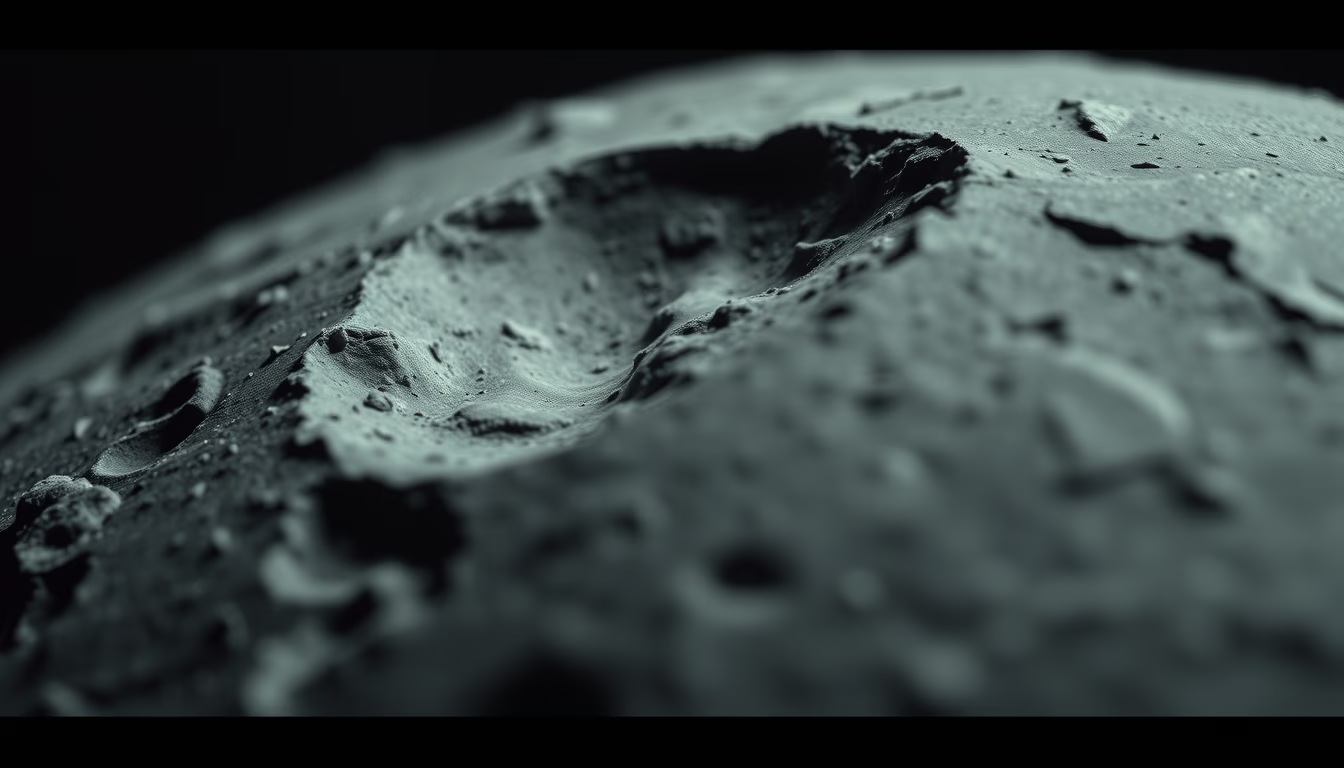
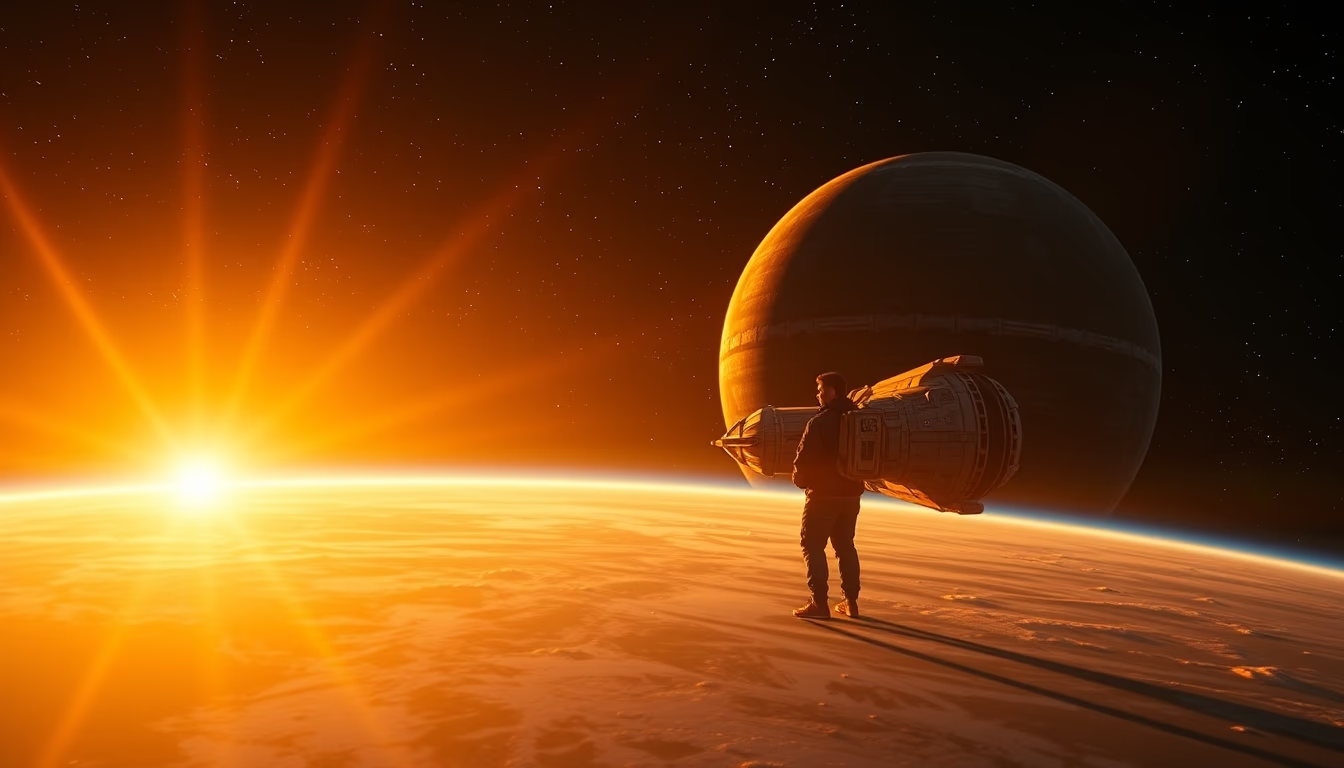
Jupiter's pole, dramatically illuminated by grazing sunlight, reveals cyclones and storms never seen before NASA's Juno mission.
About this subject
NASA's Juno spacecraft, launched in 2011 and inserted into Jupiter's orbit on July 4, 2016, revolutionized our understanding of the solar system's largest planet. Its primary focus was the poles, previously unexplored areas. Unlike the familiar equatorial bands, Jupiter's poles exhibit a chaotic structure of storms and cyclones organized in geometric patterns. At the north pole, eight cyclones were observed orbiting a central cyclone, a stable configuration that puzzled scientists. These formations are maintained by deep atmospheric currents that are not yet fully understood.
High-resolution images from JunoCam revealed stunning details of Jupiter's clouds, with colors ranging from white to deep red. The grazing sunlight, similar to Rembrandt's painting style, casts long shadows that accentuate the relief of storms. This effect, known as 'Rembrandt lighting' in photography, occurs when light hits at a low angle, creating dramatic contrast. On Jupiter, sunlight strikes the poles obliquely, especially near the solstice when the incidence angle is minimal.
Beyond storms, Jupiter's poles host intense polar auroras resulting from the interaction of its giant magnetic field with charged solar particles. Ultraviolet images from Juno's UVS spectrograph showed auroras spanning hundreds of kilometers with varying brightness. These auroras are the most powerful in the solar system, generating energy equivalent to millions of lightning bolts. Juno also detected radio emissions associated with these phenomena, helping map Jupiter's magnetic field.
The term 'Rembrandt lighting' to describe Jupiter's pole images is not merely aesthetic but technical. Juno's polar elliptical orbit brings it close to the planet every 53 days, passing over the poles at an altitude of about 4,200 km. During these passes, its camera captures images with low solar angles, creating a chiaroscuro effect that reveals cloud topography. This method allowed identification of vertical structures in storms, such as convective towers rising tens of kilometers above surrounding layers.
Frequently Asked Questions
What are Jupiter's polar cyclones?
They are huge whirlwind storms arranged in geometric patterns around the poles. At the north pole, eight cyclones orbit a central cyclone, each stable and over 4,000 km in diameter.
How did the Juno spacecraft capture images of Jupiter's poles?
Juno orbits Jupiter in a polar elliptical trajectory, passing as close as 4,200 km to the poles every 53 days. Its JunoCam takes photos with low solar angles, creating the dramatic lighting effect.
Why is the lighting in these images called 'Rembrandt lighting'?
The term refers to painter Rembrandt's style of using side light to create contrast and depth. In Juno's images, grazing sunlight casts long shadows, highlighting cloud relief in a similar way.
Direct URL
https://pub-c7d6a6ea828543ac903a74a341ccb2e1.r2.dev/imagens/juno-jupiter-polar-rembrandt-lighting-dramatic-shadows-fresh13.avifHow to credit
Include a visible link back to UtilizAí. Copy one of the snippets below:
<a href="https://xn--utiliza-eza.com/en/midia/imagens/juno-jupiter-polar-rembrandt-lighting-dramatic-shadows-fresh13">Juno jupiter polar</a> by <a href="https://xn--utiliza-eza.com">UtilizAí</a>, licensed under <a href="https://creativecommons.org/licenses/by/4.0/">CC BY 4.0</a>.
[Juno jupiter polar](https://xn--utiliza-eza.com/en/midia/imagens/juno-jupiter-polar-rembrandt-lighting-dramatic-shadows-fresh13) by [UtilizAí](https://xn--utiliza-eza.com), CC BY 4.0
License: CC-BY-4.0