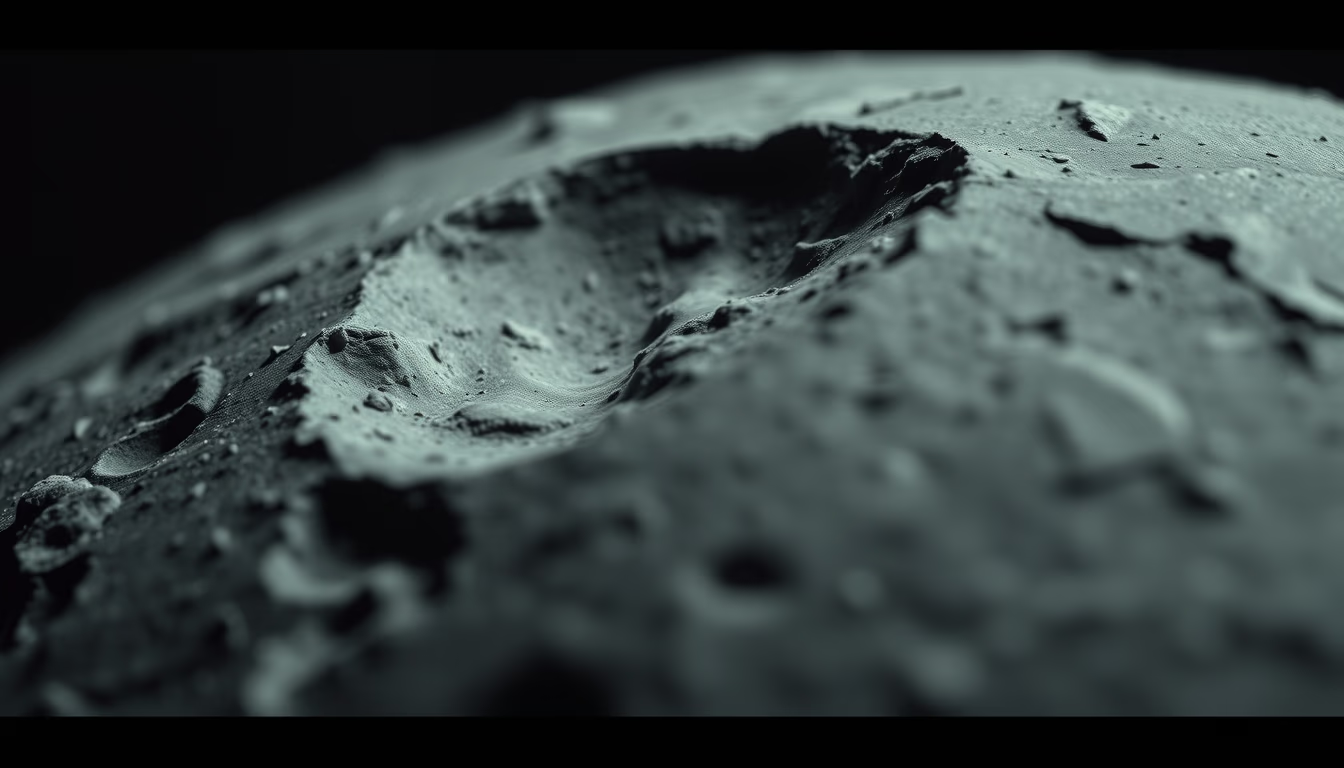
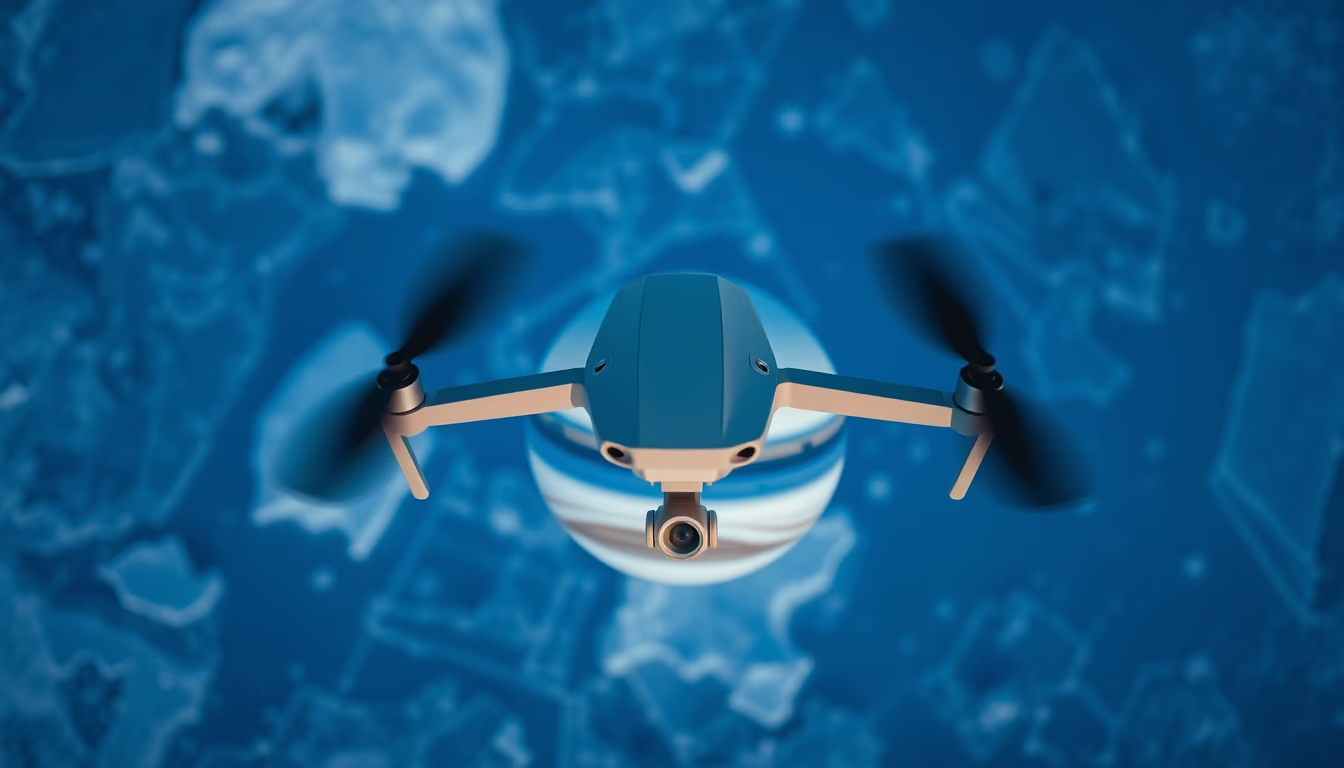
Parker solar probe sun
1344×768 · AVIF · CC BY 4.0

A Parker Solar Probe é a sonda espacial da NASA que mais se aproximou do Sol, revelando segredos da coroa solar e do vento estelar.
Sobre o tema
Lançada em 12 de agosto de 2018, a Parker Solar Probe foi projetada para estudar a coroa solar, a camada mais externa da atmosfera do Sol, que é milhões de vezes mais quente que sua superfície. A sonda recebeu o nome do astrofísico Eugene Parker, que previu a existência do vento solar na década de 1950. Em sua órbita elíptica, a Parker já atingiu velocidades recordes acima de 690.000 km/h, tornando-se o objeto mais rápido já construído pela humanidade.
Para sobreviver às temperaturas extremas na proximidade solar, a sonda utiliza um escudo térmico de compósito de carbono com 11,4 cm de espessura, capaz de suportar mais de 1.370 °C. Esse escudo mantém os instrumentos científicos a uma temperatura ambiente de aproximadamente 30 °C. Os dados coletados durante as aproximações permitiram mapear campos magnéticos em escalas sem precedentes e identificar estruturas chamadas de 'switchbacks' no vento solar.
A missão já realizou múltiplos sobrevoos de Vênus para ajustar sua trajetória e se aproximar cada vez mais do Sol. Em 2021, a Parker tornou-se a primeira sonda a 'tocar' o Sol, atravessando a fronteira da coroa na altitude de 13 milhões de quilômetros. Essas medições estão revolucionando o entendimento de fenômenos como tempestades solares e ejeções de massa coronal, que afetam sistemas de comunicação e redes elétricas na Terra.
A Parker Solar Probe continua sua jornada até 2025, quando deverá realizar sua última aproximação, a apenas 6,1 milhões de quilômetros da superfície solar. Os dados já enviados transformaram a heliofísica, e as descobertas sobre o aquecimento coronal e a aceleração do vento solar são consideradas um marco na exploração espacial.
Perguntas frequentes
Qual a principal missão da Parker Solar Probe?
Estudar a coroa solar e o vento solar, ajudando a entender por que a coroa é mais quente que a superfície do Sol e como partículas são aceleradas.
Como a Parker Solar Probe resiste ao calor extremo?
Usa um escudo térmico de compósito de carbono com 11,4 cm de espessura, que reflete a maior parte da radiação e suporta temperaturas acima de 1.370 °C.
Qual a velocidade máxima atingida pela sonda?
Aproximadamente 692.000 km/h (430.000 mph), tornando-se o objeto mais rápido já construído pela humanidade.
URL direta
https://pub-c7d6a6ea828543ac903a74a341ccb2e1.r2.dev/imagens/parker-solar-probe-sun-minimalist-composition-fresh17.avifComo creditar
Inclua um link visível de volta pro UtilizAí. Copie um dos snippets abaixo:
<a href="https://xn--utiliza-eza.com/midia/imagens/parker-solar-probe-sun-minimalist-composition-fresh17">Parker solar probe sun</a> by <a href="https://xn--utiliza-eza.com">UtilizAí</a>, licensed under <a href="https://creativecommons.org/licenses/by/4.0/">CC BY 4.0</a>.
[Parker solar probe sun](https://xn--utiliza-eza.com/midia/imagens/parker-solar-probe-sun-minimalist-composition-fresh17) by [UtilizAí](https://xn--utiliza-eza.com), CC BY 4.0
Licença: CC-BY-4.0