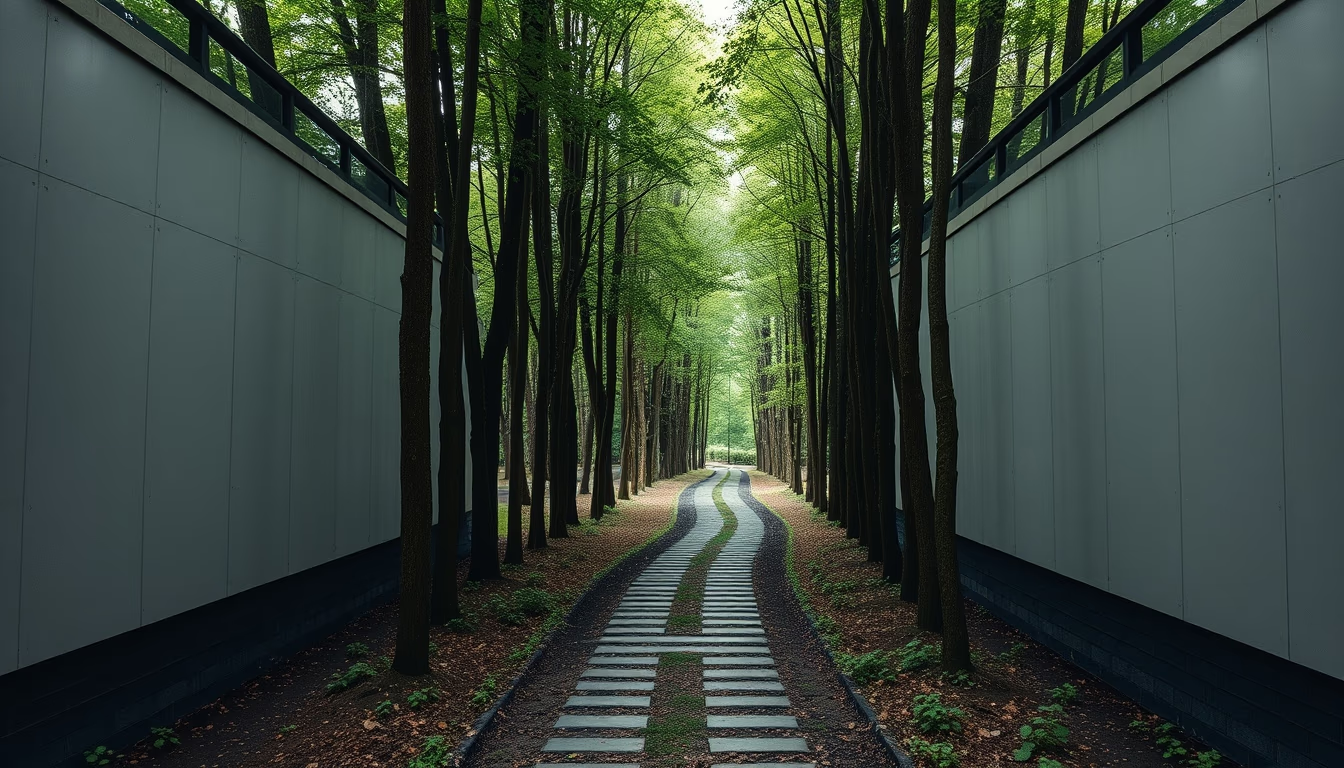
Zen garden raked sand
1344×768 · AVIF · CC BY 4.0

Japanese zen gardens, or karesansui, use raked sand to represent water and promote meditation, being a millennia-old artistic and philosophical expression.
About this subject
The zen garden, known as karesansui (dry landscape), is a Japanese art form dating back to the Muromachi period (14th to 16th centuries). These gardens consist mainly of sand or fine gravel, rocks, and occasionally moss. The sand is carefully raked into patterns that mimic waves, currents, or whirlpools, symbolizing water. The act of raking is itself a meditative practice, promoting focus and serenity.
Patterns are created with a wooden rake, with straight lines representing calm waters and curves suggesting movement. Stones are strategically placed, often representing islands or mountains, inspired by Chinese natural landscapes. The most famous example is Ryoan-ji Temple in Kyoto, where 15 stones are placed on white gravel, creating a composition visible in full only from a specific angle.
Culturally, zen gardens are deeply tied to Zen Buddhism, used as tools for meditation and contemplation. They lack elements like flowers or fruit trees, as simplicity and abstraction are valued. Garden maintenance is a daily ritual performed by monks, who renew patterns to maintain visual and spiritual purity.
Interestingly, the practice of zen gardens has spread globally, adapted in public spaces and homes for stress relief. Modern studies show that observing raked patterns reduces anxiety and improves focus. In Brazil, simplified versions are found in relaxation areas and spas, following the wellness trend that values ancient Eastern practices.
Frequently Asked Questions
What is the meaning of sand patterns in a zen garden?
The patterns represent moving water, such as waves, rivers, or whirlpools. Straight lines indicate calm waters, while curves suggest flow and change. They invite contemplation and meditation on impermanence.
How are the designs in the sand of a zen garden made?
They are made with a special wooden rake called 'kumade'. The gardener or monk drags the rake in smooth, continuous motions, creating parallel or concentric grooves. The practice requires focus and precision.
Are zen gardens only used in Japan?
No, they have become popular worldwide as decorative and wellness elements. In countries like Brazil, they are installed in spas, homes, and offices to reduce stress, adapted to smaller spaces.
Direct URL
https://pub-c7d6a6ea828543ac903a74a341ccb2e1.r2.dev/imagens/zen-garden-raked-sand-magazine-editorial-p1.avifHow to credit
Include a visible link back to UtilizAí. Copy one of the snippets below:
<a href="https://xn--utiliza-eza.com/en/midia/imagens/zen-garden-raked-sand-magazine-editorial-p1">Zen garden raked sand</a> by <a href="https://xn--utiliza-eza.com">UtilizAí</a>, licensed under <a href="https://creativecommons.org/licenses/by/4.0/">CC BY 4.0</a>.
[Zen garden raked sand](https://xn--utiliza-eza.com/en/midia/imagens/zen-garden-raked-sand-magazine-editorial-p1) by [UtilizAí](https://xn--utiliza-eza.com), CC BY 4.0
License: CC-BY-4.0