Wood grain dark walnut
1344×768 · AVIF · CC BY 4.0
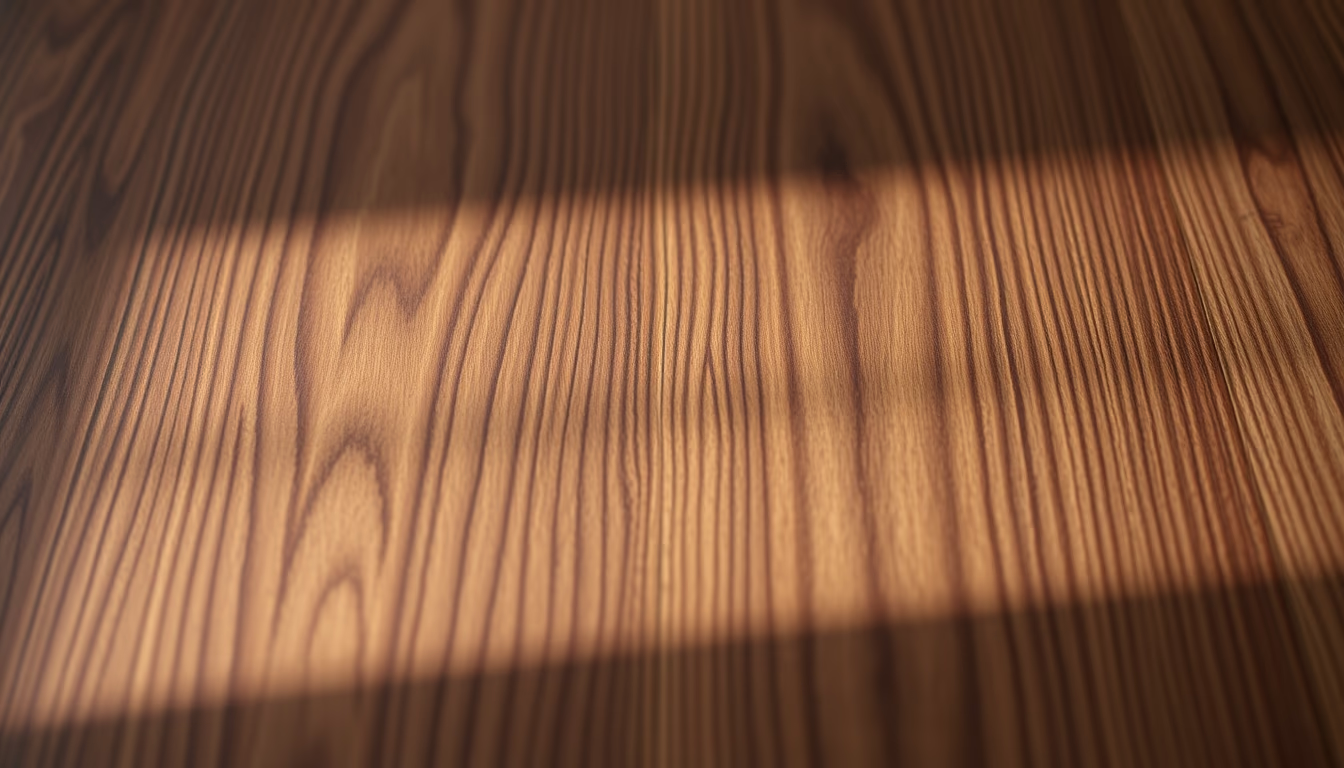
O nogueira-americano (Juglans nigra), conhecido como dark walnut, produz uma madeira densa e escura com veios retilíneos e ondulados, valorizada em marcenaria fina desde o século XVIII.
Sobre o tema
A nogueira escura, também chamada de black walnut ou nogueira-americana, é extraída da árvore Juglans nigra, nativa do leste dos Estados Unidos e partes do Canadá. Sua madeira é conhecida pela coloração marrom-escura, que pode apresentar tons arroxeados ou acinzentados, e por sua densidade moderadamente alta, entre 0,55 e 0,65 g/cm³. Os veios são predominantemente retos, mas podem exibir ondulações ou figuras irregulares, como o frisado e o crochê, que aumentam significativamente seu valor ornamental.
Historicamente, a nogueira escura foi amplamente utilizada na produção de móveis coloniais americanos, especialmente no período entre 1700 e 1850, quando substituiu o carvalho em muitos contextos. Sua resistência natural ao apodrecimento e à deformação a torna ideal para mesas, cadeiras, armários e também para coronhas de armas de fogo, devido à absorção de impacto. Na marcenaria contemporânea, é empregada em pisos, painéis decorativos e folheados finos, sendo considerada uma madeira nobre de alto custo.
O grão da nogueira escura é um dos mais apreciados por marceneiros e designers. A variação entre regiões claras e escuras, formando listras ou desenhos ondulados, confere personalidade a cada peça. É importante que a madeira seja seca lentamente em estufas ou ao ar livre para evitar rachaduras, processo que pode levar de seis meses a dois anos. Quando acabada com óleo ou verniz, a superfície ganha profundidade e um brilho acetinado que realça seus veios naturais.
Perguntas frequentes
O que torna a madeira de nogueira escura tão valorizada?
Sua coloração rica e uniforme, a estabilidade dimensional e a capacidade de exibir padrões de grãos únicos (como frisados ou ondulados). Além disso, é fácil de talhar e lixar, e adquire um acabamento acetinado de alto valor estético.
Como identificar o grão da nogueira escura?
O grão é geralmente reto, mas pode apresentar ondulações ou figuras como crochê e burl. As fibras variam entre tons marrom-escuro e castanho-claro, formando listras e desenhos que dependem da região da árvore e do corte.
Quais cuidados são necessários ao trabalhar com essa madeira?
A secagem deve ser lenta para evitar rachaduras e empenamentos. Ferramentas de corte precisam ser afiadas devido à dureza moderada. O pó da nogueira escura pode irritar vias respiratórias; recomenda-se o uso de máscara durante o lixamento.
URL direta
https://pub-c7d6a6ea828543ac903a74a341ccb2e1.r2.dev/imagens/wood-grain-dark-walnut-minimalist-composition-p3.avifComo creditar
Inclua um link visível de volta pro UtilizAí. Copie um dos snippets abaixo:
<a href="https://xn--utiliza-eza.com/midia/imagens/wood-grain-dark-walnut-minimalist-composition-p3">Wood grain dark walnut</a> by <a href="https://xn--utiliza-eza.com">UtilizAí</a>, licensed under <a href="https://creativecommons.org/licenses/by/4.0/">CC BY 4.0</a>.
[Wood grain dark walnut](https://xn--utiliza-eza.com/midia/imagens/wood-grain-dark-walnut-minimalist-composition-p3) by [UtilizAí](https://xn--utiliza-eza.com), CC BY 4.0
Licença: CC-BY-4.0