Wine cork collection
1344×768 · AVIF · CC BY 4.0
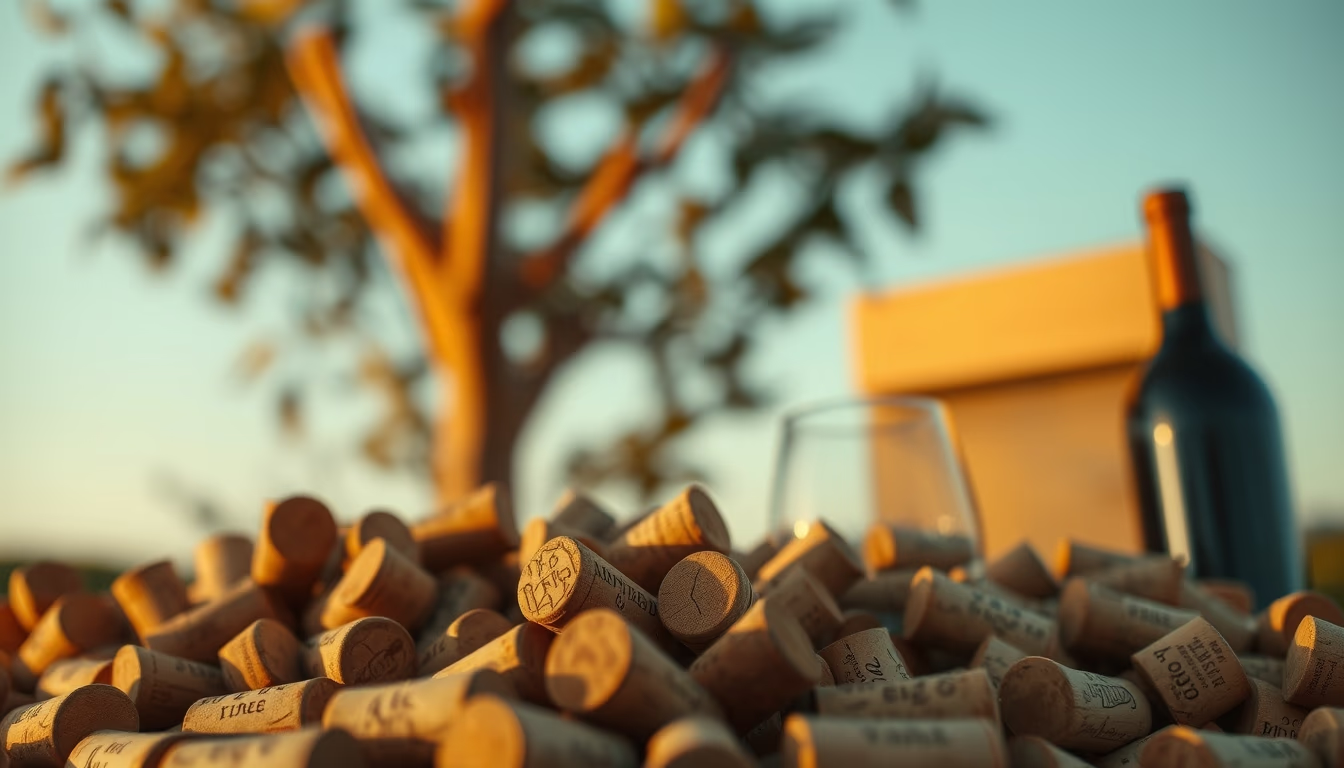
Coleção de rolhas de vinho revela a história e a diversidade dos vedantes usados na enologia, desde a cortiça natural até opções sintéticas.
Sobre o tema
Uma coleção de rolhas de vinho é mais do que um simples acervo; ela conta a história da evolução dos vedantes na indústria vinícola. As rolhas naturais, extraídas da casca do sobreiro (Quercus suber), são as mais tradicionais e valorizadas por sua capacidade de permitir a micro-oxigenação, essencial para o envelhecimento de vinhos finos. Portugal é o maior produtor mundial de cortiça, responsável por cerca de 50% da produção, seguido por Espanha. O descortiçamento é feito manualmente a cada nove anos, sem derrubar a árvore, o que torna a cortiça um material renovável e sustentável.
Além das rolhas naturais, existem as rolhas aglomeradas, feitas de grânulos de cortiça prensados com cola, e as rolhas sintéticas, geralmente de polímeros como o polietileno. Cada tipo tem vantagens: as naturais são mais porosas e permitem trocas gasosas; as sintéticas evitam o gosto de cortiça (TCA) e são mais baratas; as aglomeradas combinam partículas de cortiça com menor custo. Colecionadores costumam guardar rolhas de vinhos especiais ou de safras marcantes, formando um diário enológico.
Outro aspecto curioso é a reciclagem de rolhas. A cortiça natural pode ser triturada para produção de isolamentos, pisos ou novos objetos. Programas como o Green Cork, em Portugal, incentivam a coleta. Para quem coleciona, a conservação é importante: armazenar em local seco e arejado evita mofo. Algumas rolhas trazem marcas, safras e castas, funcionando como etiquetas históricas.
A diversidade de tamanhos também impressiona. Rolhas para vinhos tranquilos medem cerca de 24mm de diâmetro, enquanto as de espumantes têm 31mm, pois suportam maior pressão. Na coleção, é possível encontrar rolhas de vinhos famosos como Château Margaux ou Vega Sicilia, ou de pequenos produtores artesanais. Cada uma carrega uma história de terroir, safra e processo de vinificação.
Perguntas frequentes
Como armazenar rolhas de vinho para coleção?
Guarde as rolhas em local seco, arejado e protegido da luz. Evite ambientes úmidos para prevenir mofo. Seque-as naturalmente antes de armazenar.
Quais são os principais tipos de rolhas de vinho?
Os principais são: natural (cortiça inteira), aglomerada (grânulos de cortiça prensados), sintética (polímeros) e microaglomerada (partículas finas de cortiça com aglutinante).
Por que o vinho usa rolha de cortiça?
A cortiça natural permite micro-oxigenação, ideal para o envelhecimento. Além disso, é elástica, vedante e renovável. Outros materiais buscam imitar essas propriedades.
URL direta
https://pub-c7d6a6ea828543ac903a74a341ccb2e1.r2.dev/imagens/wine-cork-collection-cinematic-wide-shot-p3.avifComo creditar
Inclua um link visível de volta pro UtilizAí. Copie um dos snippets abaixo:
<a href="https://xn--utiliza-eza.com/midia/imagens/wine-cork-collection-cinematic-wide-shot-p3">Wine cork collection</a> by <a href="https://xn--utiliza-eza.com">UtilizAí</a>, licensed under <a href="https://creativecommons.org/licenses/by/4.0/">CC BY 4.0</a>.
[Wine cork collection](https://xn--utiliza-eza.com/midia/imagens/wine-cork-collection-cinematic-wide-shot-p3) by [UtilizAí](https://xn--utiliza-eza.com), CC BY 4.0
Licença: CC-BY-4.0