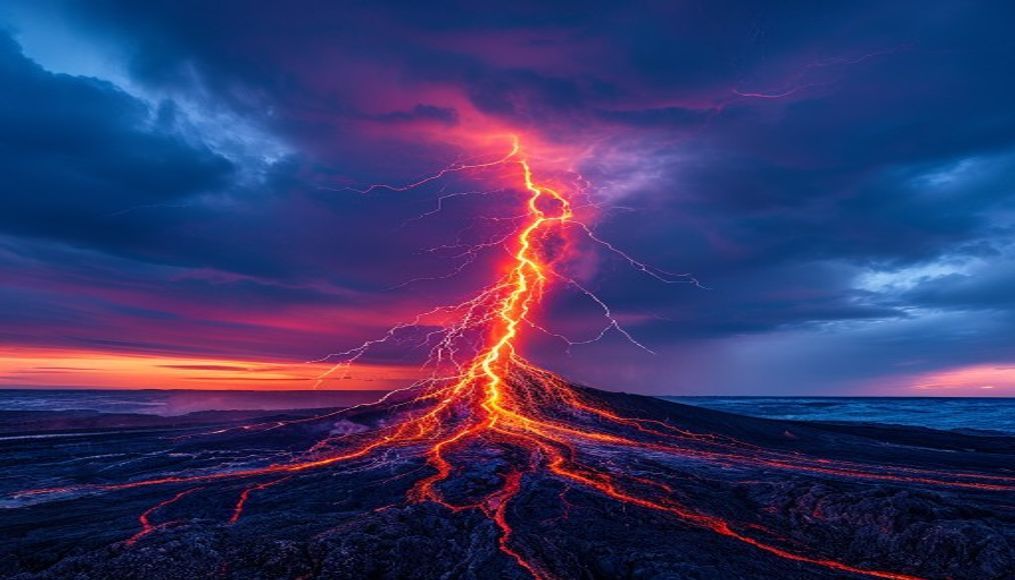
Volcanic lightning ash
1344×768 · AVIF · CC BY 4.0
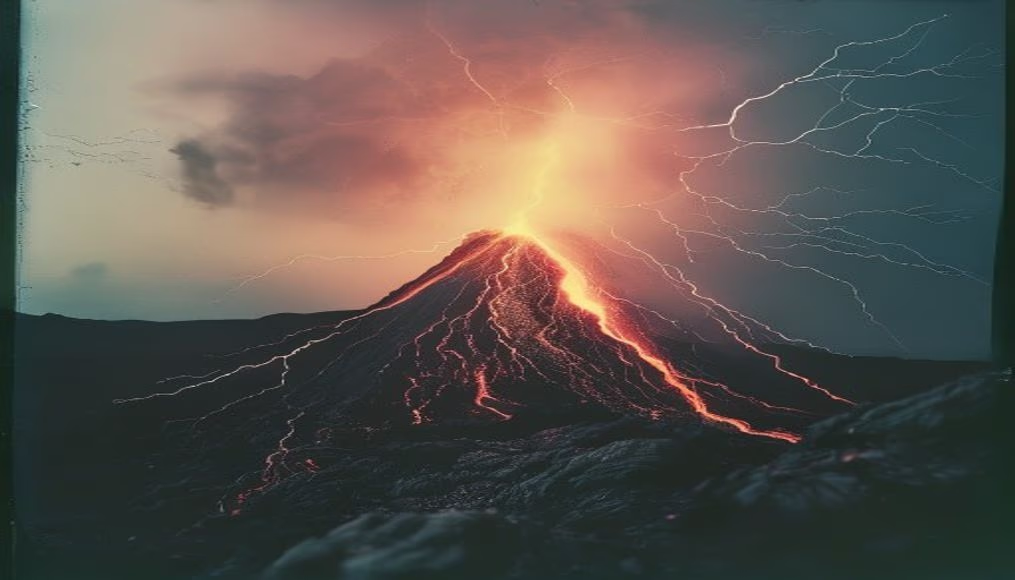
Volcanic lightning occurs during eruptions when ash particles collide generating static electricity.
About this subject
Volcanic lightning is a stunning meteorological phenomenon that occurs within eruption plumes. During an eruption, particles of ash, rock, and ice collide violently, generating electrical charges that accumulate until they discharge. Ash consists of volcanic glass fragments, minerals, and gases, and their intense friction creates static electricity, similar to regular thunderstorms but under extreme conditions. This phenomenon has been documented in many historical eruptions, such as Mount Vesuvius in 79 AD, which destroyed Pompeii, and more recently at Eyjafjallajökull in Iceland in 2010. Scientists study volcanic lightning to better understand eruption dynamics and predict explosivity, as electrical activity can indicate the intensity of the event.
Three main factors influence volcanic lightning: ash quantity, plume height, and particle speed. Plumes reaching over 10 km altitude often produce lightning because particles have more time and space to become charged. Studies show that most lightning occurs in the first minutes of eruption when particle concentration is highest. High-speed cameras have captured multiple simultaneous lightning bolts, revealing complex electrical patterns that help map ash distribution in the atmosphere.
Although Brazil has no active volcanoes, the country monitors eruptions worldwide due to impacts on aviation and climate. Volcanic ash can travel thousands of kilometers, affecting air traffic and air quality, as happened in 2011 with the Puyehue-Cordón Caulle volcano in Chile, which spread ash over southern Brazil. Volcanic lightning is a reminder of nature's power and the connection between geological and atmospheric processes.
Frequently Asked Questions
What causes volcanic lightning?
Volcanic lightning is caused by the collision of ash, rock, and ice particles within the eruption plume. Friction generates electrical charges that accumulate until they discharge, similar to ordinary thunderstorms.
Where do volcanic lightning occur?
They occur at active volcanoes worldwide, especially during explosive eruptions with tall plumes. Notable examples include Mount Vesuvius (Italy), Eyjafjallajökull (Iceland), and volcanoes in Japan and Indonesia.
Can volcanic lightning be used to predict eruptions?
Yes, monitoring volcanic lightning can help predict eruption intensity. Increases in electrical activity indicate denser, more explosive plumes, aiding in issuing warnings.
Direct URL
https://pub-c7d6a6ea828543ac903a74a341ccb2e1.r2.dev/imagens/volcanic-lightning-ash-lo-fi-disposable-camera-p2.avifHow to credit
Include a visible link back to UtilizAí. Copy one of the snippets below:
<a href="https://xn--utiliza-eza.com/en/midia/imagens/volcanic-lightning-ash-lo-fi-disposable-camera-p2">Volcanic lightning ash</a> by <a href="https://xn--utiliza-eza.com">UtilizAí</a>, licensed under <a href="https://creativecommons.org/licenses/by/4.0/">CC BY 4.0</a>.
[Volcanic lightning ash](https://xn--utiliza-eza.com/en/midia/imagens/volcanic-lightning-ash-lo-fi-disposable-camera-p2) by [UtilizAí](https://xn--utiliza-eza.com), CC BY 4.0
License: CC-BY-4.0